
Abstract:
A dinosaur fossil that has been collected in a museum for nearly a century and has not been recognized for a long time has recently helped paleontologists identify a previously unknown carnivorous dinosaur. This dinosaur lived in the early Cretaceous period about 120 million years ago. It was similar in size to a large tiger, with strong forelimbs and huge curved claws. Researchers believe that it belongs to a group of carnivorous dinosaurs that has never had definite fossil evidence in Europe before. Its discovery also provides important clues for studying how this type of predator spread from Asia to Europe and the southern hemisphere.
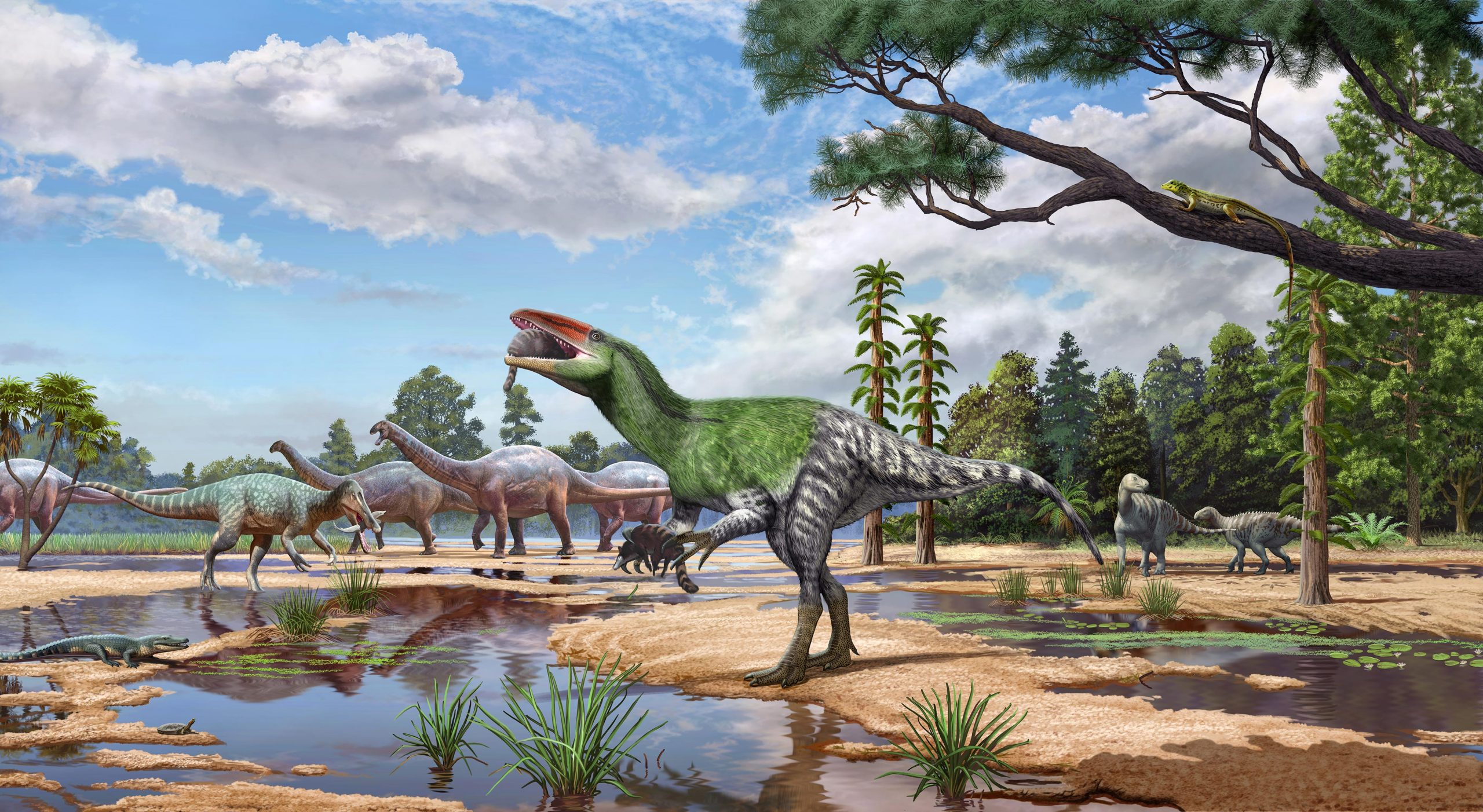
This study was led by researchers from University College London (UCL), and the results were published in the journal Royal Society Open Science. The research team named the new dinosaur Invictibellatrix amberina. Its genus name can be roughly translated as "invincible female warrior", which not only reflects the researchers' understanding of this group, but also implies tenacity and strength.
The newly discovered dinosaur belongs to Megaraptora, a group of large carnivorous theropod dinosaurs. This group has a close evolutionary relationship with tyrannosaurs such as Tyrannosaurus rex, but their hunting methods may be significantly different. Tyrannosaurs usually have powerful skulls and bite capabilities, while macroraptors are known for their relatively long and narrow heads, well-developed forelimbs, and huge curved claws, and may rely more on their forelimbs to capture and control prey.
Based on the body structure of known close relatives, researchers speculate that Invictibellatrix amberina is about 3 to 4 meters long and slightly more than 1.5 meters tall when standing, which is roughly the same as the height of an adult. It probably had feathers, and the curved claws on its forelimbs were estimated to be about 10 to 20 centimeters long. Its prey may have included small dinosaurs, lizards, and mammals, serving as a medium-sized predator in the ecosystem at the time.
Researchers liken its ecological status to that of today's hyena: Although it was not the largest predator at the top of the food chain at that time, it still had the ability to hunt a variety of animals. Dr Cassius Morrison, lead author of the paper from the Department of Earth Sciences at University College London, said that if humans had lived in the era of this dinosaur, it would have posed a great threat to humans because humans would have fallen within the range of what it could hunt. In contrast, the massive Tyrannosaurus rex might not necessarily view smaller animals like humans as worthy targets.
Of course, humans didn't appear until millions of years later, so the researchers' comparison is just to help modern readers understand the dinosaur's size and potential hunting methods, and doesn't mean scientists can directly determine how it would have treated humans.
The most surprising thing about this discovery is that the fossil itself was not recently unearthed. It is a fragment from the back of a dinosaur skull that entered the collection of the Natural History Museum in London in 1924. For nearly a hundred years, the fossil remained in the collection without being identified as a previously unknown dinosaur species.
The fossil was originally collected by amateur paleontologist Reginald Walter Tully off the southwestern coast of the Isle of Wight, England. Tully was a prolific fossil collector, discovering more than 1,000 fossil specimens in his lifetime. After his death, part of the collection found its way to the Natural History Museum, becoming historical material that researchers can re-examine today.
When the research team re-examined the fossil, they found that it had some anatomical features that were different from known carnivorous dinosaurs. Since only the back part of the skull is preserved in the fossil, researchers cannot intuitively determine its identity based on its appearance alone. Therefore, they used computed tomography, also known as CT scanning, to conduct non-destructive examination of the internal structure of the fossil.
CT scanning uses X-rays to obtain structural information inside objects, allowing researchers to reconstruct the three-dimensional shape of fossils without destroying precious specimens. In this way, the team not only obtained a detailed digital model of the skull fragment, but also reconstructed the internal space of the skull cavity that housed the brain of the dinosaur during life.
The researchers then compared these structures to other theropods, including tyrannosaurs, spinosaurs and other bipedal carnivorous dinosaurs. Analysis found that the fossil had several noteworthy features, including an oval-shaped opening near the connection between the spinal cord and the brain, and a special bony ridge that resembled an hourglass.
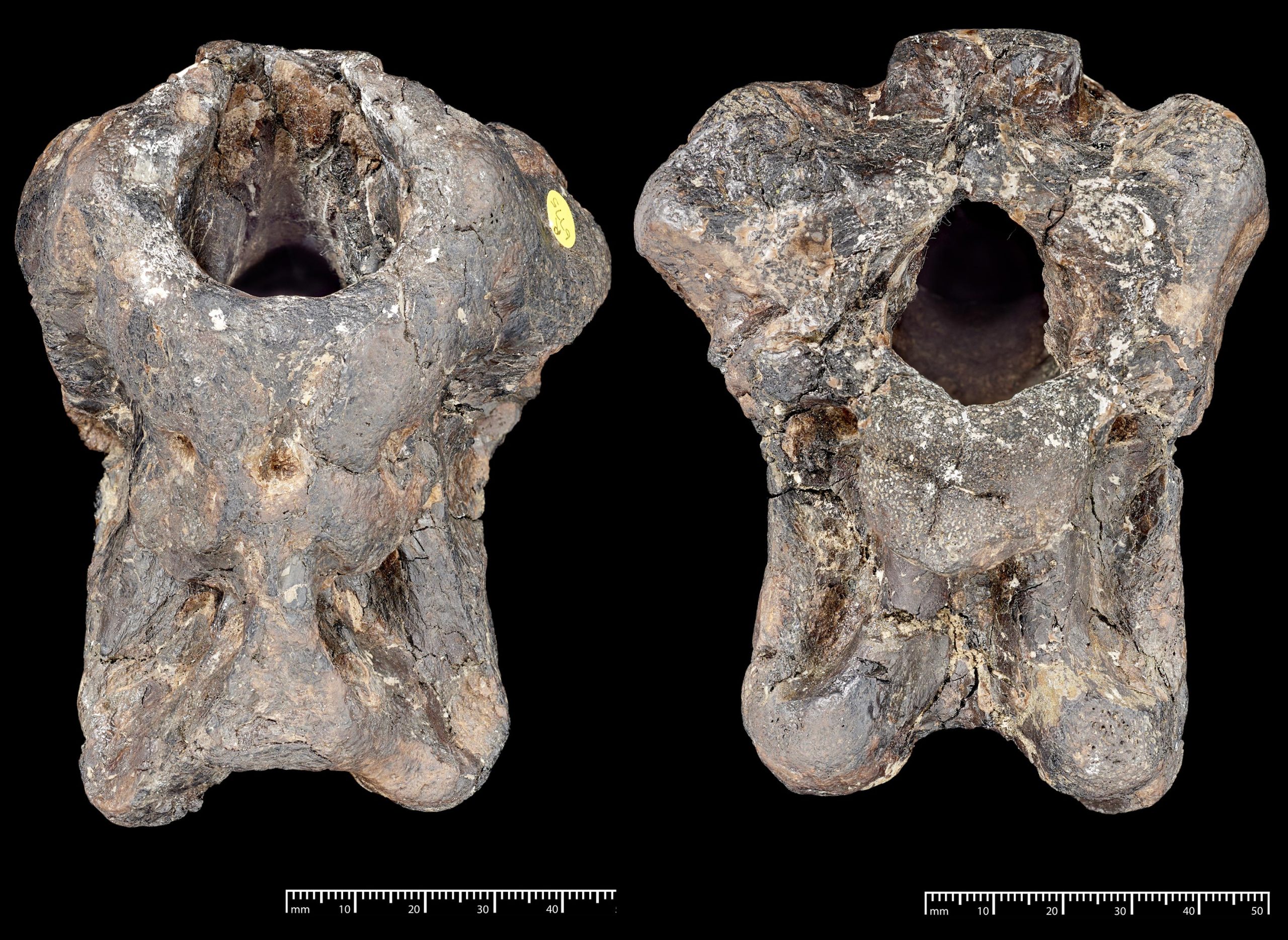
The combination of these features is significantly different from other dinosaurs that have been discovered. The researchers also used computer algorithms to systematically compare the anatomical features of different dinosaurs and repeatedly analyzed the fossil's position in the dinosaur evolutionary tree. Multiple rounds of analysis supported its identification as a macroraptor, ultimately prompting the team to identify it as a new species.
Macroraptors have long been a relatively mysterious group in paleontological research. Its fossils are relatively rare, and many species leave only scattered skeletons. Therefore, it has been difficult for scientists to completely restore their origins, migration routes, and evolutionary relationships between different branches.
Previously, a major hypothesis held that macroraptors may have originally originated in Asia, then spread to Europe and further into Gondwana. Gondwana is a southern supercontinent that once existed in geological history. Its scope includes parts of today's Africa, South America, Antarctica and other regions.
However, until this discovery, Europe had lacked fossil evidence that could clearly be assigned to the group Megaraptor. This makes it difficult for researchers to confirm whether this type of dinosaur really passed through Europe and then spread to the southern continent.
The discovery of Invictibellatrix amberina fills this important gap. It not only proves that macroraptors were already living in Europe in the early Cretaceous, but also provides new basis for studying their subsequent migration routes.
Charlie Scherer, a co-author of the paper and a doctoral student at University College London, said that this new dinosaur is the first definite evidence that macroraptors once existed in Europe, and also supports the hypothesis that they may have spread to Gondwana through Europe, rather than following a more southerly route and gradually migrating through islands between different landmasses.
In order to further study the evolutionary history of this group, the research team also combined the known fossil records, the relationship between dinosaurs, the geographical distribution of ancient continents and prehistoric climate conditions, and used mathematical models to reconstruct the distribution changes of macroraptors in different periods.
Model results show that in the early Cretaceous, macroraptors may have been widely distributed on multiple continents. Over time, the distribution pattern of this group has changed significantly.
By the late Cretaceous, macroraptors may have disappeared from much of Laurasia. Laurasia was a geologically northern continent that included most of today's Europe, Asia, and North America. At the same time, some macroraptors on Gondwana in the south gradually evolved to larger sizes and became one of the most threatening predators in the local ecosystem.
Some late-stage macroraptors had huge curved claws up to 35 centimeters long, and their hunting capabilities far exceeded those of the early species discovered this time. One famous example is the Maip macrothorax, which lives in what is today Argentina. Researchers estimate that this dinosaur was about 9 to 10 meters long and may have weighed as much as an elephant.
This means that macroraptors were not always just medium-sized predators. They evolved into different body shapes and ecological types, and some of them eventually developed into large apex predators.
As for why they disappeared from the northern continent, there is still no clear answer. Researchers suggest that climate change, changing environmental conditions, and competition with other large carnivorous dinosaurs may have affected its distribution and survival. However, these factors are currently considered possible explanations, and research has not identified a single cause for the disappearance of its northern population.
Professor Paul Barrett, senior study author at the Natural History Museum in London, said that the Isle of Wight has experienced more than 200 years of fossil collection and research, but it still continues to bring new dinosaur discoveries. In particular, fossils of carnivorous dinosaurs are relatively rare, so this discovery has special scientific value.
He noted that there may still be a large number of under-recognized specimens hidden in history museum collections. Researchers in the past may have been unable to accurately determine the identity of certain fossils due to a lack of advanced scanning equipment, comparative materials or relevant evolutionary knowledge at the time. As science and technology advance, re-study of old specimens may also yield important new discoveries.
This case illustrates once again that breakthroughs in paleontology do not always come from newly excavated fossils. Historical specimens collected by museums may also contain a large amount of information that has not yet been revealed, and technologies such as CT scanning, three-dimensional reconstruction and computer-aided analysis are helping researchers discover new species and evolutionary clues from these old materials.
The significance of this study is not only to add a new dinosaur, but also to fill in a key puzzle in the evolution and migration history of macroraptors. It suggests that such predators had entered Europe during the early Cretaceous and may have spread further through this region to the southern continent.
From a fragment of a skull that had been neglected for nearly a century to a new species that could help reconstruct prehistoric continental migration routes, this discovery demonstrates the long-term scientific value of historic fossil collections. In the future, as more old specimens are reanalyzed with modern techniques, researchers may also find more prehistoric animals that have never been known to science before in museum drawers and storage cabinets.
Comments