
Abstract:
After years of cross-comparison of genomics and morphology in tropical rainforests and mountain ecosystems in Central and South America, an international team of biologists has officially confirmed the discovery of a new species of small wild cat. This breakthrough research result not only rewrote the taxonomic tree diagram of cats, but also opened up a new key protection area for biodiversity conservation in the American tropics.
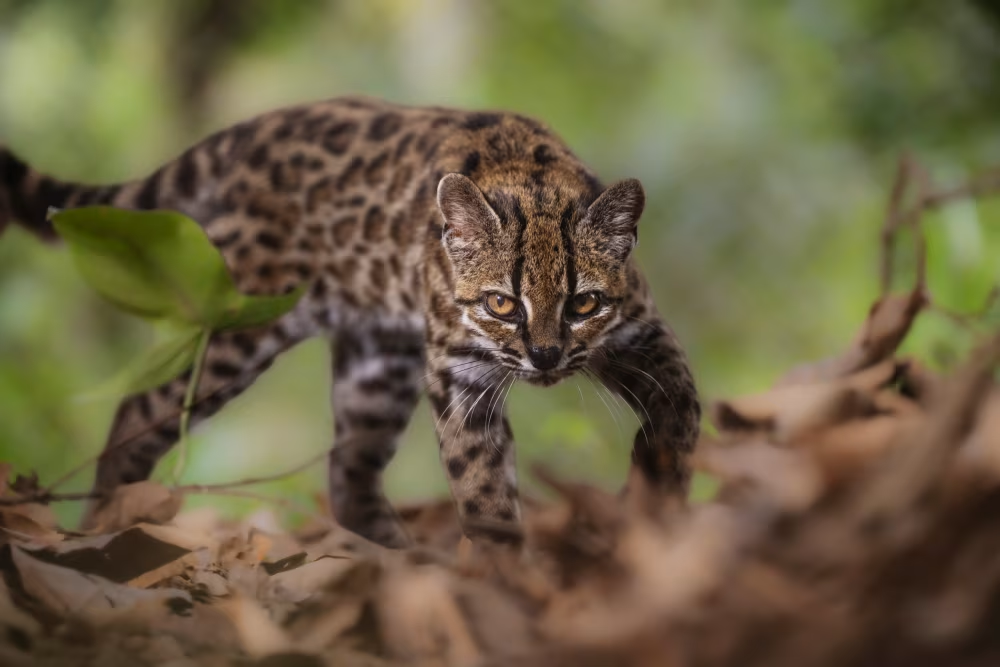
Scientific researchers have long classified the small spotted cats found in tropical wet forests and high-altitude cloud forests of the Americas as either a single species or a handful of known species. However, a joint research team composed of geneticists and animal taxonomists conducted in-depth analysis of hundreds of wild cat DNA samples, skeletal specimens and high-resolution field infrared camera images collected from a wide area from Costa Rica to Brazil. Finally, it was confirmed from two dimensions of genetic differences and phenotypic characteristics that this cat group living in a specific high-altitude microclimate environment has already diverged from related species in the evolutionary chain and has completely independent species characteristics.
The "tiger cat" (a new branch of the Tigrina/Oncilla complex) newly recognized as an independent species is slightly smaller than ordinary domestic cats in size, but its fur markings and body proportions show extremely high adaptability to the wild. Compared with its relatives at lower altitudes, this species has thicker fur with specific dark markings to adapt to the colder and damper climate of alpine cloud forests. In addition, its skull anatomy and teeth bite characteristics also indicate that this cat has developed a highly specialized hunting habit during its long-term evolution, mainly feeding on small arboreal rodents, lizards and small birds.
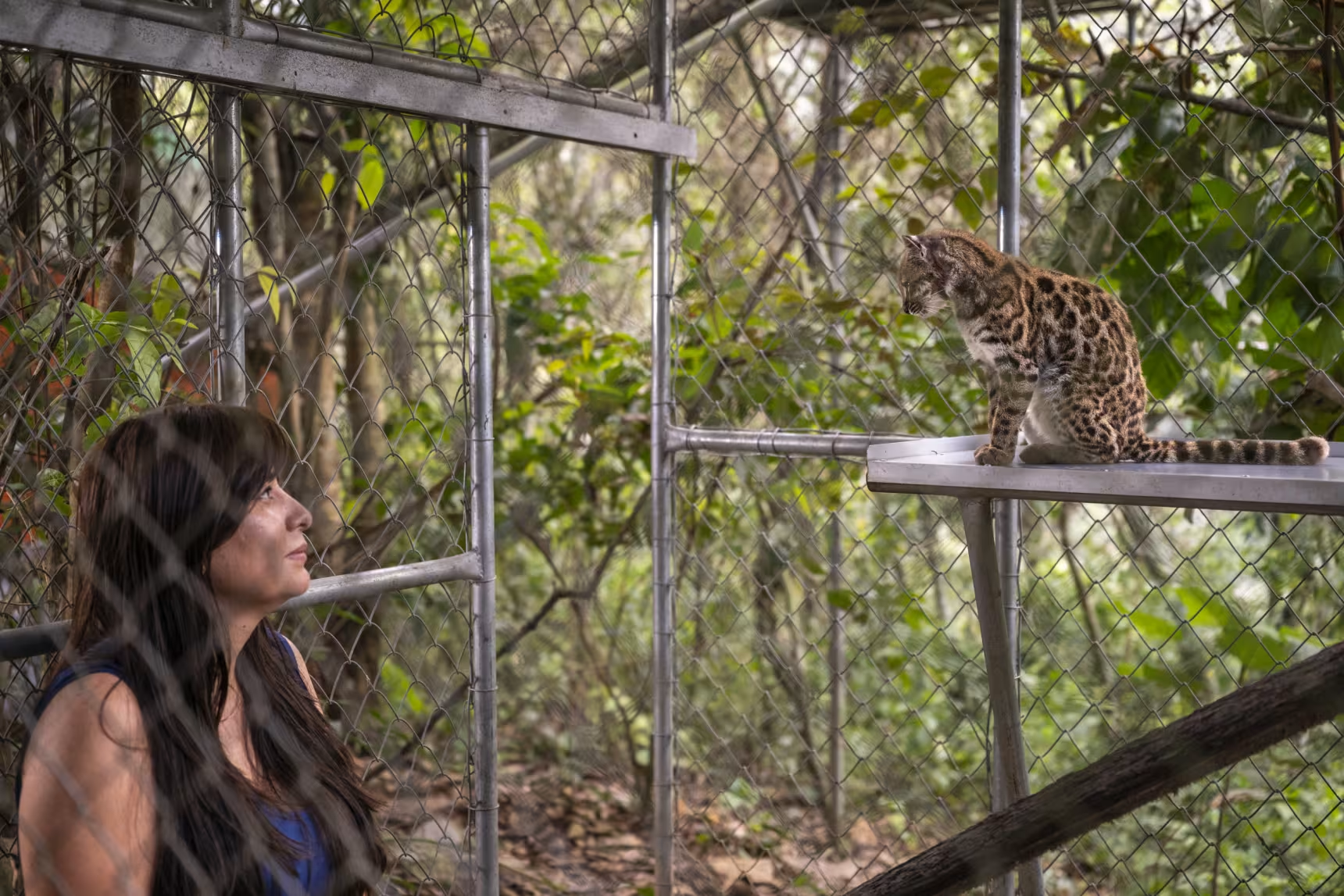
Genetic analysis shows that the gene flow between this new species and its closely related cat species distributed in the same domain or in the neighborhood has been basically interrupted hundreds of thousands of years ago. Although it is very similar in appearance to known tiger cats and can easily be misidentified in wild observations, there are multiple significant unique markers in its genome sequence, which is enough to support its classification and registration as an independent species.
The scientific community warns that the official recognition of this new species also reveals that it is facing a severe existential crisis. Because of its high dependence on pristine forest ecosystems at specific altitudes, wild populations of this species are already extremely vulnerable as agricultural expansion, deforestation, and the fragmentation of suitable habitats caused by climate change. Conservation biologists call on relevant countries and regions to immediately update the list of threatened species based on the latest taxonomic results and designate special nature reserves in the core breeding areas of this new species to prevent this rare wild cat from falling into extinction.
Comments