
Abstract:
Researchers at the University of Bonn in Germany have discovered that spiders may have a more complex sleep mechanism than previously thought. Through long-term observation of an Australian jumping spider, the research team obtained for the first time systematic experimental evidence that spiders have two different sleep stages, one of which shows similar characteristics to human rapid eye movement sleep (REM), including eye movements and muscle twitches. The discovery raises an interesting question: Do spiders dream?
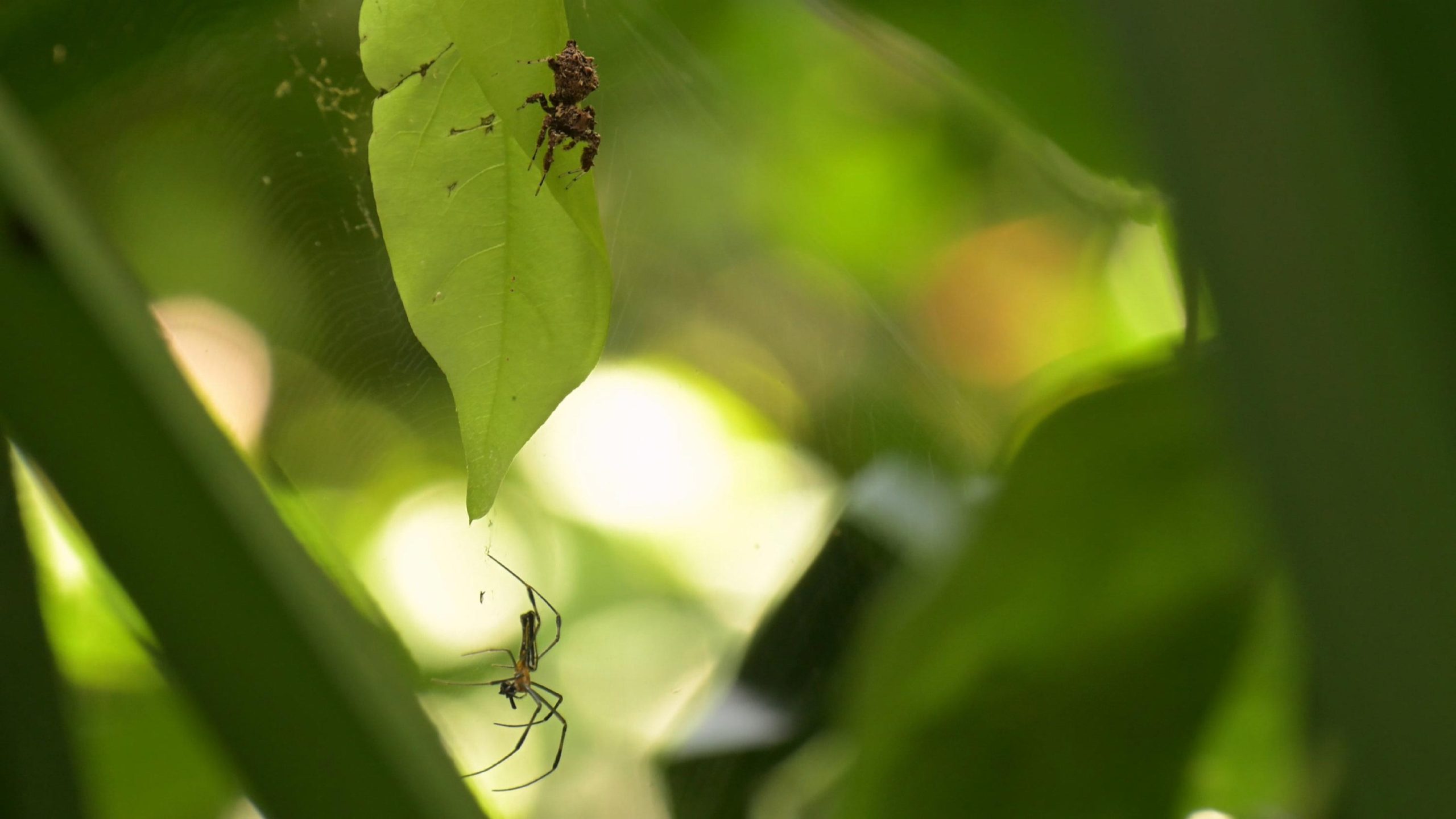
The research object is an Australian jumping spider named Portia fimbriata, which belongs to the genus Portia. This type of spider is known for preying on other spiders and has quite special hunting abilities in the spider world. They can not only capture insects, but also actively hunt web-building spiders. They can even create vibrations by manipulating the webs of their prey, simulating the signals produced by insects struggling when they are entangled in spider silk, thereby luring web-building spiders closer and eventually capturing them.
This complex hunting behavior shows that the spider has excellent learning and adaptability. The size of the adult Portia fimbriata is actually not very large, with its body size only about the size of a one-euro coin, but its behavioral complexity is far beyond what people know about ordinary spiders.
By observing the spiders' nighttime behavior, researchers hope to determine whether they are simply inactive due to lack of activity, or whether, like mammals, they truly enter a state of sleep regulated by their biological clock.
To answer this question, the research team placed a single spider in a 12 cm diameter plastic container, observed it for multiple days and nights, and studied their diurnal activity patterns by changing light conditions.
The researchers used high-resolution camera equipment to record the subtle movements of the spiders, and used infrared cameras to observe their sleep state in a dark environment. Using these devices, the researchers found that spiders not only remained stationary for long periods of time at night, but also periodically displayed special movements, including eye movements and leg muscle twitches.
These movements have particularly attracted the attention of researchers because they closely resemble physiological phenomena that occur during REM sleep in humans.
In the human sleep process, rapid eye movement sleep is an important stage. At this stage, the human eyeballs will move rapidly under the closed eyelids, most of the skeletal muscles of the body are in a relatively relaxed state, and the brain activity shows characteristics closer to those of the awake state. Vivid human dreams are also often closely associated with this stage.
However, simply observing spiders remain still does not prove that they are actually sleeping. Animals may be less active due to environmental conditions, temperature changes or other reasons, so the researchers also designed additional experiments to verify whether spiders have true sleep characteristics.
One of the experiments tested the spider's response to external sound stimuli. The researchers found that during a specific resting stage, the spider's response to external stimuli was significantly weakened, showing a decrease in perception similar to that of sleeping animals.
The research team also tested the so-called sleep rebound phenomenon. This phenomenon is when animals have their sleep disrupted or sleep deprived, and they compensate by increasing their subsequent sleep time. For example, humans who experience prolonged sleep deprivation tend to exhibit stronger sleep needs during subsequent sleep periods.
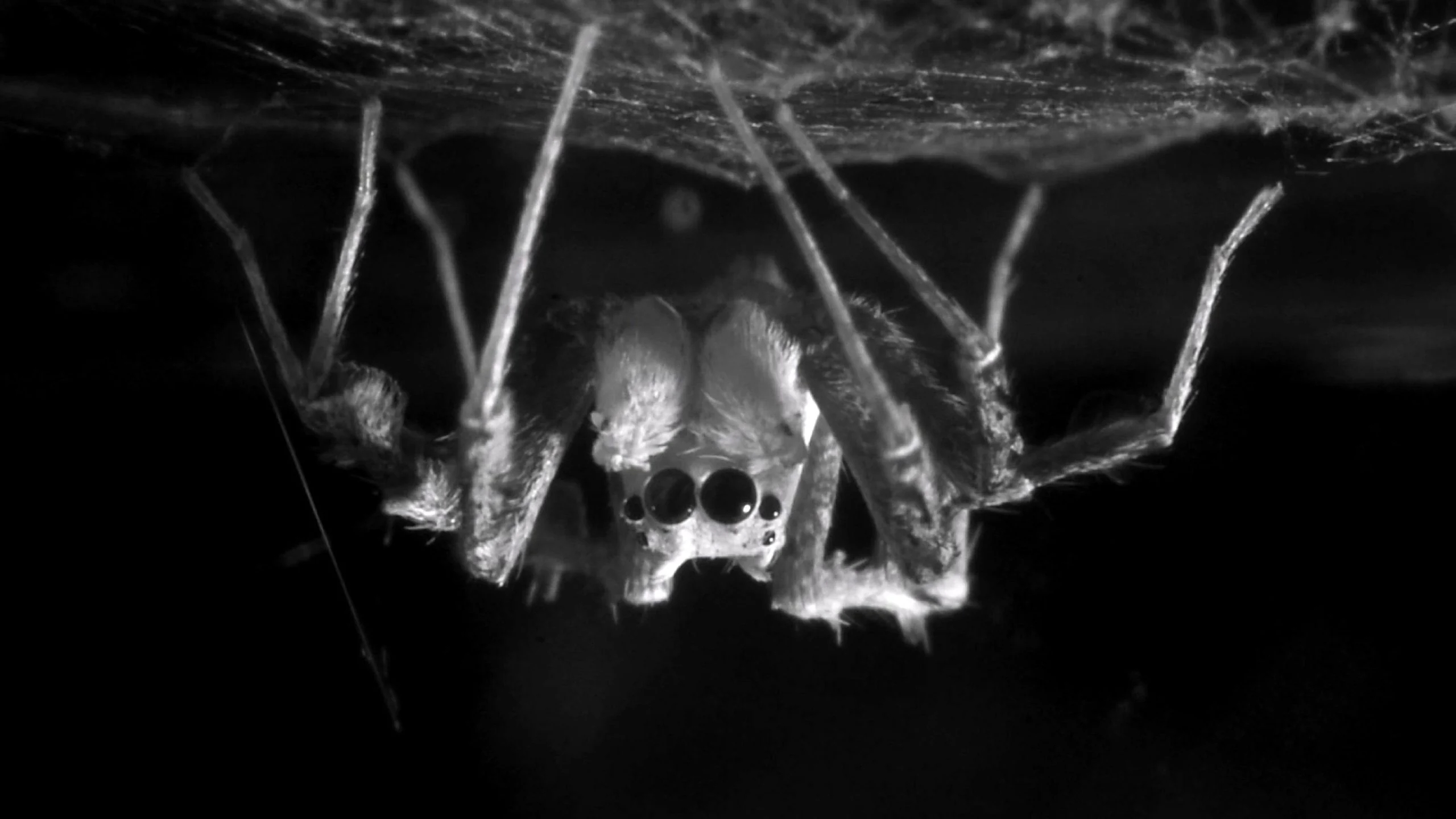
Experimental results show that spiders will also exhibit corresponding compensatory resting behaviors after their sleep is disturbed. This provides further evidence for researchers to conclude that spiders have a sleep state that is truly regulated by biological mechanisms.
Based on nighttime videos, responses to external stimuli, and sleep rebound experiments, researchers finally confirmed that Portia fimbriata does not just stop moving at night, but is able to enter a regular sleep state with two distinct stages.
The most concerning of these is the stage similar to rapid eye movement sleep. The researchers observed that the spider's eyes would move significantly, while its leg muscles would also twitch briefly. These actions do not occur randomly, but have a certain periodicity.
However, the research team emphasized that this does not mean that spiders have been proven to dream.
Human dreams are usually closely related to REM sleep, but behaviors similar to eye movements and muscle twitches in other animals cannot be directly equated to human dream experiences. There are huge differences between the nervous systems of spiders and humans, and their external manifestations are similar, but this does not mean that their brains are undergoing exactly the same physiological processes inside.
The study also has an important limitation: The scientists were unable to directly measure the spider's brain activity during sleep.
Unlike humans who can monitor sleep through equipment such as electroencephalography, spiders have a more special nervous system structure. Researchers currently mainly rely on high-resolution video recordings and behavioral experiments to determine their sleep status. Therefore, there is still no clear answer to what kind of neural activity occurs in spiders during REM-like sleep stages.
Nonetheless, the discovery has important implications for understanding the evolutionary history of sleep.
For a long time, scientists' research on sleep has mainly focused on vertebrates such as humans, other mammals, birds, and reptiles. Because these animals have relatively complex nervous systems that share certain characteristics, researchers can more easily look for sleep patterns across species.
Spiders are completely different. They are arthropods, and their nervous system structure is significantly different from that of vertebrates. If spiders also have staged sleep, or even exhibit behaviors similar to REM sleep, it means that complex sleep mechanisms may be more common than previously thought.
This also brings up an important evolutionary question: Are mechanisms similar to REM sleep developed independently in different animals during the long evolutionary process, or have some basic sleep characteristics already appeared in the early stages of animal evolution?
If animals with different nervous system structures can form similar sleep stages, researchers will have the opportunity to find more basic and universal biological laws in sleep mechanisms.
The research team at the University of Bonn is now extending the study to other spider species to understand whether this two-stage sleep is unique to octopus spiders or whether it is a physiological characteristic of arachnids in general.
The researchers also plan to compare lab-raised spiders with spiders living in their natural environment to determine whether artificial light, temperature changes and other environmental factors alter their sleep patterns.
In addition, whether there is a connection between spider sleep and cognitive ability is also a direction of particular interest to the research team. Because the spiders have complex hunting strategies and learning abilities, scientists hope to learn more about whether sleep helps consolidate memories, process information acquired during the day, or improve their hunting behavior.
Future research will also attempt to directly measure the neural activity of spiders and insects during sleep to determine whether the REM-like behaviors they exhibit actually involve neurophysiological mechanisms similar to those of vertebrates.
Artificial nighttime lighting is also another issue of concern to the research team. Artificial light sources are changing the activity patterns of many animals that originally relied on natural day and night cycles. Scientists hope to study whether changes in nighttime lighting and climate affect spiders' sleep, and what impact such changes might have on ecosystems.
The results of this research were published in the Proceedings of the National Academy of Sciences (PNAS) of the United States on October 26, 2026. The paper is titled "Behavioral evidence for two-stage sleep in spiders."
The most important significance of the research is not to prove that spiders already have human-like dreams, but to demonstrate for the first time through systematic experiments that spiders have staged sleep regulated by biological mechanisms, one of which also shows similar characteristics to vertebrate rapid eye movement sleep.
This also reminds scientists that humans are not the only animals with complex sleep mechanisms. Even a jumping spider, which is about the size of a dime and has a completely different nervous system than humans, may undergo physiological processes at night that are far more complex than simply resting. Whether they actually dream like humans during sleep is still a scientific mystery waiting to be answered.
Comments