
Abstract:
North Korea’s underground nuclear test at Mt. Mantap had a lasting and delayed impact on the surrounding crust, triggering seismic activity that lasted — and even intensified — for years after the blast, a new study shows. The findings have implications for monitoring old nuclear test sites.
These results suggest that these explosions have the potential to reactivate faults that were otherwise seismically quiet and produce earthquakes that may be indistinguishable from natural tectonic activity. North Korea conducted a total of six underground nuclear tests between 2006 and 2017 at the Punggye-ri nuclear test site under Mount Mantap. The last – and largest – nuclear test took place in September 2017. The explosion had an estimated yield of 100,000 to 250,000 tons and was recorded by the United States Geological Survey (USGS) as a magnitude 6.3 seismic event.
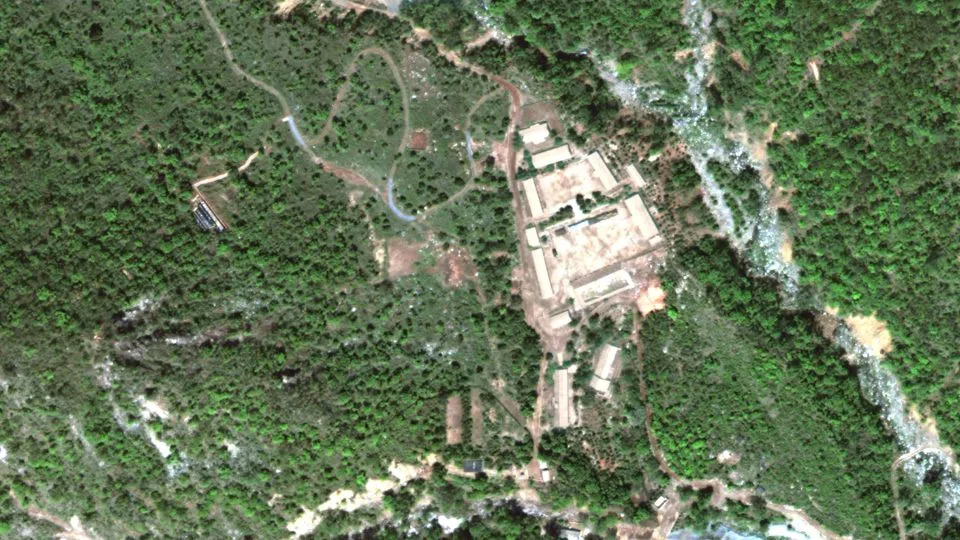
In addition, according to satellite radar measurement reports, significant surface deformation occurred at the top of Wanta Mountain. Most previous studies of these nuclear tests have focused on determining their location, timing, and size. However, their broader impact on the region's seismic activity remains poorly understood.
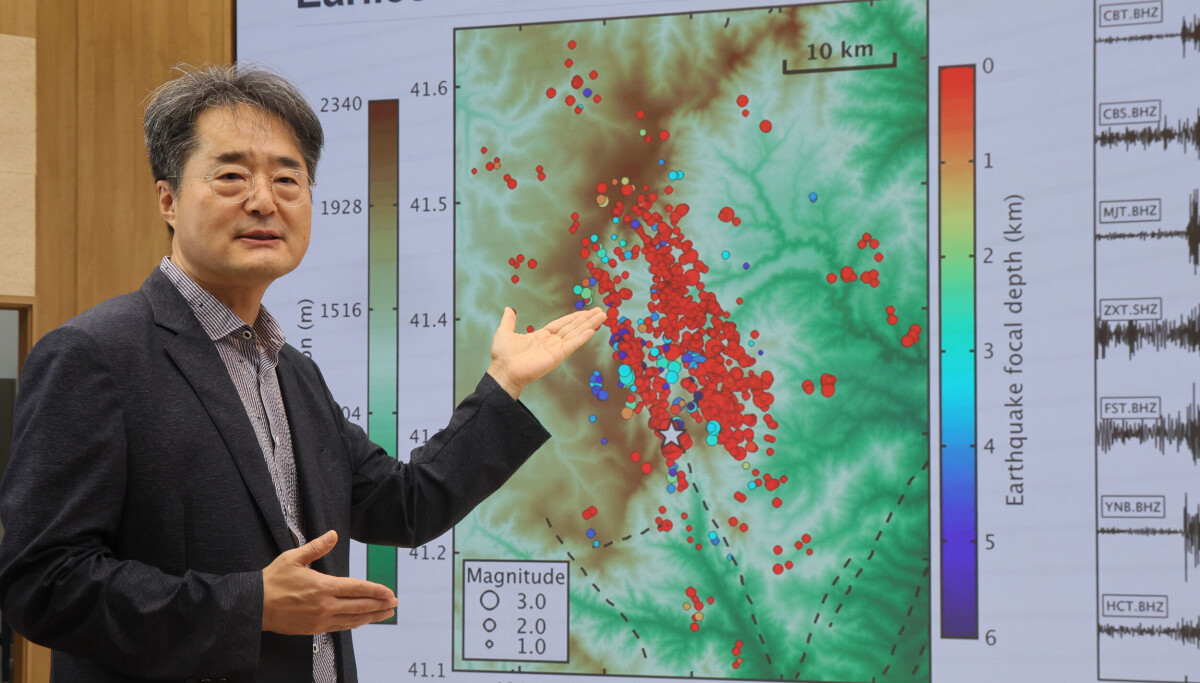
To fill this gap, Xingli Fan and colleagues analyzed seismic data recorded in China and South Korea since 2008, including data from stations 80 to 200 kilometers from the test site, aiming to track changes in seismic activity around Mount Wanta over time. Fan et al identified 1399 earthquakes locally between 2008 and 2025 – far more than recorded in previous earthquake catalogs.
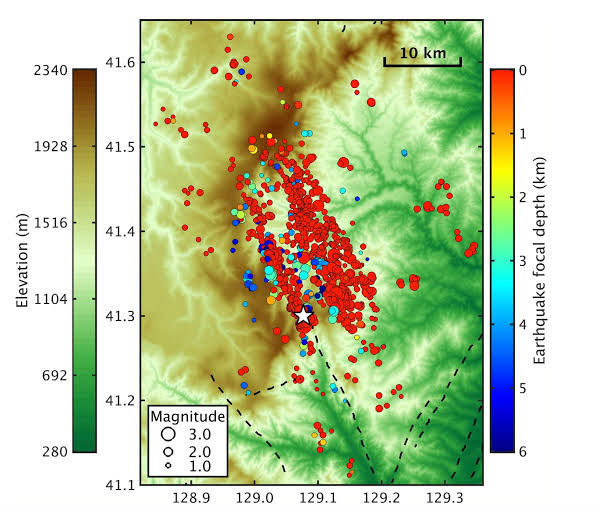
It is worth noting that the authors found that after the 2017 nuclear test, the seismic activity around Mount Wanta did not show the sequence characteristics after previous nuclear explosions - the latter tended to produce short-term earthquake sequences that rapidly decayed after the test. Instead, after the 2017 test, seismic activity began to increase about three weeks after the nuclear explosion and continued through 2025, growing in both frequency and magnitude. High-precision positioning showed that these earthquakes were concentrated on two previously existing or previously unrecognized fault structures that were roughly north-northwest trending, indicating that this was continuous and orderly fault reactivation rather than random seismic activity. Lin and others believe that repeated nuclear explosions gradually damaged the shallow crust and changed its internal stress field, causing faults that were already close to rupture to gradually become active over several years.
Comments