
Abstract:
A photo of the International Space Station released by NASA shows a brightly colored, almost round rock mass in southern Madagascar. It is called the Sariliaki anorthosite, with a surface outcrop area of about 100 square kilometers and is surrounded by rocks subject to strong geological deformation. NASA said that this type of anorthosite is very common on the surface of the moon, but there are similar rock bodies on the earth; the photos show known geological structures and are not newly discovered rocks from the moon.
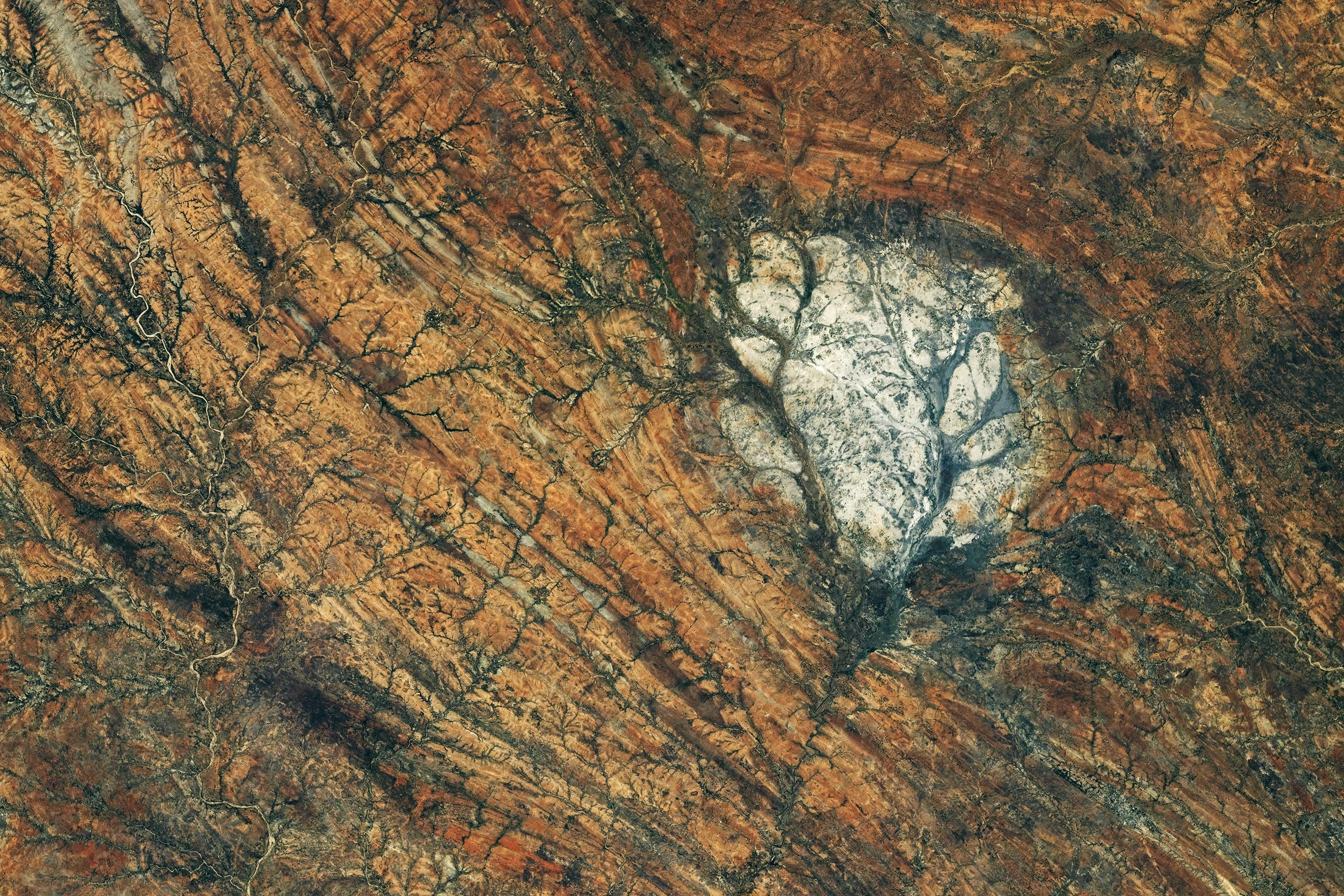
The photo was taken by an astronaut of the 75th Expedition of the International Space Station on August 28, 2026, using a Nikon Z9 digital camera and a 400mm focal length lens, numbered ISS075-E-85249. NASA said the image was cropped, contrast-enhanced and lens artifacts removed to highlight the differences between the rock mass and the surrounding landforms.
Anorthosite is an intrusive igneous rock, formed by the slow cooling and solidification of underground magma. Due to the long cooling time, the mineral crystals can grow. Based on geological research, NASA traced the Sarilia basement rock mass to the late Precambrian, saying it was formed at least about 600 million years ago. An isotope study published in 1998 estimated that the igneous crystallization age of such anorthosite bodies in southwestern Madagascar was about 660 million years, with an error margin of about 60 million years; the study also measured that related rocks underwent metamorphism about 559 million years ago. Different numbers correspond to different geological processes such as rock mass crystallization and subsequent metamorphism, and are not a single precise "formation date."
The rock formations surrounding the rock mass record lengthy tectonic deformations. The anorthositic rock mass is located in the ductile shear zone. The surrounding rocks are metamorphosed under the action of high temperature and high pressure, and are stretched and bent to form a linear texture that runs roughly north-south. Researchers believe that these deformations are related to the process of the ancient continents joining together to form the Gondwana supercontinent; another anorthositic body on the north side of the same shear zone may have been integrated with Saririaki and was later separated during tectonic compression and stretching. This "sausage-shaped" pull-off structure is called a pudding structure, but the explanation that the two rock masses were originally connected is still a geological hypothesis.
Its connection with the moon is mainly in rock types and scientific comparisons, rather than a direct material connection between the earth and the moon. The bright highlands of the moon are widely composed of anorthosite, which was formed over 4 billion years ago. The mainstream explanation is that the young moon was covered with a magma sea in its early stages, and the minerals formed during the cooling process gradually formed its outer crust. The lunar samples brought back by the Apollo missions provide direct materials for research, but the quantity is limited. Therefore, the anorthosite on Earth can be used as a comparison object to help scientists understand the composition and evolution of this type of rock. The Madagascar pluton shows how Earth's tectonics reshaped ancient anorthositic rocks and provides a ground-based reference for studying the lunar highlands.
Comments