
Abstract:
NASA has uploaded more than 800GB of lunar science data collected by the Artemis 2 mission to the Planetary Data System for further research by the scientific community and the public. The data includes more than 11,000 full-resolution photos and videos, approximately 8.5 hours of audio recordings of astronauts’ scientific observations, and the crew’s handwritten annotations on the images. The images were captured by astronauts' handheld cameras and the Orion spacecraft's camera equipment, some of which have not been made public before.
This batch of data records observations made by Artemis 2 during its flight around the moon in April 2026. The mission launched on April 1 and returned on April 10, lasting 9 days, 1 hour and 32 minutes. It was carried out by NASA astronauts Reid Wiseman, Victor Glover, Christina Koch and Canadian Space Agency astronaut Jeremy Hansen. This is the Artemis program's first manned mission around the moon and one of the first lunar scientific data to be generated primarily by humans in deep space field observations since the Apollo era. NASA said astronauts' instantaneous judgments of color, brightness and landscape changes can complement data accumulated by previous robotic probes and Apollo missions.
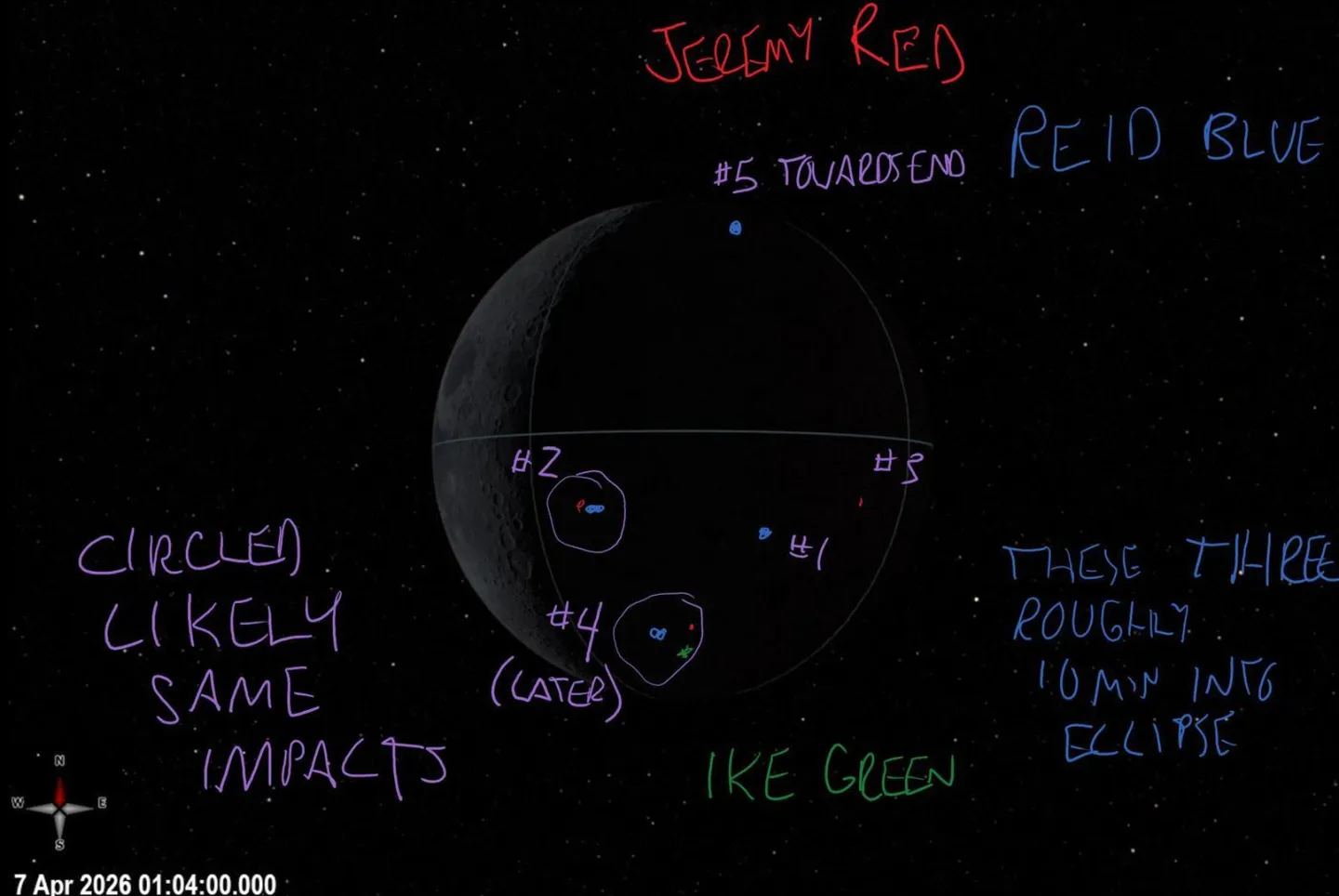
One of the more interesting public information is that astronauts observed five extremely weak "pinpoint" flashes near the back of the moon. The NASA science team said that these flashes occurred when the moon blocked the sun and the environment was dark. After ruling out other sources such as cosmic rays or reflections from the spacecraft, they were confirmed to be flashes from rock fragments hitting the lunar surface. Orion was about 46,000 miles away from the moon at the time of the observation; researchers initially estimated based on the brightness of the flash that the impactor may be only a few inches in diameter. NASA said that Apollo astronauts reported similar phenomena, but the Artemis 2 crew may have seen the faintest type of impact flash recorded by the naked eye.
In addition to the data itself, NASA also released a preliminary lunar science report, scientific operations report and data user guide, introducing how the mission develops and executes observation plans, and how various types of data are organized. During the flight around the moon, the astronauts took turns using the portholes to observe, take photos and take oral notes. The intensive observation time was about seven hours; at its closest point, the spacecraft was about 4,067 miles away from the lunar surface. Scientists can further analyze lunar surface color, texture, geological features and impact events, and compare crew observations with lunar orbiter data.
NASA stated that this batch of data will provide reference for scientific planning of subsequent Artemis missions. However, what is currently released is the scientific observation archive compiled by the lunar science team, not all the spacecraft telemetry and operational data generated during the mission; the data user guide also points out that a small number of images taken by the crew using iPhones were still being compiled at the time and had not yet been included in the archive.
Comments