
Abstract:
The National Aeronautics and Space Administration (NASA) recently announced that the Lunar Reconnaissance Orbiter (LRO) discovered a new lunar crater of astonishing scale. Scientists believe that this is one of the largest new impact craters ever discovered in the solar system, and it is also a rare impact event that only occurs once in about a hundred years.
The discovery originally emerged from a routine data review.
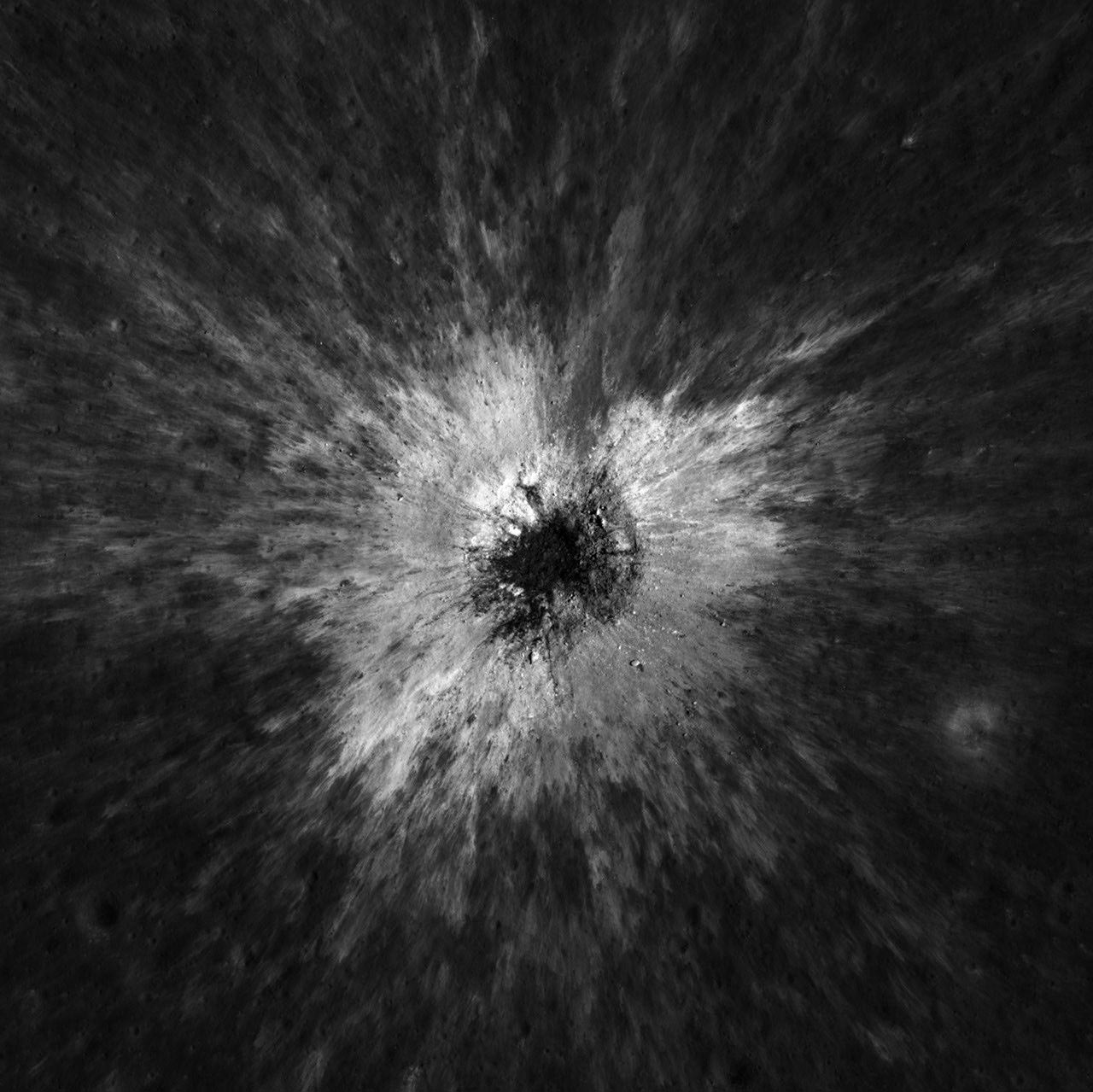
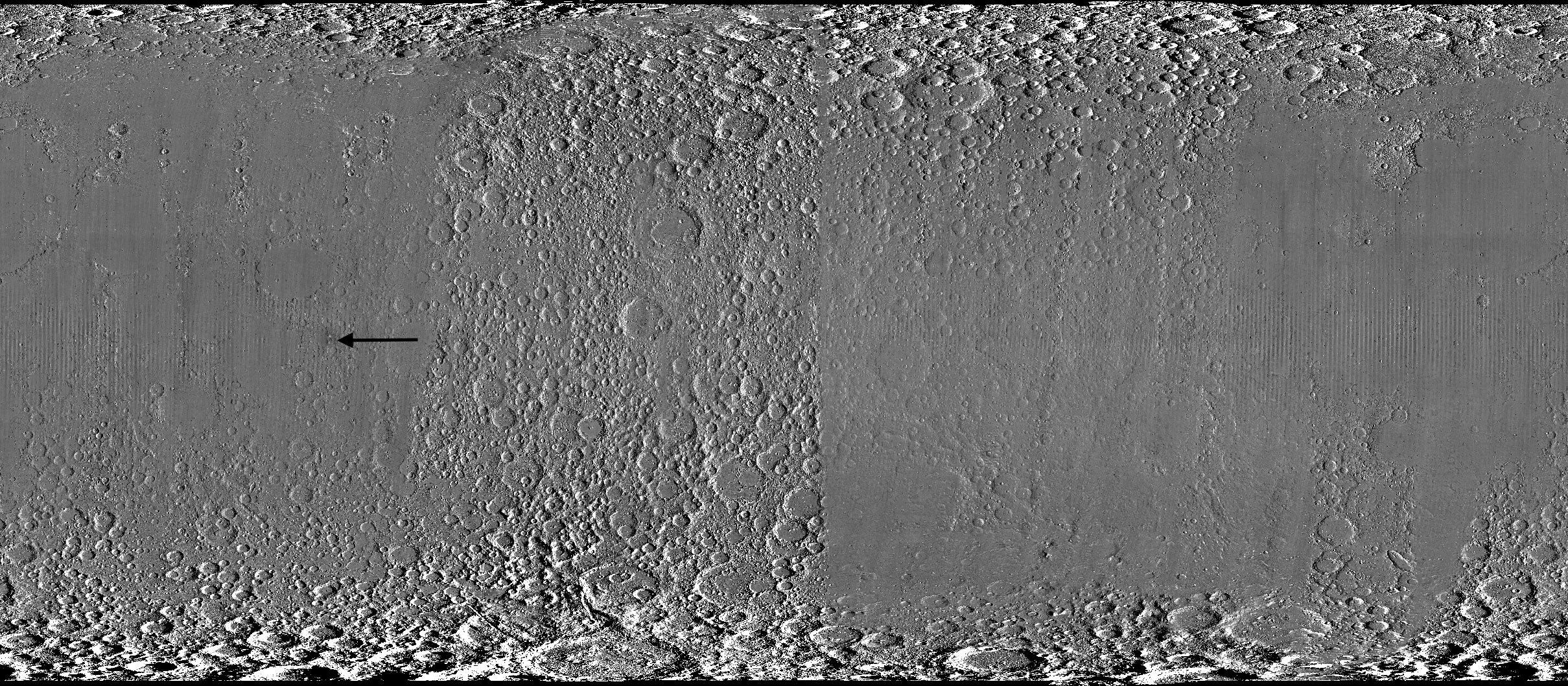
In October 2025, Robert Wagner, an image processing expert involved in the Lunar Reconnaissance Orbiter project, noticed an unusually conspicuous bright spot when he was looking at a global map of the moon stitched together from hundreds of photos. This bright spot is surrounded by an obvious dark halo, forming a strong contrast with the surrounding lunar surface environment.
At first, the researchers suspected that this was just an artifact caused by changes in lighting angle or image noise. However, when they further compared the photos of the moon before and after the impact, a surprising fact gradually emerged: this was not an imaging error, but a large new crater that had never been recorded before.
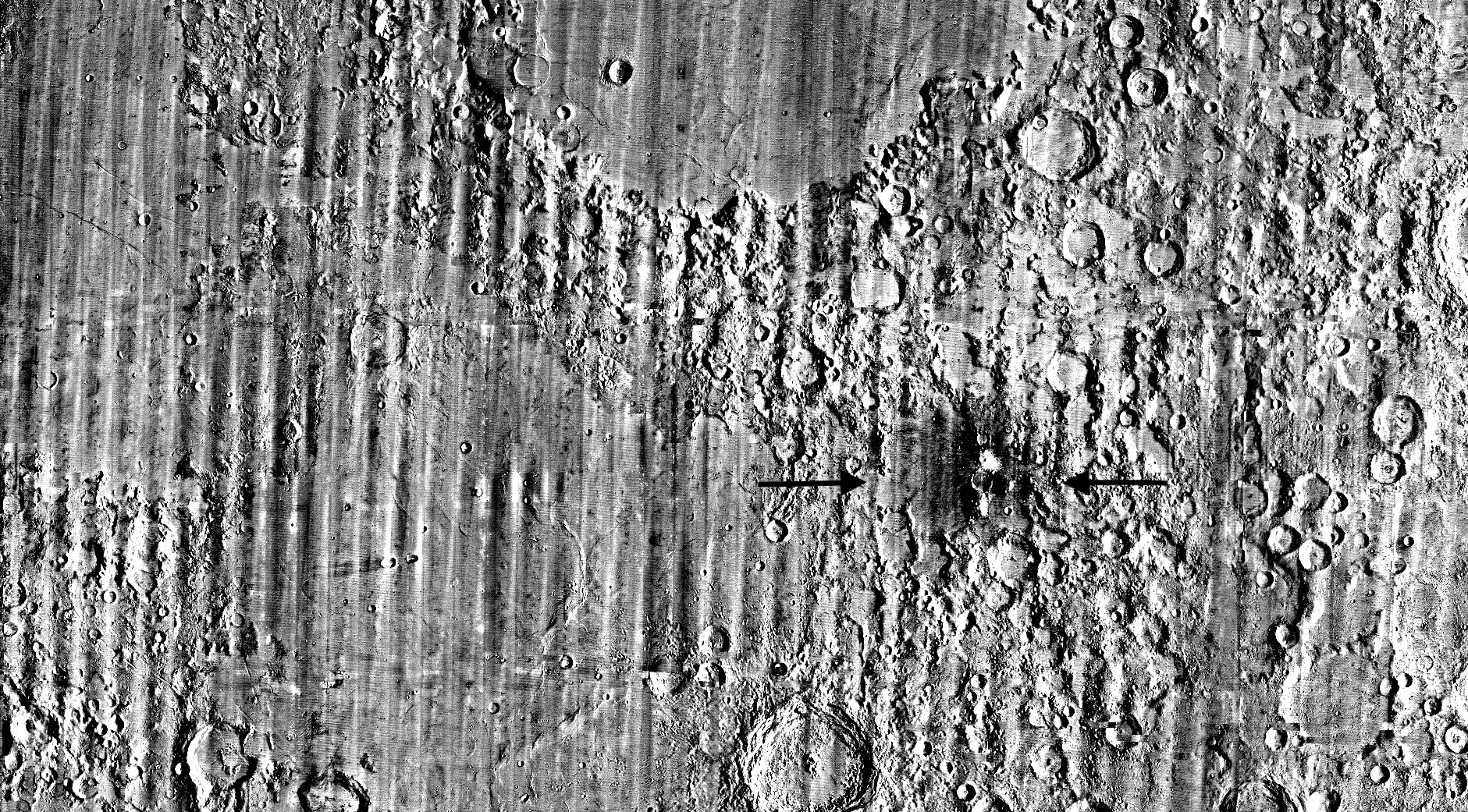
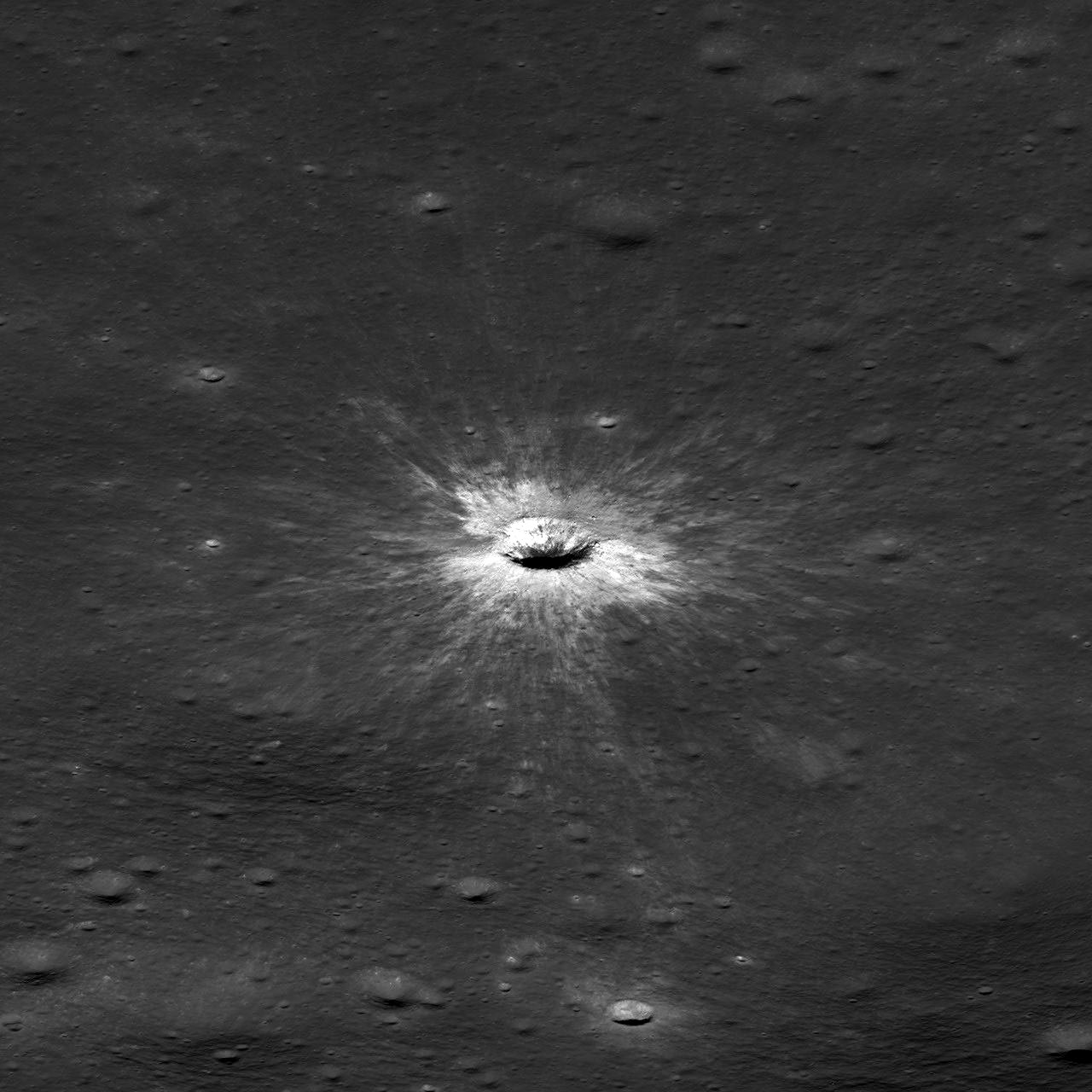
Scientists later confirmed that the crater was formed between April 11 and May 22, 2024. It is located on the eastern edge of the moon and is officially named "McGutcheon Crater" in honor of the late lunar scientist Thomas McGutchan.
According to the measurement results, the diameter of Magchin Crater is about 222 meters, or about 728 feet, which is equivalent to the length of two standard American football fields connected end to end; the depth is about 43 meters, or about 141 feet, which is enough to accommodate three school buses stacked one on top of the other.
Researchers believe that the object that formed an impact crater of this size is likely to be a piece of comet or asteroid fragment, which is about the size of a three- to six-story building.
Since the moon has almost no atmosphere, celestial bodies entering the moon's gravitational range will not burn up due to friction like meteors on the earth, but will directly hit the surface at extremely high speeds. Therefore, even if it is not a particularly huge celestial body, it is enough to produce a very destructive impact effect.
NASA stated that an impact event of similar magnitude only occurs once on the moon in about a hundred years on average, and some studies even estimate that the average interval between occurrences is about 132 years. Therefore, this discovery is regarded as an extremely rare opportunity for real-time observation.
What makes scientists even more excited is that the Lunar Reconnaissance Orbiter captured images of the area just before and after the impact. This means that researchers have obtained a complete set of "before and after impact data" for the first time, allowing them to directly observe how large impact events change the lunar landscape.
Analysis shows that the crater itself is only part of the impact of this event.
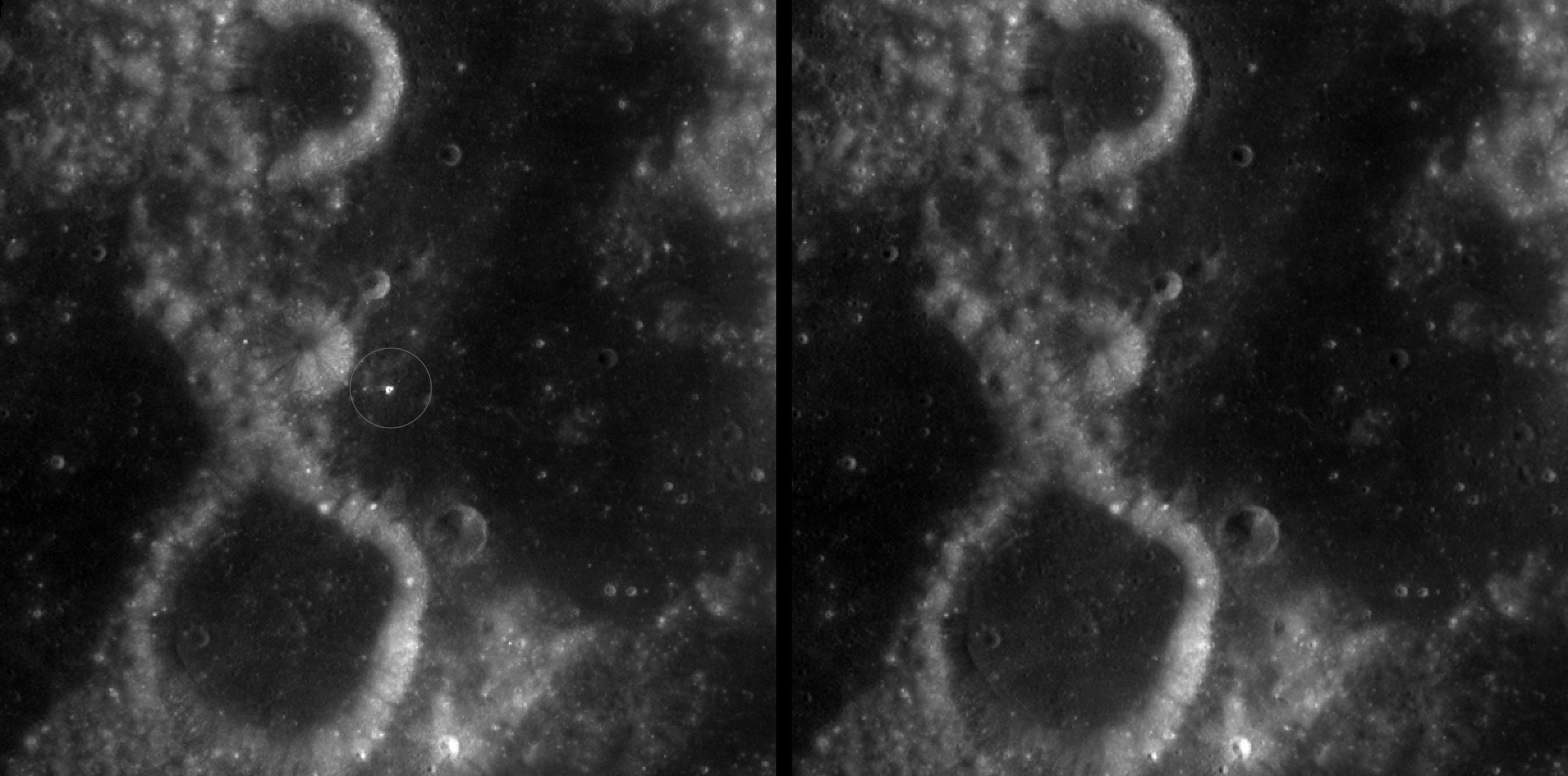
The impact not only dug a large crater tens of meters deep, but also ejected a large amount of lunar soil and rocks into the surrounding wide area. The research team found that the disturbed area far exceeded the scope of the crater, and its impact even extended to 120 kilometers away.
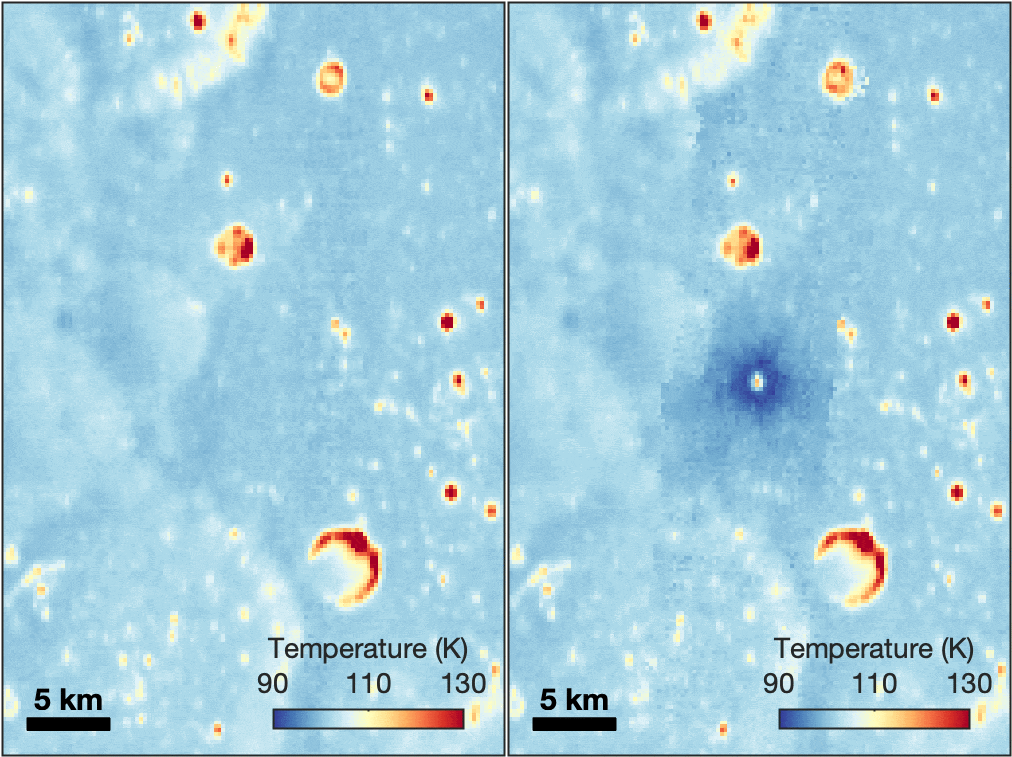
At the same time, scientists also discovered a special "cold spot" area about 6.4 kilometers wide around the crater. The nighttime temperatures in these areas are significantly lower than the surrounding lunar surface, which is believed to be related to the churning of the lunar soil, changes in particle structure and changes in heat conduction characteristics caused by the impact.
Researchers pointed out that fresh impact craters are of great significance to understanding the geological evolution of the moon.
Although the moon's surface is dotted with numerous impact craters, many of which are far larger than Magchin Crater, most were formed millions or even billions of years ago. In contrast, such newly formed impact craters can help scientists directly observe the evolution of the moon's surface without having to rely on long-term speculation.
This discovery also has practical value for NASA's "Artemis" return to the moon plan.
In the future, astronauts will establish a long-term scientific research base on the moon. Understanding the structural changes of the lunar soil, the impact of impact events on the surface environment, and the physical characteristics of the lunar surface are of great reference significance for base construction, lunar rover operations, and resource development.
Since 2009, the Lunar Reconnaissance Orbiter has been orbiting the moon for more than 17 years. During the mission, scientists discovered more than 1,000 new impact craters that did not exist before.
Even among these discoveries, however, Magchin Crater remains particularly special. Regardless of its scale, scope of influence or completeness of observations, it is one of the most important lunar impact discoveries in recent years.
The research team stated that this once-in-a-century impact allowed scientists to closely observe the moment when the lunar surface was rewritten, and also provided extremely precious research samples for understanding the impact evolution process of the entire solar system.
Comments