
Abstract:
The National Aeronautics and Space Administration (NASA) is supporting a new lunar exploration program with the goal of investigating whether there are large underground cave structures beneath a giant crater on the lunar surface. Scientists believe that this mission is not only expected to reveal the history of ancient volcanic activity on the moon, but may also provide key basis for establishing a safe habitat for future astronauts.
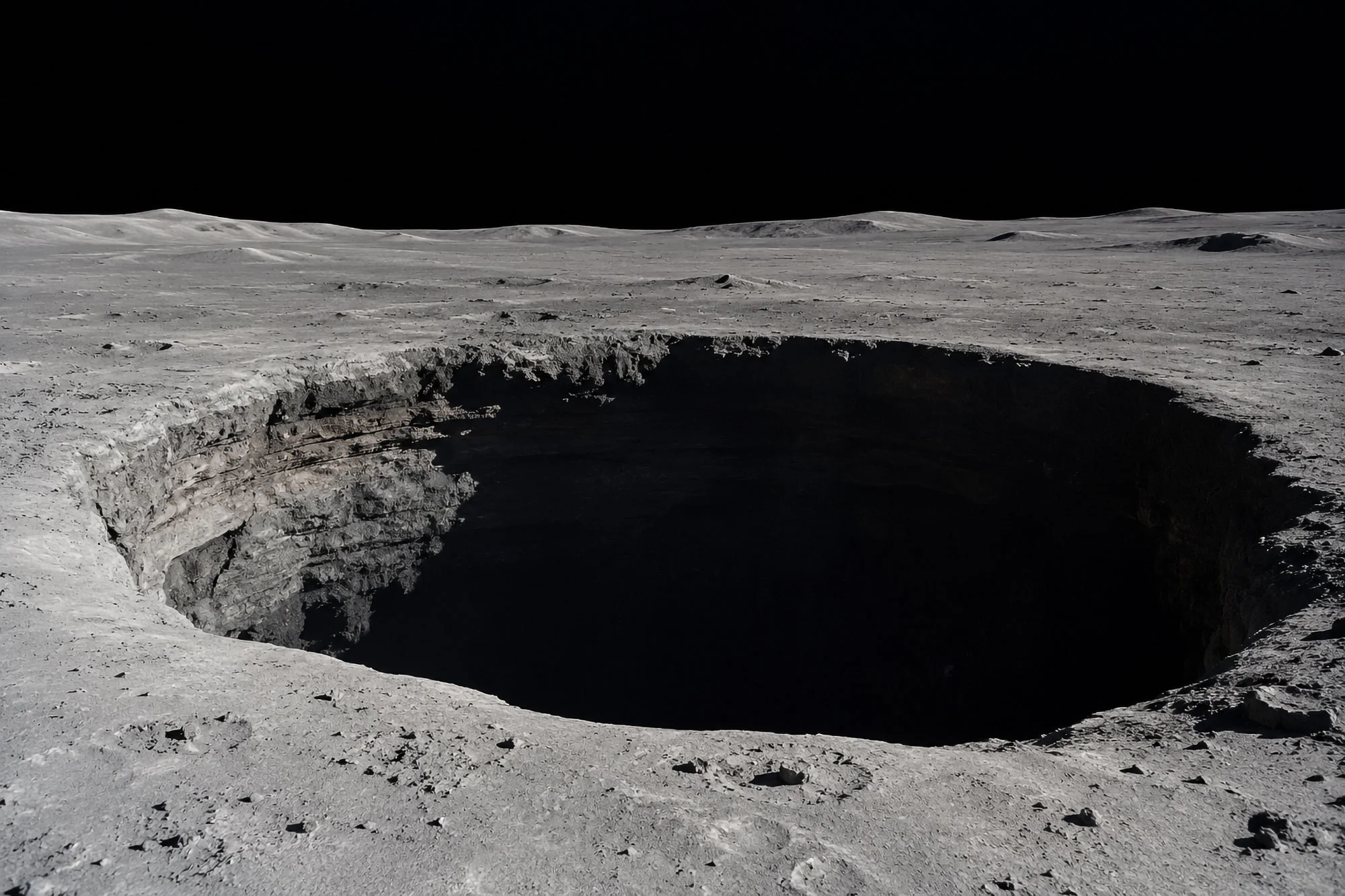
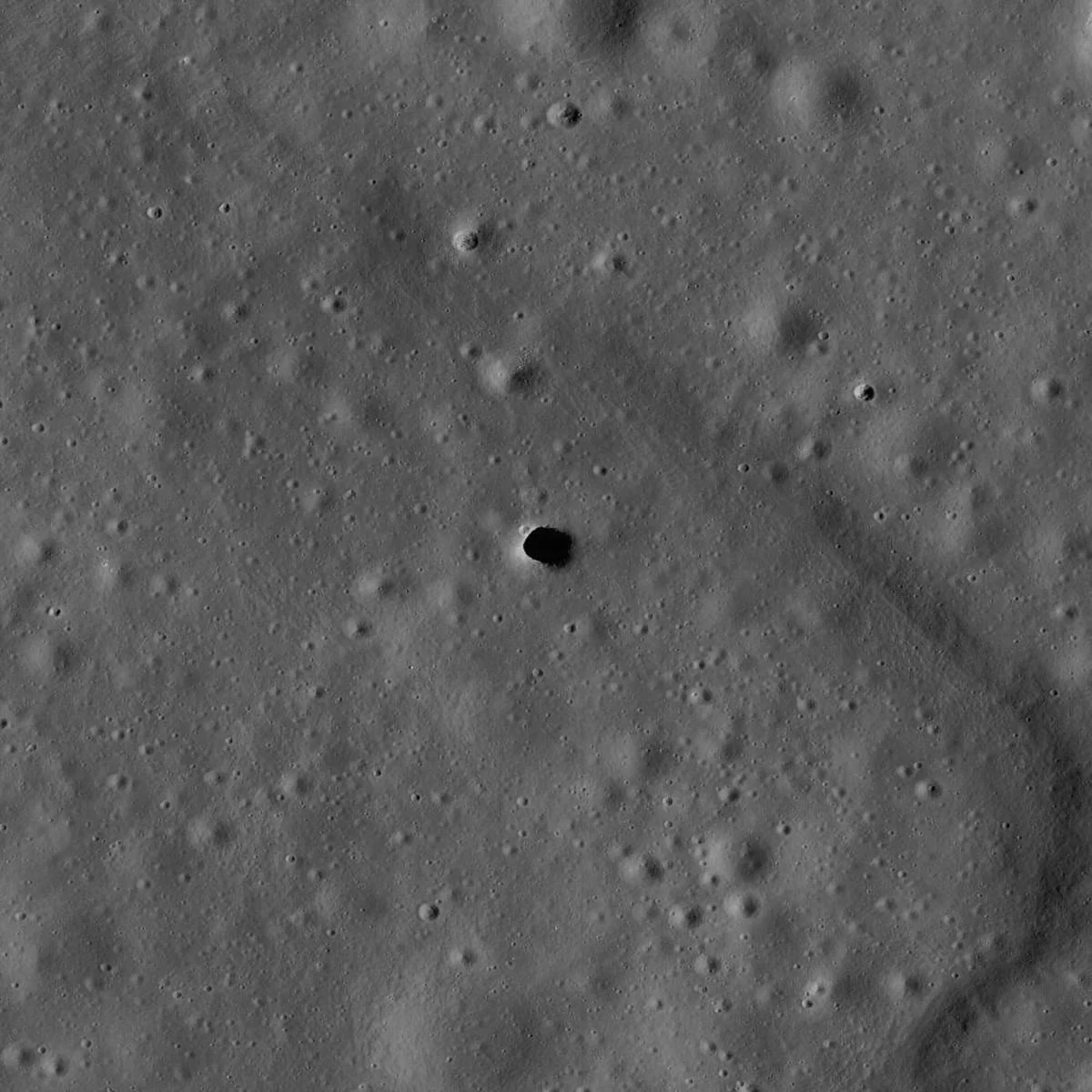
For a long time, researchers have collected a large amount of evidence through orbiting probes indicating that there may be a network of caves and lava tubes underground on the moon. These natural cavities can effectively shield cosmic radiation and reduce the impact of the dramatic temperature difference between day and night on the moon. Therefore, they are considered important candidates for future manned lunar bases. To test these speculations, NASA has selected a research project led by the Planetary Science Institute (PSI) to focus on investigating whether a large cave system extends beneath Marius Hills Pit.
According to the plan, the research team will use a lander and a lunar rover equipped with a variety of scientific equipment from the Marius Lunar Crater Geophysical Instrument Investigation Mission (GIMLI) to carry out exploration work. Among them, ground-penetrating radar will use radio waves to detect underground structures; seismic sensors will analyze internal structures by recording the propagation of human-generated vibrations underground. In addition, scientists will also combine gravimeter measurements and surface and crater wall image data to study the composition of the surrounding material and estimate the possible size of the cavity.
Sayne Puziger, GIMLI project leader, deputy director and senior scientist at the Planetary Science Institute, said that since astronauts conducted the first seismic surveys on the moon in the Apollo era, active source seismic detection methods have almost never been used in planetary scientific research. He believes that combining active seismic detection with ground-penetrating radar and gravity measurements will significantly improve scientists' understanding of the moon's subsurface structure and increase the likelihood of discovering lava tubes extending outward from the Marius Crater.
In terms of equipment research and development, Honeybee Robotics, a subsidiary of Blue Origin, will be responsible for building a large number of core hardware, including active source seismic system equipment, gravimeters and camera systems. As a commercial partner of PSI, the company will also undertake project management and be responsible for integrating various scientific instruments into the lander and lunar rover. It will also be jointly responsible for lunar surface operation tasks with PSI.
International cooperation will also play an important role in the project. The Norwegian Space Agency will provide ground-penetrating radar equipment and conduct related research together with PSI. Researchers from Boise State University, Johns Hopkins University, the Lunar and Planetary Institute and the University of Oslo will also participate in the project.
NASA will provide financial support for GIMLI through the Lunar Surface Payload and Science Research Program (PRISM). The plan relies on the Commercial Lunar Payload Services Program (CLPS) to use spacecraft provided by commercial partners to send scientific research equipment to the moon. Landers and lunar rovers for future missions will also be provided by CLPS suppliers.
Marius Crater is a huge crater located in one of the most volcanically active regions of the moon. Its crater walls expose multiple layers of lava flows and lunar soil sedimentary structures, which are usually hidden underground and cannot be directly observed. By studying these exposed layers, scientists hope to learn how lava flowed in the area and whether there were long gaps between eruptive events. If caves or lava tubes are discovered, their interiors may also contain richer evidence of ancient volcanic activity.
Gareth Morgan, deputy principal investigator of the GIMLI project and senior scientist at PSI, said that if the existence of large lava tubes can be confirmed, it will help the scientific community gain a deeper understanding of the mechanism of lunar volcanism. Because lava tubes are common in basalt volcanic regions on Earth, once confirmed on the moon, researchers will be able to draw on findings from related caves on Earth to more accurately reconstruct the geological evolution history of the moon.
The research team pointed out that even if no cave or lava tube is ultimately discovered, the underground measurement data obtained by the mission will still be of great value. These data can help scientists explain the formation process of Marius Hill Crater and further clarify the geological structure and volcanic evolution history of the area, providing a valuable foundation for future lunar scientific research.
Comments