
Abstract:
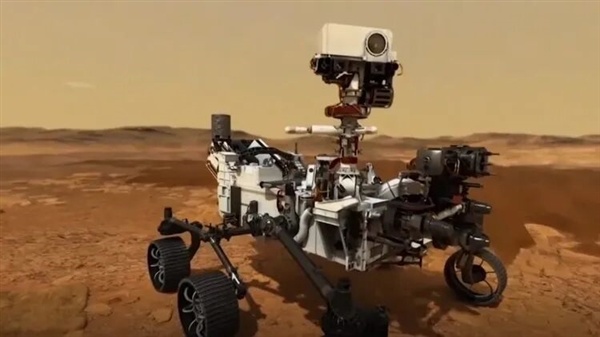
A rock the size of a thumb is currently quietly sealed in the container of the "Perseverance" rover on Mars. It is regarded by scientists as the closest discovery to "evidence of extraterrestrial life" that humans have ever made, but it may not be able to return to Earth for a long time.
This sample is called "Sapphire Canyon" and was drilled by "Perseverance" in July 2024 from an arrow-shaped rock called "Cheawa Falls".
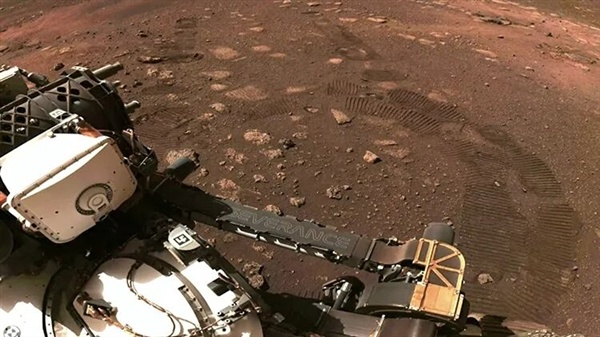
Since landing in Jezero Impact Crater in February 2021, the Mars rover has been searching for rocks that may retain traces of life in this ancient lake bed.
The reason why "Sapphire Canyon" has high hopes is that its surface is covered with spotted patterns. On Earth, such spots called "reduction spots" are often formed by microbial activity in the soil, and scientists infer that they may be "potential biological features."
However, the spots alone do not prove that life once existed on Mars. These lines may also originate from chemical or geological processes that do not contain life. The only way to make a judgment is to bring the rocks back to Earth and examine them one by one with the most sophisticated instruments in the laboratory. And this is the most difficult step to do at the moment.
NASA's originally planned "Mars Sample Return" plan was quite complex: it required a relay of multiple systems such as a lander, a sampling vehicle, an ascent vehicle, and the European Space Agency's orbiter, and it would not be possible to return the samples until 2031 at the earliest.
As the review progressed, the plan became more cumbersome, the budget soared to a maximum of $11 billion, and the expected return time was postponed to 2040.
Faced with budget cuts in multiple fiscal years, NASA finally announced the termination of the project in the fiscal year 2026 budget request, after having invested approximately US$2.5 billion in this project.
Director Isaacman blamed the project failure on the previous administration and bluntly stated that the mission "will cost more than an aircraft carrier." He also insisted that the Mars samples will eventually be retrieved. The only difference lies in whether it will be done by robots or astronauts, and the specific timetable.
Currently, the samples collected by Perseverance are still safely stored on Mars. NASA said it is exploring simpler and more economical alternative return options, including commercial or international cooperation.
On the other hand, China's "Tianwen-3" plan aims to return samples from Mars in 2031, and may become the first country to complete this mission.
Comments