
Abstract:
On November 2, according to Reuters, at the NASA Johnson Space Center in Houston, Texas, four crew members participating in a simulated Mars mission escaped from the cabin after 378 days of isolation. This experiment is designed to prepare for possible future Mars exploration missions carried out by NASA astronauts.
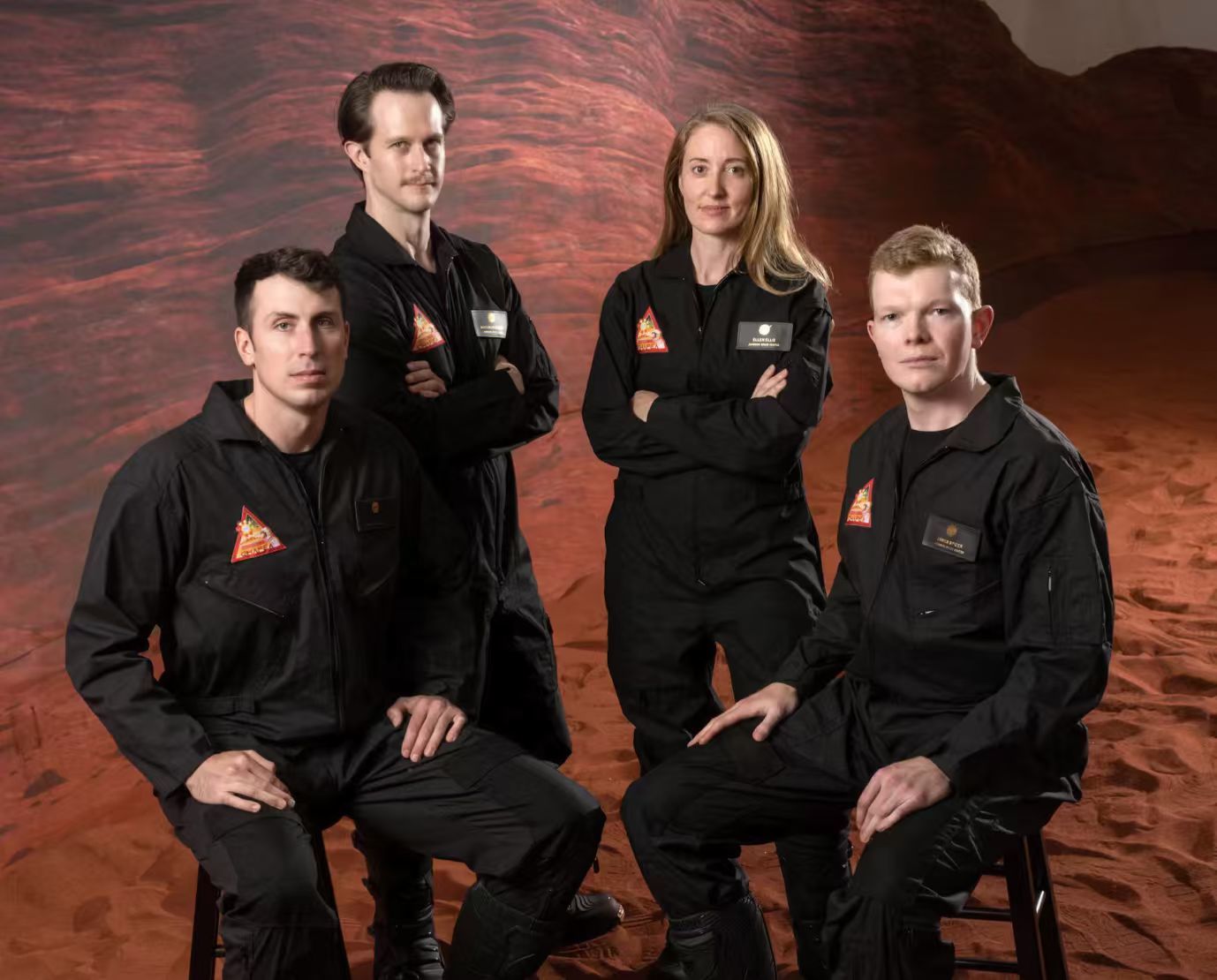
Four simulated astronauts
"This year has been really difficult. We, the simulated astronauts, voluntarily chose to live in isolation." said Ellen Ellis, one of the crew members and a medical officer participating in the "Crew Health and Performance Exploration Simulation" (CHAPEA) mission. On Saturday, she spoke at Johnson Space Center after she and three other teammates emerged from quarantine and emerged from the simulation cabin.
The four people entered the 1,700-square-foot (approximately 158 square meters) 3D printed habitat cabin on October 19, 2025, and performed tasks such as planting crops in simulated Martian soil, and communicated and interacted with NASA officials, during which the inherent delays in interplanetary communications were deliberately simulated.
NASA has previously used Mars rovers and orbiting spacecraft to explore Mars, and plans to launch a manned Mars mission as early as the 2030s. Prior to this, NASA also planned to return astronauts to the moon, which would be the first time humans have returned to the moon since 1972.
"Our window of opportunity to maintain America's leadership in space is shrinking," Ellis said. "Let's seize the initiative, lead with science, benefit our economy, and ensure that our career in space is passed on." She also mentioned the Trump administration's push to establish a space-related operational service academy and plans to build a lunar base.
The other three crew members are mission commander Ross Elder, science officer Matthew Montgomery and flight engineer James Spicer.
Speaking after coming out of quarantine, Elder said: "Going to Mars is risky. But as long as we continue to explore and understand, have a strong vision and leadership, creativity, perseverance, hard work attitude, and lay a solid foundation, then the goal of landing humans on Mars is not only feasible, but will be achieved."
The crew will undergo a post-mission evaluation in the next two weeks and conduct summary exchanges with NASA scientists. NASA stated that it hopes to use this experiment to understand how astronauts adapt to daily life schedules and various requirements when performing long-term missions outside the Earth, so as to ensure that they stay healthy, efficient, and stay connected with the outside world.
This is the second CHAPEA mission carried out by NASA. Previously, another crew of 4 people lived in isolation at the Johnson Space Center for 378 days from 2023 to 2024.
Comments