
Abstract:
Tomas Salvo, an aerospace engineering student at the Georgia Institute of Technology, built a jet-powered drone called "Reaper" in his dormitory. It reached a speed of 491 miles per hour (about 790 kilometers per hour), unofficially breaking the nine-year-old world record.
The previous speed record for a jet-powered remote-controlled aircraft was set by German pilot Niels Herbrich in Rothenburg on August 23, 2017, with a score of 465.544 mph (749.221 km/h), which has been certified by Guinness World Records. Although Salvo's 491 miles exceeds this number, it can only be regarded as an unofficial record because it has not gone through the official Guinness certification process.
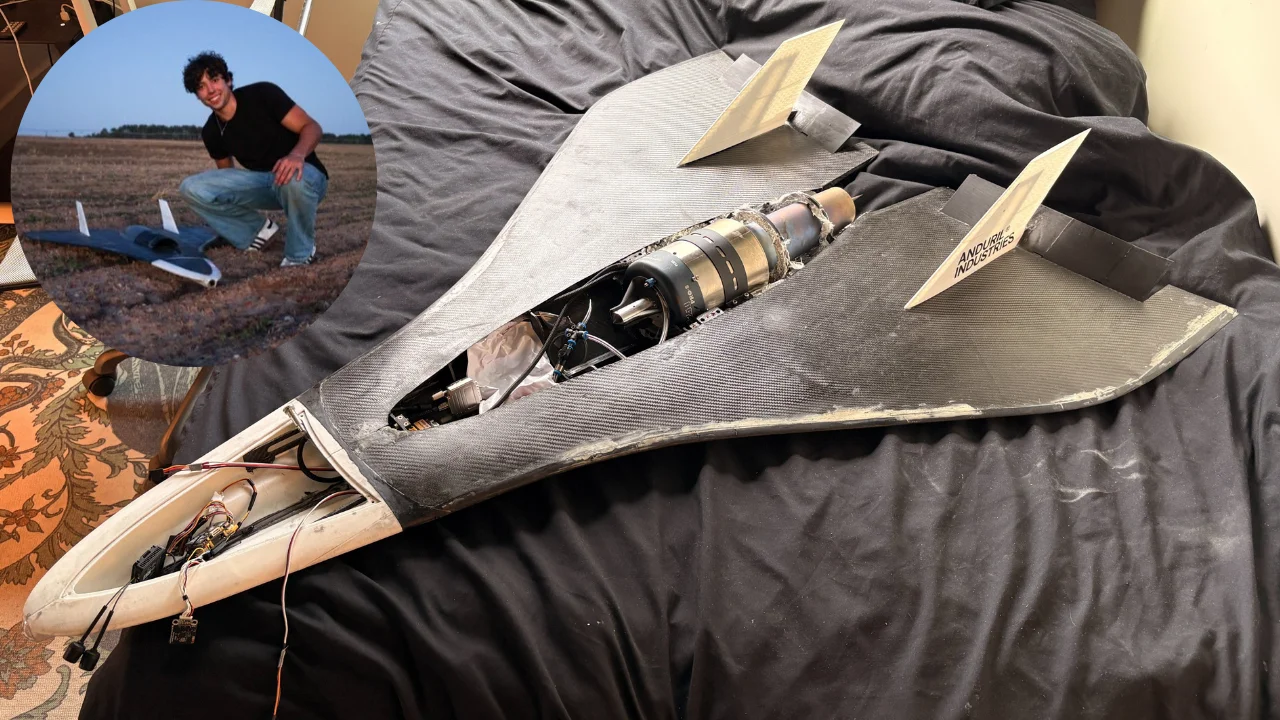
Reaper cost approximately US$13,000 and took 5 months to complete. The fuselage adopts a carbon fiber shell formed by a custom mold, and the interior is a laser-cut structure. It is equipped with a 250N turbojet engine, and the nozzle is replaced with a 3D printed titanium alloy part. This titanium alloy nozzle allows the engine to be installed further forward, optimizing the center of gravity layout and eliminating the front counterweight. The weight of the entire machine is controlled at 11 pounds (about 5 kilograms). Salvo designed the entire structure from scratch, and the assembly work was all completed in the dormitory.
In terms of performance data, Reaper can fly at a speed of 491 miles per hour while carrying a 1.2 kilogram payload. It can maintain this speed for 4 minutes with full fuel, climb to 6,500 feet in 20 seconds, and fly at full speed with a range of 31 miles.
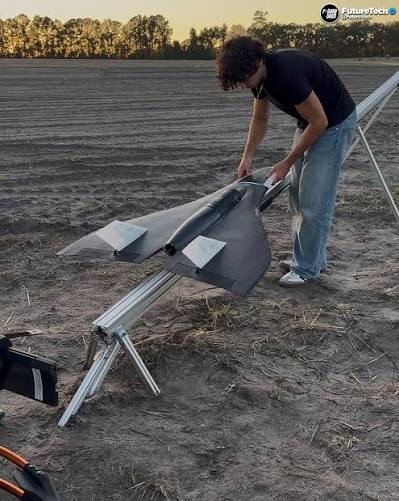
The ultimate goal of this project is to hit the Boom Prize of US$800,000 (equivalent to approximately RMB 5.32 million). The award was established by Boom Supersonic CEO Blake Scholl. The prize includes US$750,000 in cash and US$50,000 in Boom stock. Participants are required to use a remotely piloted air-breathing aircraft to break through Mach 1 (approximately 767 mph) in level flight or climb and maintain it for at least 5 seconds. After landing, they fly again the same day. The same aircraft completes two flights in one day. Entrants must be individuals or teams, receive no corporate, venture capital or government funding, and are reserved exclusively for garage players.
The current Reaper's 491 miles is still 276 miles away from the 767-mile sonic threshold, but it is already the closest entry in the United States.
Another strong contender is the Mach Initiative team’s Kingchaser, which is a 3D printed PETG material jet remote control aircraft equipped with a 300N engine, which is 50N larger than the Reaper. However, Kingchaser's first test flight only flew 273 miles due to insufficient acceleration distance on the field. The team estimates that it can reach 550 miles under ideal conditions. However, the Mach Initiative team is not a US citizen and is not eligible for the Boom Prize. It can only hit the official Guinness record.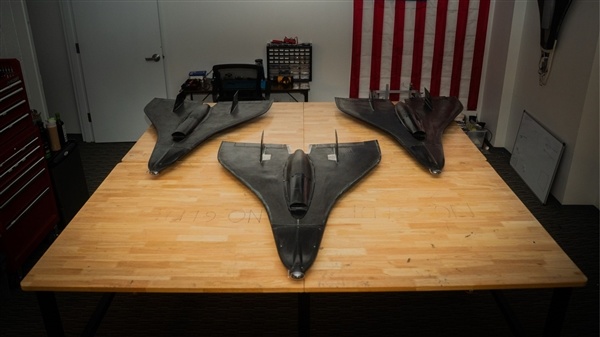
Comments