
Abstract:
For a long time, titanium has been widely used in aerospace, marine engineering and other fields due to its high strength, light weight and excellent corrosion resistance. However, because titanium is more than four times denser than water, people have never associated this metal with "floating." Now, a research team at Australia's Royal Melbourne Institute of Technology (RMIT University) has successfully created a titanium structure that can float on water and achieve long-term buoyancy while maintaining high strength.
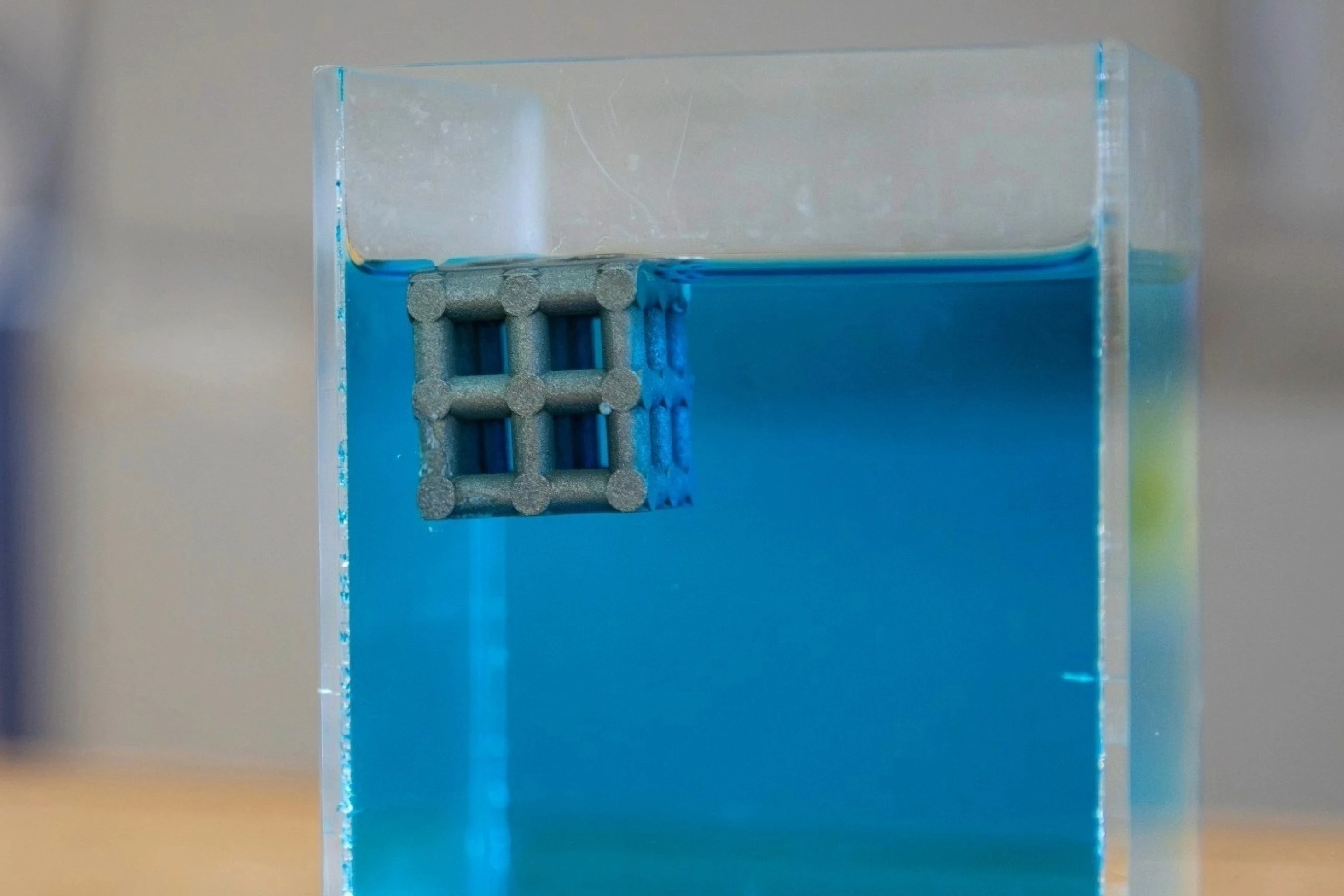
What the research team developed is a new structure called "buoyant metal-polymer open lattice metamaterial". Although titanium itself has a density of about 4.43 grams per cubic centimeter, which is much higher than the density of fresh water, which is about 1 gram per cubic centimeter, the researchers changed this characteristic through special structural design.
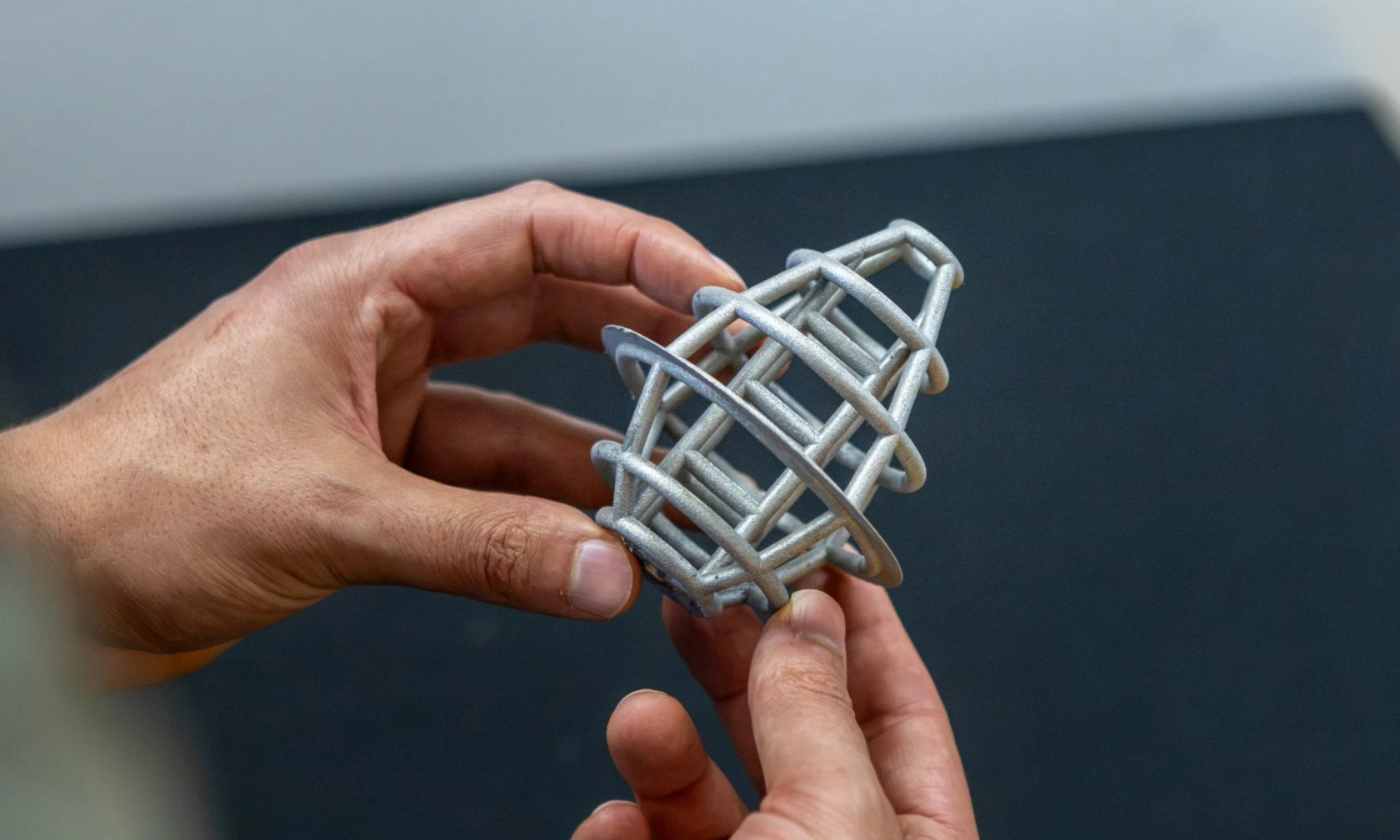
In order to achieve the floating effect, researchers used 3D printing technology to construct a Ti-6Al-4V titanium alloy lattice skeleton, and designed all the support beams that make up the lattice into hollow structures. They then filled the interiors of these hollow channels with lightweight polyurethane foam. The resulting composite structure not only retains the mechanical properties of titanium metal, but also achieves stable buoyancy.
During the experiment, the researchers found that even if the material cracked, the connection parts were broken, or even part of the lattice layer was damaged as a whole, it could still remain floating and did not sink into the water.
The reason why materials with both high strength and buoyancy are pursued is because there are a lot of practical needs in the field of marine engineering. Buoys, offshore monitoring sensors, offshore platforms, and various marine infrastructure must not only withstand the continuous impact of waves, but also resist seawater corrosion and continue to maintain their ability to work despite damage.
While currently widely used stainless steel and high-density plastics can meet some needs, they still have limitations in terms of strength, durability and long-term reliability. Titanium alloy itself has excellent corrosion resistance and fatigue resistance, so it has always been considered an ideal material. However, its natural high density limits its application in floating facilities.
Researchers said that humans in the past mainly relied on two methods to solve the problem of floating. One is to use the hollow structure of the ship to wrap a large amount of air, and the other is to add low-density materials such as foam inside the equipment to provide buoyancy. The rise of metal lattice structures in recent years provides new ideas for this problem.
Through 3D printing technology, only a small amount of metal can be used to construct a huge mesh structure, thereby achieving an extremely high strength-to-weight ratio. The overall density of some metal lattices is less than one-tenth that of water. However, such structures have long been impractical for use in marine environments because their open pores quickly fill with seawater, eventually causing them to sink.
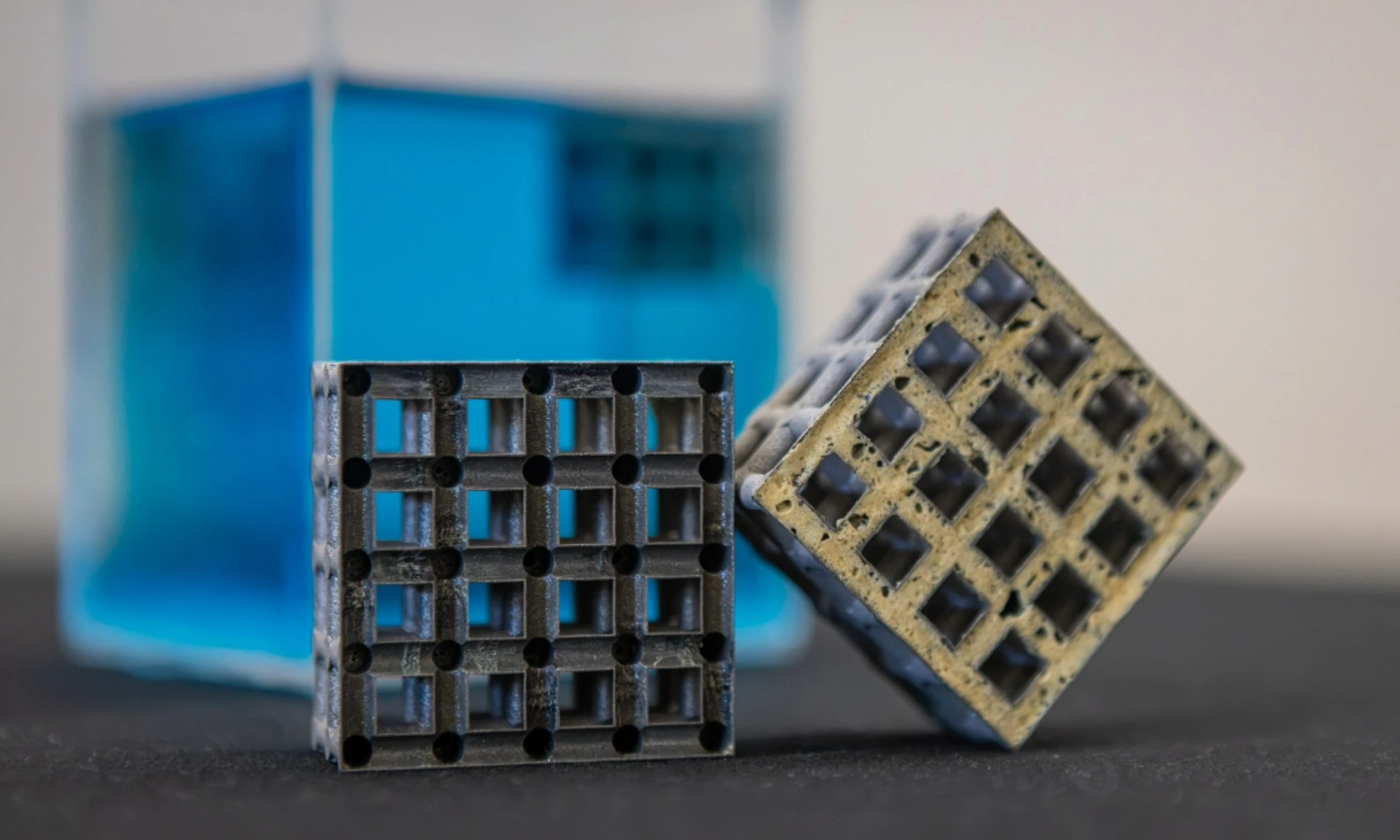
The research team’s breakthrough solved this problem. Instead of enclosing the entire lattice, they simply filled the inside of the hollow titanium support beams with foam. This not only allows seawater to freely pass through the lattice structure, but also ensures that the overall buoyancy exists for a long time.
To more accurately assess the floating ability of such structures, the researchers also proposed a new calculation metric - "skeleton density."
Traditional density calculations will include all open spaces inside the lattice into the volume range, but these spaces will actually be occupied by water and will not contribute to buoyancy. The new skeleton density concept only calculates the parts that can truly repel water, including titanium alloy walls and foam-filled areas.
According to this theory, as long as the density of the skeleton is lower than the density of the surrounding liquid, the entire structure can still float stably even if a large number of external openings allow water to pass through.
The performance test results are also interesting. Under the same overall density, the strength of this new buoyant titanium structure is about 70% higher than that of stainless steel or high-density polyethylene currently widely used in marine engineering.
The research team also conducted corrosion resistance tests using natural seawater from Port Phillip, Melbourne. The results showed that after the sample was soaked in seawater for two weeks, it only lost about 0.15% of its mass, while its strength decreased by less than 1%, demonstrating excellent adaptability to the marine environment.

In addition, the experimental samples floated continuously in fresh water for more than two months and remained stable for a long time. Researchers believe that this proves that the structure not only has theoretical floating capabilities, but also has potential for practical engineering applications.
The research team stated that this is the first time in the world that a metal mixed lattice metamaterial that can float for a long time has been achieved. In the future, this technology is expected to be applied to offshore buoys, ocean monitoring equipment, offshore energy facilities and various types of infrastructure deployed in the marine environment for a long time.
As 3D printing technology and advanced materials engineering continue to develop, this new type of "floating titanium" that combines high strength, corrosion resistance and sustained buoyancy is expected to open up new possibilities for future ocean engineering design.
Comments