
Abstract:
With the increasing number of satellites in low-Earth orbit, space debris is becoming an important issue threatening the safety of spacecraft. Facing an increasingly crowded orbital environment, satellite manufacturers and research institutions are developing new impact sensors, lighter protective armor, and shielding structures using new materials and 3D printing technology, hoping to allow satellites to maintain normal operations as much as possible even if they are hit by high-speed debris.
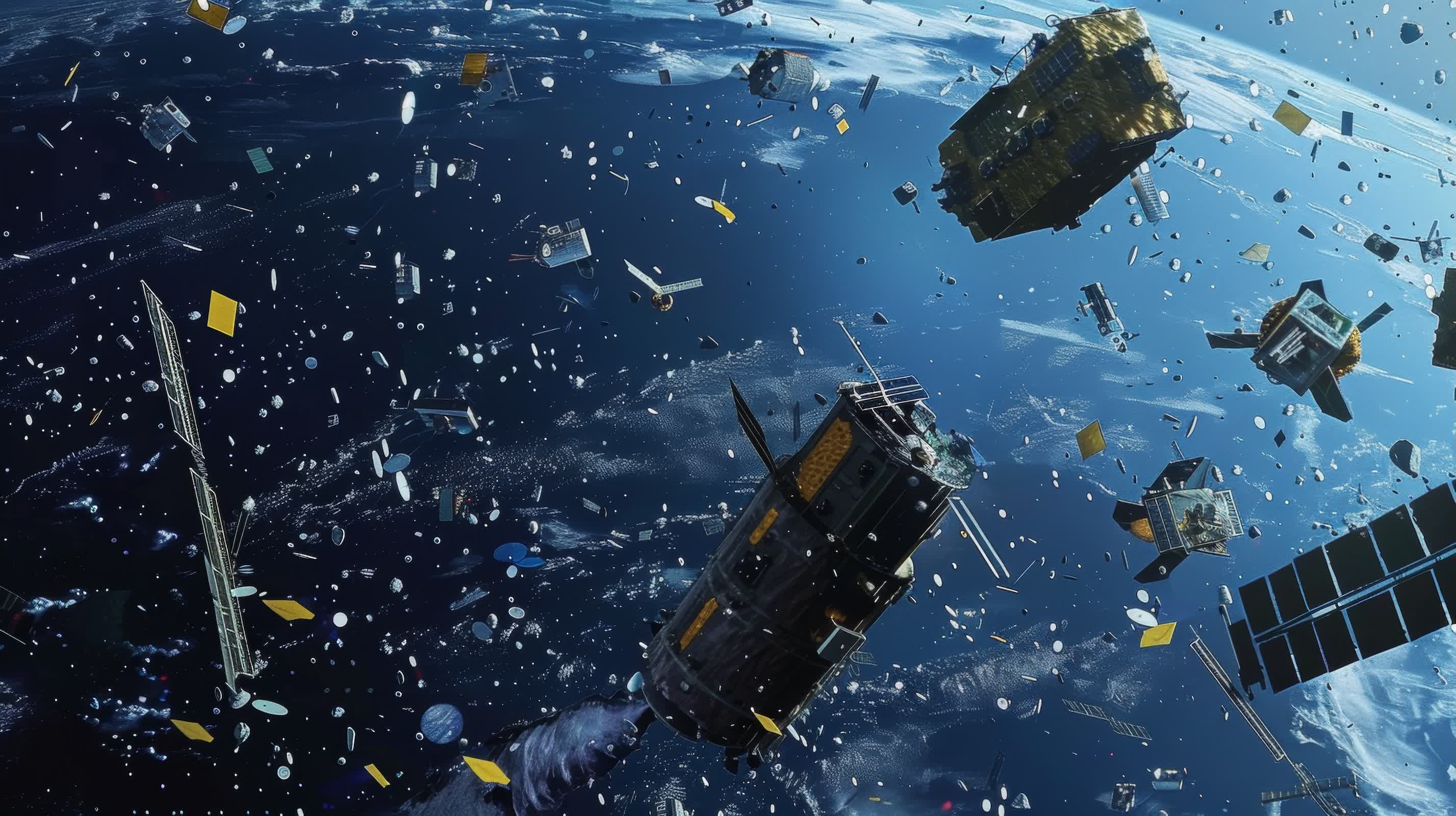
Currently, space debris in low Earth orbit can move at a speed of about 7 kilometers per second. At such speeds, even a small fragment can damage satellite electronics, penetrate external components, or even directly cause the entire satellite to fail. European Space Agency data shows that the number of man-made objects in Earth orbit has more than doubled since 2017, and the problem is worsening as commercial satellite constellations continue to be deployed.
Space debris is not just abandoned satellites and rocket debris, but also includes metal fragments, plastics, paint fragments and other tiny objects produced after collisions. Because they may be so small, many debris cannot be directly tracked by ground systems, but the destructive power produced by high-speed flight cannot be underestimated. The European Space Agency currently estimates that there are tens of thousands of trackable objects in orbit, and the actual number of debris larger than 1 centimeter that is large enough to cause catastrophic damage to a spacecraft may exceed 1.2 million.
In addition to trying to reduce the generation of new space debris, satellite manufacturers have also begun to consider another practical issue: how to make satellites more likely to "survive" when collisions cannot be avoided. Odin Space in Santa Ana, California, USA, has begun selling a sticky sensing strip installed on the surface of a satellite. It is equipped with a vibration sensor inside, which can record the vibration generated when the satellite is hit, and help operators determine the approximate size and impact force of the impact.
This technology promises to solve a long-standing problem in the small satellite industry. A 2021 study found that about one in five small satellites stops working within a year of launch, and the cause of about 60% of these failures is unclear. Debris strikes are one possible cause, but satellite failures often leave insufficient evidence for operators to determine what happened.
If satellites can record the timing, intensity and characteristics of impacts, manufacturers can correlate this data with satellite failures to better determine the actual threats in different orbital environments. This data can also be used to improve satellite structural design in the future, allowing engineers to strengthen the most common debris types and impact directions without simply increasing the protective weight of the entire satellite.
At present, aluminum is still one of the most common protective materials for spacecraft. Many satellites use aluminum panels and use aluminum honeycomb structures to strengthen the fuselage. This solution is lighter in weight and relatively mature in manufacturing, but has limited protection capabilities when faced with high-speed debris.
A more proven solution is the Whipple Shield. This structure adds a thin external buffer layer a few centimeters in front of the satellite's main shell. When high-speed debris hits the outer structure, it will first be broken and vaporized, and then the debris cloud formed will then hit the rear main protective layer, thereby reducing the impact energy that is ultimately transmitted to the interior of the spacecraft. The Whipple shield has proven to be very effective, but the problem is that it adds weight and takes up valuable internal space, two of the most sensitive parameters in satellite design.
Atomic-6 near Atlanta, USA, is developing an alternative called "Space Armor." The company did not disclose the specific ingredients of the composite protective bricks, but each protective brick is about the size of a palm, about 2.5 centimeters thick, and weighs roughly as much as an iPhone.
Tests of Atomic-6 have shown that the material can stop aluminum projectiles about the size of a pea traveling at 7.2 kilometers per second. Company CEO Trevor Smith said that unlike traditional protective structures, this material does not produce large amounts of high-speed fragments similar to those formed after the metal shield is broken, but can vaporize the impacting metal fragments and be absorbed by the protective material.
Meanwhile, other research teams are trying to reduce the weight of protective systems through a combination of different materials. For example, Kevlar fiber has been used in bulletproof equipment and has also been used in the protective structure of the International Space Station. Researchers are experimenting with combining Kevlar with Nextel fabric ceramics to create lighter-weight protective layers, especially for smaller, lower-cost satellites.
Researchers at the University of Padua in Italy have set their sights on 3D printing technology. They are using aluminum, Kevlar and carbon fiber reinforced resin to create experimental protective structures. The biggest advantage of 3D printing is its ability to design complex cavity structures inside materials. These cavities allow high-speed fragments to undergo multiple fragmentation and energy consumption during the process of penetrating the protective layer, thereby achieving a staged protection effect similar to the Whipple shield.
NASA is also testing a different idea, using aluminum foam as a protective material. There are a large number of tiny voids inside the aluminum foam. In tests, an aluminum foam protective layer just over 6 mm thick was able to provide similar protection to a traditional Whipple shield, which weighs about twice as much as the aluminum foam solution. This means that if the relevant technology matures further, satellite manufacturers may be able to improve protection capabilities without significantly increasing launch weight.
However, there is no "universal armor" that can be applied to all satellites. The debris environment in different orbits is not the same, and the composition, size and speed of the debris may vary. Engineers need to decide which materials and structures to use based on the specific orbital environment in which the satellite is located.
Rannveig Marie Faergestad, a protection designer at Thales Alenia Space, said that if more accurate orbital debris environment data can be obtained, engineers can select materials and design protective structures in a more targeted manner. In other words, the development of future satellite protection will not only rely on stronger materials, but also on a more accurate understanding of the orbital environment.
This is also where impact sensors may play an important role. In the past, satellite manufacturers have relied primarily on theoretical models to predict possible debris threats, while sensors installed on satellites can provide real-world impact data. By collecting this data over time, operators can gain a clearer understanding of the types of debris and impact risks satellites actually face, and further optimize the protection design of next-generation satellites.
As large satellite constellations continue to enter low Earth orbit, the space environment is changing from a relatively loose operating space in the past to an increasingly crowded infrastructure. The European Space Agency warns that even if it stops launching new spacecraft in the future, existing debris may continue to increase due to collisions and disintegration. Therefore, reducing the generation of new debris, improving satellite impact resistance, and proactively cleaning up existing space debris will become key measures to maintain long-term availability of low-Earth orbit.
For satellite manufacturers, the competition in the future is not just about making satellites lighter, cheaper, and easier to launch, but also how to make them survive longer in the increasingly dangerous orbital environment. Technologies such as sensors, new composite materials, aluminum foam, and 3D printed structures are gradually allowing satellites to shift from simply "avoiding" space debris to having stronger active sensing and passive protection capabilities.
Comments