
Abstract:
The U.S. Federal Aviation Administration (FAA)'s advanced air traffic and electric vertical takeoff and landing aircraft (eVTOL) integration pilot project was officially launched recently, and the first pilot project landed in Texas. Three electric vertical take-off and landing aircraft companies, Joby, Beta and Wisk, will conduct test flights in the coming week to simulate future air taxi routes between cities and regional airports. This is also the first time that the new aircraft pilot program promoted by the White House has entered the official flight stage.
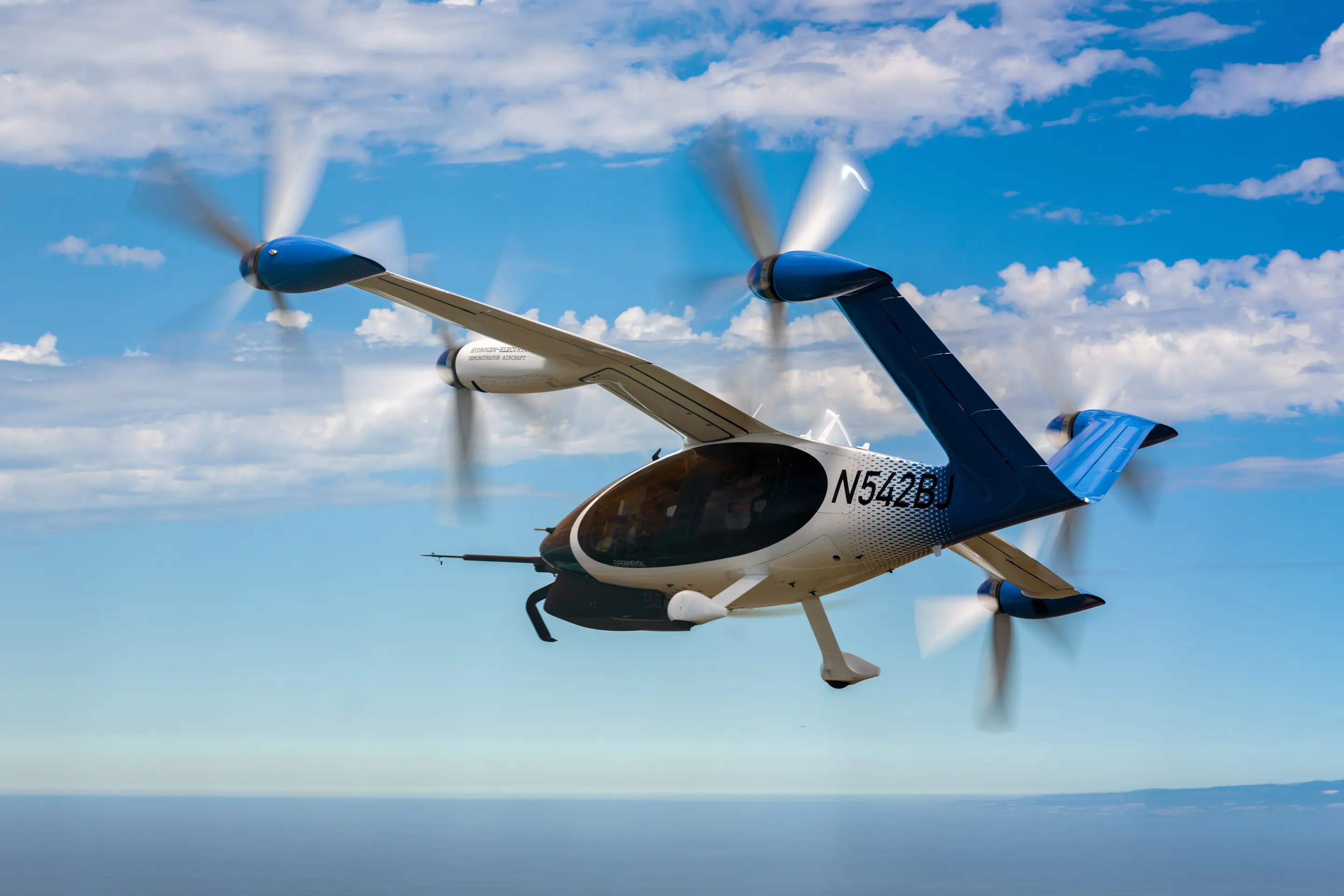
This project is part of the FAA's "Advanced Air Traffic and Electric Vertical Takeoff and Landing Vehicle Integration Pilot Program" (eIPP). Earlier this year, the FAA selected eight state-level projects from proposals submitted by states as the first public tests of electric, hybrid and autonomous aircraft in the United States. Texas became the first region to officially launch testing, with participating companies including Joby Aviation, Beta Technologies and Wisk Aero.
The test will take place over the next week, with participating companies flying missions according to planned routes to demonstrate future operating models connecting different cities and regional airports, including Dallas-Fort Worth International Airport. However, the flight will not carry passengers. Regulators are more concerned about whether the existing air traffic control system in Texas can effectively handle more flight tasks when this new type of aircraft increases airspace activities, as well as the problems that may arise when different types of aircraft operate at the same time.
For participating companies, this test flight is also of great significance. Any eVTOL that wants to carry out commercial passenger operations in the United States must first obtain a Type Certification from the FAA. This certification process can usually last several years, so the company hopes to accumulate actual operational data in advance through this pilot to prepare for subsequent certification work, and at the same time prove to the federal government that its aircraft has the technical foundation to enter the commercial market.
One of the important reasons why the White House launched this pilot program is that there is a significant time lag between traditional aviation regulatory procedures and the development speed of new aircraft. Since type certification itself takes a long time, if companies can only start large-scale testing after all the rules are finalized, the commercialization process may be further delayed. Therefore, eIPP allows companies to conduct actual flight testing under controlled conditions before the regulatory framework is fully determined.
The data generated by these test flights is not only used for the company's own certification. The U.S. government hopes to use the flight, airspace management and operational safety data collected by the project to provide a basis for formulating relevant regulations in the future. The White House previously stated that these data will help the government formulate new rules that can safely support the large-scale application of this new aviation technology, thereby establishing a clearer regulatory framework for future commercial operations.
eVTOL companies generally believe that this new type of aircraft is expected to change the mode of urban transportation. Compared with traditional helicopters, electric vertical take-off and landing aircraft can theoretically use electricity to drive multi-rotor or distributed propulsion systems to take off and land vertically without the need for traditional airport runways, so smaller take-off and landing facilities can be built around cities. Companies hope to use this method to connect city centers, airports and surrounding areas in the future, thereby shortening travel times caused by ground traffic congestion and eliminating some car traffic.
Jo Ben Bevelt, founder and CEO of Joby Aviation, said he is very excited about the potential of Texas to develop vertical takeoff and landing aviation, and believes that the local infrastructure, aviation professionals and partnerships are well-positioned to lead the U.S. aviation industry into the next stage.
In fact, some companies participating in this pilot have already conducted public flight tests before. Joby, for example, demonstrated a future route from Lower Manhattan to JFK International Airport earlier this year. However, this flight in Texas will be the first formal test conducted by these companies under the White House eIPP framework, so its significance is different from the verification flights conducted by the companies themselves.
Texas is not the end of this plan. The U.S. government has plans for other pilot projects in New York, Utah, Pennsylvania, Louisiana, Florida, North Carolina and New Mexico. As tests are carried out in different regions, regulatory authorities will be able to obtain richer operational data and compare the impact of different geographical environments, airport conditions and airspace structures on eVTOL operations.
However, there are still many obstacles for the U.S. electric aviation industry to achieve large-scale commercial operations. In addition to the long time required for regulatory certification itself, battery weight and energy density are still core technical issues restricting the development of eVTOL. Aircraft must carry enough batteries to ensure range and safety redundancy, but the weight of the batteries themselves limits payload and flight distance. In addition, the sensor solutions required for autonomous driving or assisted driving are still subject to technical and regulatory controversy.
Legal disputes within the industry may also affect industry development. Joby is currently in the middle of a lawsuit with rival Archer Aviation over allegations of trade secret theft and corporate espionage. Although these disputes are not directly related to the certification work of the aircraft itself, they reflect that competition in the eVTOL market is rapidly heating up, and various companies are hoping to seize the opportunity in this potential new aviation market.
The real significance of this Texas test flight is not that ordinary passengers can get on the electric air taxi immediately, but that for the first time, the US regulatory authorities have allowed enterprises, airports and air traffic control systems to jointly enter a real operating environment for verification without fully establishing final rules. If the pilot can be successfully completed, the relevant data will become an important basis for formulating regulations, promoting model certification, and establishing a commercial operation system in the future.
For the entire eVTOL industry, this means that electric air taxis are gradually entering the government-led actual operation verification stage from the enterprise experiment and demonstration stage. Whether it can truly become a part of urban transportation in the future depends on multiple factors such as battery technology, flight safety, noise, infrastructure construction, airspace management, and commercial operating costs. But at least starting from this Texas pilot, the United States has officially allowed this "flying car" that once mainly existed in concept demonstrations to enter the real aviation regulatory system.
Comments