
Abstract:
U.S. manufacturing is starting to add jobs again. But here’s the thing: To get these jobs, you may need a college degree. This shift has significant implications for the U.S. economy. High-skilled jobs generally pay more and are more profitable for employers, thereby driving economic growth. However, since these positions require higher education levels, companies may face a shortage of skilled labor if talent training programs cannot keep up with the pace of industrial development.
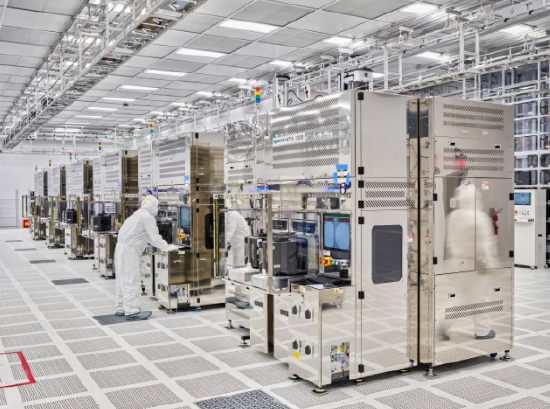
Swift Coat, which makes anti-reflective coated glass for satellites, plans to hire two to three workers by the end of the year for its factory in a dusty industrial park north of Phoenix. All positions require candidates to have an engineering degree.
Swift is a microcosm of broader changes in the U.S. manufacturing landscape. U.S. manufacturers have added 72,000 jobs since December, providing a glimmer of hope for a manufacturing job market that has been shrinking for years.
But today’s factory jobs are no longer what our ancestors were familiar with. Manufacturers are hiring more white-collar workers in management and business operations. At the same time, as factory automation continues to increase and production systems become more complex, blue-collar jobs increasingly require advanced skills training.
Binil Starly, dean of the School of Manufacturing Systems and Networks at Arizona State University, said: "The manufacturing industry returning to the United States today is different from the manufacturing industry in the 1970s, 1980s or 1990s. What you need is a new type of worker with technology as the core."
According to the U.S. Department of Labor, U.S. manufacturers will lose 244,000 jobs in so-called production jobs such as assemblers and machine operators between 2015 and 2025. During the same period, manufacturing companies added 358,000 jobs in management, business and financial operations.
One of the factors driving this change is automation. Robots have replaced many front-line workers, but not managers and engineers, so the latter two categories have increased their share of the manufacturing workforce.
Automation also makes factory work more complex. As companies increasingly rely on sensors and data to monitor machine operations and identify potential problems, they need data analysts to extract useful information from large amounts of data. Robots also require technicians with professional skills to maintain them.
"No matter what factory you walk into now, if you don't at least understand how these systems work, you can't do your job," Staley said.
Phoenix-based Swift uses highly sophisticated machinery to create anti-reflective coatings from tiny particles called nanomaterials. Such coatings could be used, among other things, to improve the efficiency of satellite solar panels.
Swift CEO Peter Firth said the startup currently has seven full-time employees, including a Ph.D. in physics, two masters in mechanical engineering, and a bachelor's degree in chemical engineering.
These employees run computer simulations, analyze data, design equipment and test coatings, among other tasks. Of the three shop technicians responsible for handling and inspecting samples, one has an associate's degree and the other has some college education. They also all have extensive work experience.
If everything was running perfectly, I could even call my mother in and ask her to do these tasks," Firth said. "But we hire people for these positions to prevent and detect problems. So what you really need are people who have the relevant experience and can complete these tasks effectively."
Swift is investing in a new, highly automated assembly line, where robots will load and unload samples and only one or two workers will be needed to monitor them.
This means that instead of five technicians, the company may be hiring one technician and two engineers, with the latter being paid more, Firth said.
"We're not necessarily spending less on people," he said.
Meanwhile, traditional industries such as furniture manufacturing are shrinking, while knowledge-intensive industries such as aerospace, computers, electrical equipment and heating and cooling systems have been adding jobs this year.
More than half of employees in the aircraft manufacturing industry have at least a bachelor's degree, according to the U.S. Census Bureau. A LinkedIn analysis shows that semiconductor manufacturers are more likely to recruit college graduates than other manufacturing companies.
W.E. Susan Houseman, an economist at the W.E. Upjohn Institute for Employment Research, said these high-skill jobs not only pay better, but also often involve less "tedious, mind-numbing repetitive work" than the assembly-line jobs of decades past.
But on the other hand, higher training requirements also mean higher employment thresholds.
The days when high school graduates could go directly into factories and find jobs are gradually becoming a thing of the past.
“My concern is people’s access to quality jobs,” said Susan Helper, an economist at Case Western Reserve University’s Weatherhead School of Management.
Businesses and industry groups are racing to expand training amid concerns about a shortage of skilled labor.
The manufacturing industry association SME employs about 125 people in its workforce development department and provides equipment such as drone programming kits and 3D printers to junior high schools in the hope of sparking students' interest in manufacturing jobs.
Jeannine Kunz, CEO of SME, said: "Today, the speed of technological development has exceeded the speed of talent cultivation. There is no area in the manufacturing industry that does not face the problem of talent shortage."
In Mesa, Arizona, the Arizona State University College of Manufacturing is training about 170 students to become equipment technicians at TSMC's rapidly expanding factory in Arizona. The college plans to increase the number of trainees to 800 next year.
The college, which was established five years ago, currently has about 370 students studying for bachelor's, master's and doctoral degrees.
Aspyr Workforce Innovation, a workforce development agency based in Columbus, Ohio, was founded a decade ago when manufacturing jobs were not a focus of its efforts.
But in recent years, as more and more advanced manufacturing companies have entered the local area, the situation has changed. Today, training local residents to engage in manufacturing jobs has become an important part of Aspyr's business.
The agency's chief executive, Lisa Patt-McDaniel, said current local training programs were still meeting the needs of businesses and job seekers, but that could change if the local industry continued to grow.
For example, chipmaker Intel has announced plans to build two factories east of Columbus that are expected to employ a combined 3,000 workers.
Pat McDaniel said: "We're doing pretty well right now. But ask me again in two years and see where we're going to be."
Comments