
Abstract:
NASA’s “Perseverance” Mars rover has set a new world record—it has traveled more miles on the surface of extraterrestrial bodies than any previous probe. On October 11, its odometer read 28.10 miles (45.22 kilometers), surpassing the previous record of 28.06 miles (45.16 kilometers) held by Opportunity. "Opportunity" conducted exploration on Mars from 2004 to 2018.
What is even more amazing is the speed with which Perseverance achieved this achievement. It took "Opportunity" nearly 15 years to complete this mileage, while "Perseverance" only took 5 and a half years. This milestone event occurred on its 2006th Martian day.
When the record was set, "Perseverance" was heading to a place called "Idubi" and passing through an area called "Sharm Lake" outside the western edge of Jezero Crater. Here lies one of the oldest surfaces ever surveyed by humans in the solar system. This landscape holds precious imprints of the planet's ancient past. Most similar rocks on Earth have disappeared as weathering erosion and plate tectonic movements continue to reshape the crust. Plate tectonics do not exist on Mars.
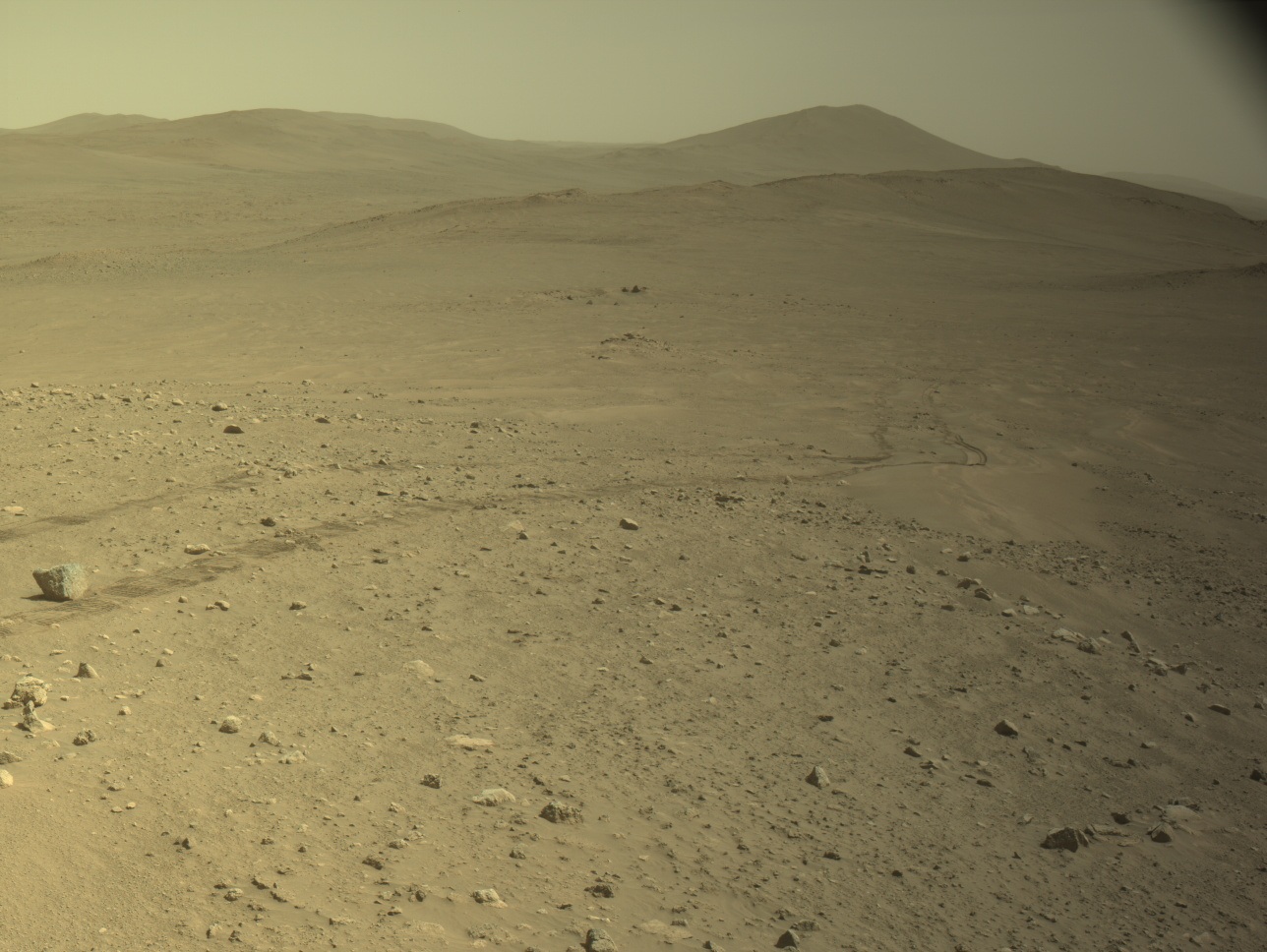
The "Perseverance" Mars rover has set a new record for traveling on extraterrestrial objects. Image source: NASA/JPL-Caltech
One of the core reasons why "Perseverance" can travel long distances is that it is equipped with an advanced autonomous driving system. The system is called AutoNav. Relying on it, the Mars rover can most of the time find its way on the surface of Mars independently without waiting for detailed driving instructions from the earth. During the journey, "Perseverance" continued to capture surrounding images, draw a three-dimensional map containing obstacle information, and plan a safe route on its own between the destinations selected by the ground controllers.
NASA engineers describe this process as "thinking as we go." The system allows the rover to travel at near top speeds, advancing up to 1,351 feet (412 meters) in a single Martian day. More than 90% of the "Perseverance" mileage relies on AutoNav to independently assess the terrain. In contrast, the early autonomous navigation systems of "Opportunity" and its twin detector "Spirit" can only independently evaluate about 5% of the driving sections.
If compared with NASA’s first Mars rover, Sojourner, the technological gap is even more obvious. This early robot only needs to analyze 20 measuring points to determine the safe route ahead, while "Perseverance" needs to analyze about 600,000 measuring points each time it surveys the surrounding terrain.
“I am deeply honored to be able to participate in the Perseverance project at a stage when this technology is maturing and long-distance autonomous driving has become routine operations.” Steven Lee, who is responsible for the Curiosity and Perseverance projects at NASA’s Jet Propulsion Laboratory, said, “The upper limit of the original mission plan was only 12.4 miles. Now we have far exceeded the goal. All mobile systems are operating normally, and the results of the extended life ground test are promising. We expect that Perseverance will continue to set this record for many years to come.”
NASA has approved the first mission extension of Perseverance. The extended mission will start in October, and the rover will continue to explore the edge of Jezero Crater until around the end of 2028.
Although "Perseverance" has set all extraterrestrial driving records, NASA engineers are still continuing to optimize its navigation capabilities.
"The Mars rover relied on its independent judgment of its route to break the record this time. With autonomous travel authority, Perseverance is now more capable of 'driving' than when it first landed, and our optimization has not stopped. The latest software allows it to reduce frequent turns, drive more smoothly and straightly, and check its position against the orbiting satellite map during the journey." said Mark Maimone, deputy director of robotic operations of "Perseverance".
Maimone said: "The next direction to conquer is sunlight. The navigation camera is easily interfered by strong glare, so when driving towards the sun, we usually stop it in the middle of the afternoon. If the rover can be able to identify and filter out this kind of imaging interference, all subsequent rover can have longer daily working hours."
The significance of this record is not limited to Mars. Previously, the mileage of "Perseverance" has surpassed two classic driving records on the moon. But for NASA, refreshing mileage is not the primary goal. Traveling farther and faster will allow scientists to study more geological structures, collect more types of rock samples, and piece together the environmental evolution history of Mars.
So far, "Perseverance" has collected a total of 29 rock and surface soil samples, and the samples come from many completely different environments. Next, "Perseverance" will explore south during the extended mission phase, and one of its future destinations is "Rainbow Falls."
As Perseverance continues to move forward, every extra mile it travels may help scientists further uncover the mystery of Mars' ancient environment and find out whether the red planet once had the conditions to breed life.
Comments