
Abstract:
The Amazon rainforest is experiencing widespread fires again. Satellite observations from the National Aeronautics and Space Administration (NASA) show that since September 2026, fire activity and smoke emissions have increased significantly in the central and eastern regions of the Brazilian Amazon. Scientists warn that the Amazon may be entering a longer and more destructive fire season due to a combination of El Niño-induced drought, global warming and human land development activities, and the worst may yet to come.
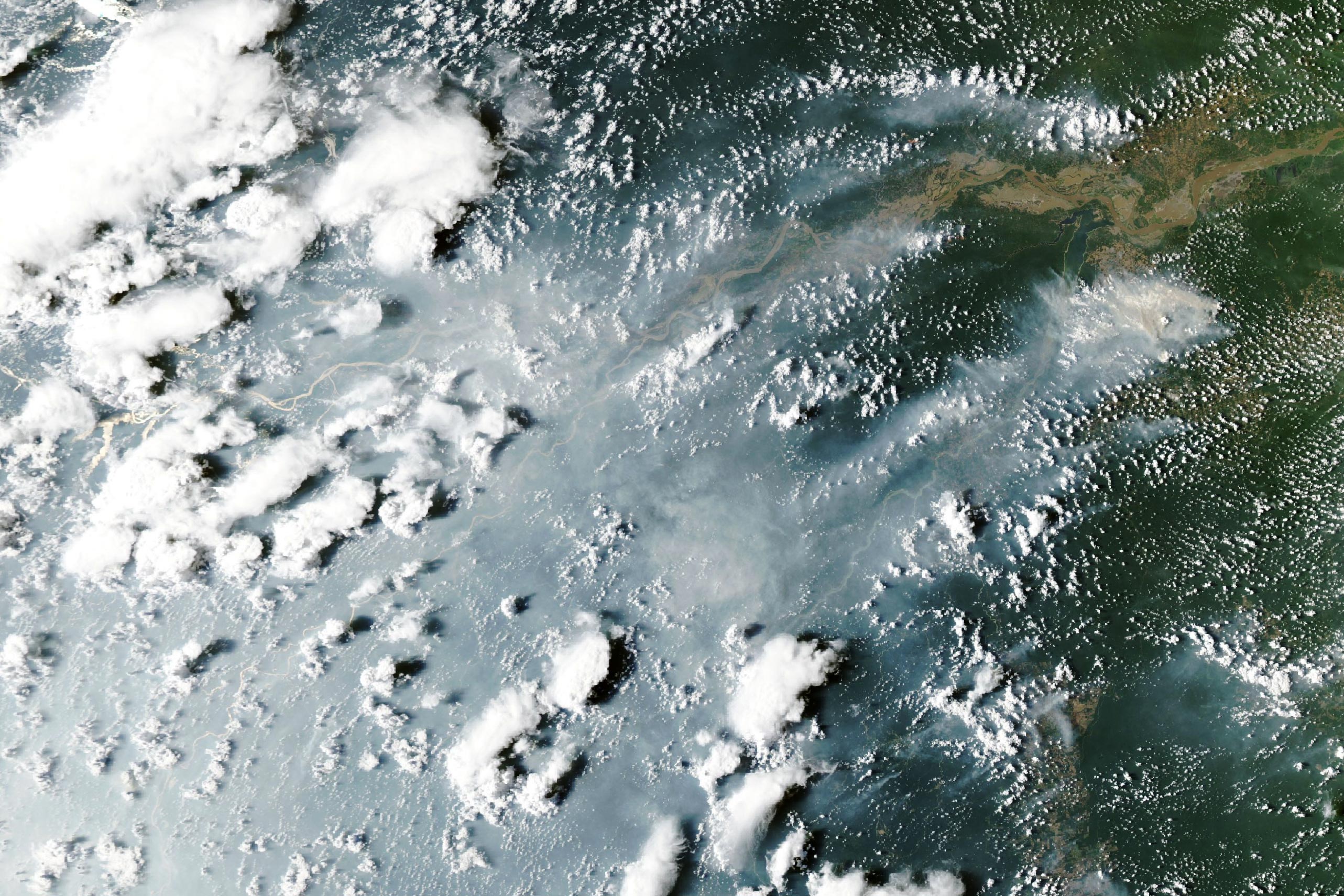
The Earth Observation Report released by NASA on October 15, 2026 pointed out that the current fires in the Amazon are not isolated incidents, but part of a larger round of fire activity in the tropics. Researchers believe that rainfall changes brought by El Niño are making multiple tropical areas dry and flammable in turn, and the risk of fires is expanding from equatorial Asia to the Amazon.
Douglas Morton, an Earth scientist at NASA's Goddard Space Flight Center, said that fire activity in the Amazon is significantly increasing, especially in the Brazilian states of Pará and Amazonas. Satellite observations found that fires and smoke emissions have increased significantly since September. The relevant areas extend from forests around transportation and commercial centers such as Manaus and Santarém to near the mouth of the Amazon River.
Morton described the process as the second falling domino in a series. He and his colleagues predict that the next round of fire activity may spread further north in November and December, affecting the Brazilian states of Roraima, northern Pará, and Amapá, as well as parts of Venezuela, Guyana, and Suriname. Subsequently, fire risk may also peak in August to September 2027 in parts of the southern Brazilian Amazon and Paraguay.
This means that even if the current fires are controlled in local areas, the Amazon basin may still face new fire pressure in the coming months. Researchers are particularly concerned that the current drought combined with forest degradation from past fires may make some forests more susceptible to burning than in the past.
On October 12, the Moderate Resolution Imaging Spectroradiometer (MODIS) on board NASA’s AquaSat satellite captured thick smoke from a large number of fires on both sides of the Amazon River. Smoke has enveloped Manaus, the capital of Amazonas state, and the air quality in this city of more than 2 million people has seriously deteriorated. Local monitoring data showed that the concentration of fine particulate matter PM2.5 once exceeded 135 micrograms per cubic meter, reaching the second worst level of the local air quality index.
Such serious air pollution not only affects visibility, but also poses a direct threat to human health. PM2.5 particles can penetrate deep into the lungs and increase the burden on the respiratory system. Local residents have reported symptoms such as difficulty breathing, some schools have been closed, and public events and children's sporting events have been canceled due to worsening air quality.
Reuters reported on October 14 that the Brazilian state of Amazonas recorded 1,679 fires in the first two weeks of October, an increase of 253% over the same period last year. At least 36 municipalities have declared a state of emergency. The Brazilian federal government and civil protection departments have dispatched aircraft and firefighting teams to the affected areas to put out fires, but continued drought and heavy smoke have made fire monitoring and fighting efforts more difficult.
More worryingly, traditional satellite monitoring systems may underestimate the actual number of fires.
Researchers at NASA's Goddard Space Flight Center are analyzing data from the Visible Infrared Imaging Radiometer Suite (VIIRS), looking for signals that do not meet the official fire database record threshold but may still represent real fires. The work is part of NASA's Operation Earth program, which aims to supplement information missing from existing fire monitoring systems.
Sean Cofield, an assistant research scientist at the University of Maryland who participated in the study, said that in the area around Santarem, the number of potential fire sites identified by the research team was about 40% more than the number of active fire sites published by NASA's Fire Information Resource Management System (FIRMS). Satellite analysis also shows that there may be 50 to 70 out-of-control fires burning in the Santarém area alone.
These additional identified fire sites are currently called "candidate fire sites," and the researchers plan to provide their locations to the MapBiomas project team. MapBiomas is a collaborative network of universities, NGOs and technology companies tracking fires and land-use changes in the Amazon over time. Including more potential fire sites in the analysis is expected to help researchers more fully assess the actual scale of forest fires.
Why do satellites miss fires? The key is that the flames are not always clearly visible from above the forest canopy.
Satellites typically identify fires by detecting the infrared radiation released by burning vegetation. However, the Amazon forest has a dense canopy, and thick smoke, clouds and tree foliage can obscure the heat signature produced by fires. Especially for low-intensity fires that spread slowly along the forest understory, their heat radiation can easily be obscured by the trees above.
So even if there are still a lot of fires burning on the ground, the number of fire spots recorded by satellites may suddenly decrease. Cofield pointed out that on some of the smokiest days, MODIS and VIIRS detected very few fire spots, and the situation on the ground clearly did not improve.
This means that relying solely on satellite fire spot counts to determine whether a fire has weakened may lead to erroneous conclusions. Researchers need to combine disparate satellite data, ground observations and land use information to get a more accurate picture of how fires are developing.
Behind this fire crisis is the result of the joint action of El Niño phenomenon, global warming and human activities.
El Niño will change the atmospheric circulation and rainfall distribution in the tropical Pacific and other regions, causing some areas to remain dry for several months. NASA researchers found that tropical fires in 2026 showed obvious regional transmission characteristics: areas near the equator such as Indonesia were first affected by drought and peatland fires, and then fire activity increased in the central and eastern Brazilian Amazon. In the future, fire risks may further expand to the north and south.
This is not the first time this pattern has appeared. Researchers studied similar phenomena after a strong El Niño event in 2015-2016 and observed a similar sequence of fire development in 2023. Now, the situation in 2026 shows similar characteristics again.
Peatland fires are particularly concerning. Peat is formed from plant residues that accumulate over time and stores large amounts of carbon. Once burning occurs, the flames can penetrate deep below the surface, continue to release smoke and greenhouse gases, and are often difficult to extinguish completely. Parts of Indonesia have been affected by drought, fires and heavy smoke since August 2026, and hundreds of houses were destroyed by fires in October.
As similar dry conditions spread into the Amazon, previously moist rainforests are becoming more susceptible to burning.
Data from the Brazilian National Meteorological Institute show that in August 2026, rainfall in Manaus was 95% lower than normal; rainfall in September was also 60% lower than normal. Typically, the Amazon rainforest's dry season peaks in August and September, followed by the rainy season in October, which can help suppress fires. This year, however, rains have been slow to provide sufficient relief, leaving the forest understory unusually dry.
Researchers point out that less than 1% of lightning strikes in the Brazilian Amazon cause fires. This means that the vast majority of current fires are related to human activities. Many fires do not begin as out-of-control forest fires, but as management fires set to clear brush from pastures, dispose of farm residue, or clear land.
Under normal conditions, these fires may burn only on cleared land. But when the forest is short of water for a long time and the vegetation is dry, the flames can easily exceed the original control range and spread to the surrounding rainforest. As the fire expands, dead branches, fallen leaves and understory vegetation on the ground become continuous burning fuel, making the fire more difficult to control.
When Brazilian Environment Minister João Paulo Capobianco took a flight to inspect the Amazon state, he discovered that fires also broke out inside the protected forest. Brazil's environment agency believes the fires may be linked to deliberate arson to clear land for deforestation and has promised to investigate.
The impact of fires on the Amazon ecosystem could last for years. Unlike many ecosystems that are adapted to periodic fires, most rainforest species are not equipped to cope with frequent burning. Fires damage trees, destroy habitats, and change the moisture and temperature environment within forests.
More seriously, forests that have suffered fires in the past may become even more vulnerable. Previously burned trees may have been damaged, if not completely dead, and the remaining vegetation is more likely to ignite during the next drought. NASA researchers are therefore worried that the intensity of fires in some areas this year may be greater than in the past.
Forest degradation may also create a vicious cycle. Tree loss reduces the ability of forests to transport water vapor to the atmosphere through transpiration, which in turn affects local cloud formation and rainfall. At the same time, forest fragmentation and continued land development will expose more areas to dry conditions, making it easier for fires to spread.
The Amazon rainforest is not only one of the most biologically diverse regions in the world, it is also an important carbon storage system. Forest burning releases carbon originally stored in vegetation and soil into the atmosphere, further exacerbating climate warming. Climate warming will increase the risk of high temperatures and drought in some areas, making forests more vulnerable to fires.
For areas currently burning, NASA researchers predict that fires near Manaus and Santarém may continue until December 2026 or January 2027, until seasonal rainfall returns. As for regions farther north and south, researchers believe there is still time to take preventive measures to reduce human-made fires and strengthen fire monitoring.
Morton specifically called for the use of fire sources to clear land as much as possible under the current strong influence of El Niño. He believes that if human-ignited fires get out of control, extreme drought will quickly turn them into large-scale forest fires.
NASA’s latest observations reveal two important features of the current Amazon fire crisis: on the one hand, fire activity is indeed on the rise; on the other hand, traditional satellite systems may also miss a considerable number of fire spots hidden under the tree canopy. As researchers further analyze the data, the actual size of the current fires may be larger than current statistics indicate.
Scientists predict that fire risks in the Amazon will continue in 2026, while drought and fire risks in the southern Amazon may increase again in 2027. The extent of ecological damage that fires will ultimately cause will depend on future rainfall conditions, human fire behavior, forest protection measures, and fire monitoring and suppression capabilities.
This crisis has shown once again that fires in the Amazon rainforest are not just short-term natural disasters during the dry season. Climate anomalies have made forests more flammable, and human activities have provided starting points for a large number of fire sources; while the damage left by past fires has made forests more vulnerable to the next round of burning. Even if some of the fires are temporarily extinguished, the Amazon could face similar threats repeatedly in the coming years as long as drought and land development pressures persist.
Comments