
Abstract:
The University of Nottingham research team found that the extremely small size of duckweed is not due to the drastic deletion of plant organs, but the basic structures of stems, leaves and other structures possessed by larger flowering plants have been compressed and fused into a leaf-like body a few millimeters wide during the evolutionary process. The findings, published in Current Biology, provide new anatomical evidence to explain how duckweed forms its minimalist shape
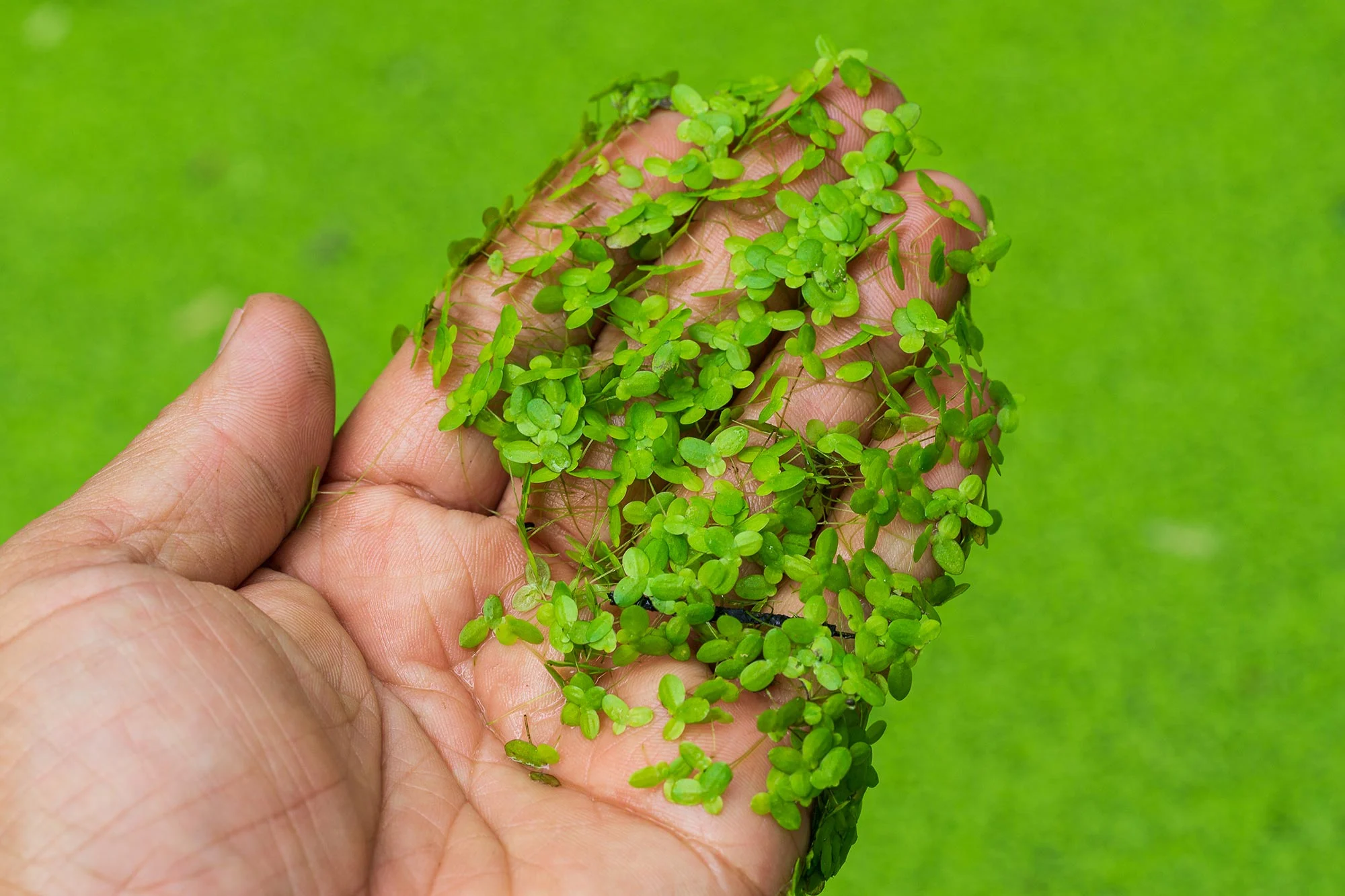
The researchers focused on the analysis of common duckweed (Lemna minor) and purple duckweed (Spirodela polyrhiza), and compared them with Araceae related plants such as calla and taro. The team used tissue clearing and confocal microscopy to reconstruct the three-dimensional structure of the duckweed population, and then conducted gene expression analysis on different parts. The study compared the expression patterns of more than 6,000 corresponding genes in four types of plants to determine whether each region of duckweed fronds is closer to the leaves, petioles or stems of ordinary plants.
The results show that duckweed looks like a simple green leaf, but actually contains tissue regions with different identities: the outer side of the frond is similar to the leaf tissue; the central node shows the characteristics of a stem and contains tissue that forms new shoots. Duckweed grows daughter fronds through this node, and the node, connecting tissue and main body of the frond are tightly compressed together. Researchers believe that the miniaturization of duckweed mainly comes from the fusion and compression of the stem and leaf structure, rather than discarding the basic parts of the plant one by one.

This study also explains why duckweed cannot simply be regarded as a "shrunken leaf." Its fronds are more like a composite organ composed of stems and leaves. Although its appearance is minimalist, it still retains the development area corresponding to larger plants. Duckweed belongs to the family Araceae, which has a wide range of plant sizes, ranging from the smallest flowering plants in the world to large herbaceous plants. Therefore, it provides a unique sample for studying how plants evolve to have tiny bodies
Duckweed grows quickly and has high protein content, so it is attracting attention in future food and space mission crop research. However, this paper studied how its body structure was formed and did not test yield, nutritional value or performance in space cultivation. The research team believes that clarifying the growth and development methods of duckweed can lay the foundation for subsequent screening and cultivating traits suitable for crops; further research is still needed before it can become a mature and large-scale food source
Comments