
Abstract:
Hidden in the world’s oceans is a long-undervalued ecological resource. The latest research shows that if large-scale restoration and protection of oyster reefs in suitable areas around the world are carried out, the ecological services provided by these submarine ecosystems may be worth US$12 trillion each year. These values come not only from the oysters themselves, but also from the ecological benefits of purifying seawater, removing pollutants, protecting coastlines, providing habitat for fish, and absorbing and storing carbon.
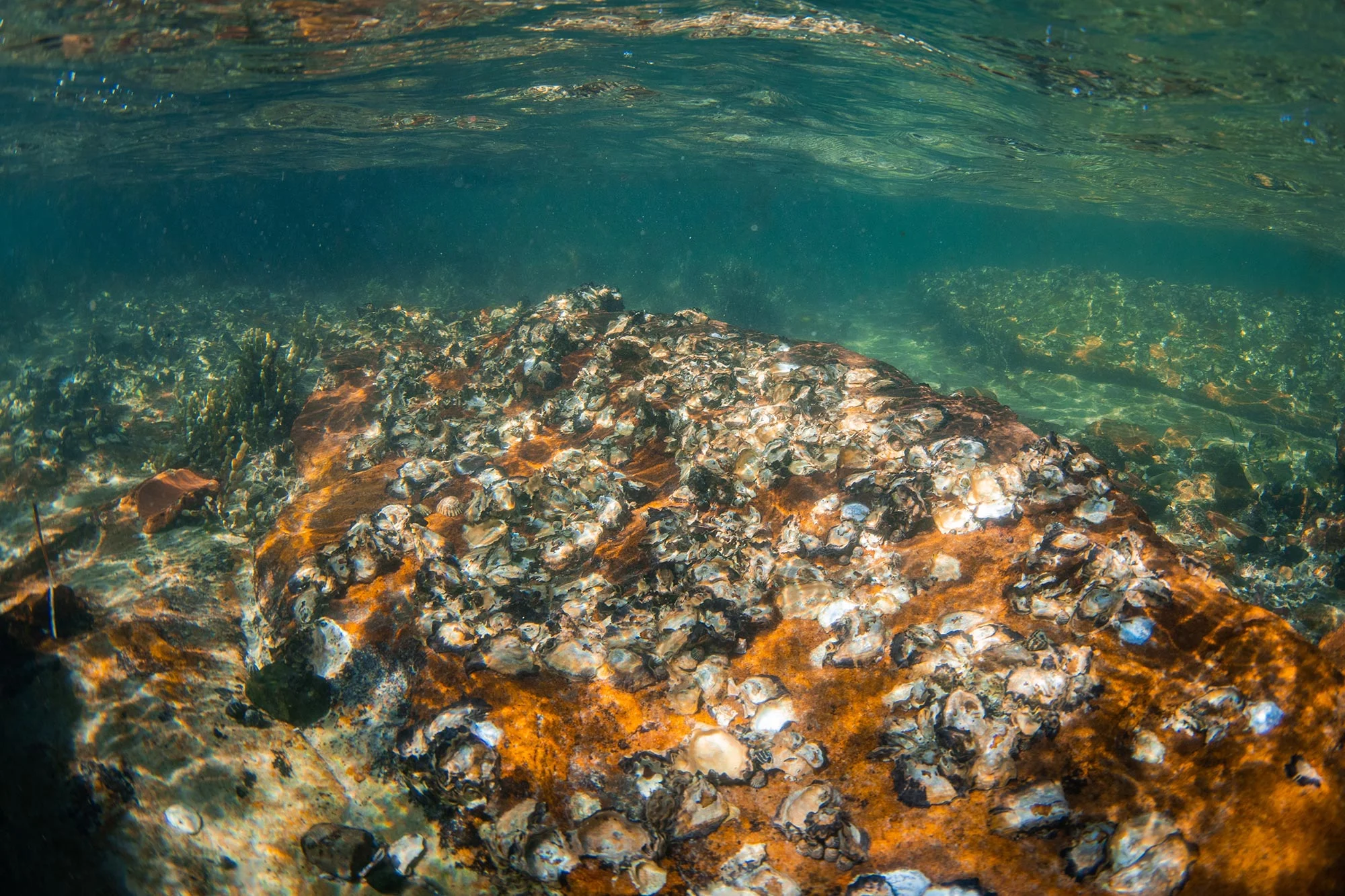
This research was conducted by Matteo Convertino, associate professor of Tsinghua University, and others. The paper was published in Frontiers in Marine Science on August 12, 2026. By analyzing global oyster reef distribution records and using machine learning to predict suitable habitats, the researchers assessed the potential ecological value of oyster reefs if fully restored and protected.
Oyster reefs are underwater ecological structures that are gradually formed by the attachment, aggregation, and formation of a large number of oysters. They are usually found in coastal areas such as bays, lagoons, estuaries and deltas, and can provide food, shelter and breeding environment for a variety of marine life.
However, this ecosystem has been severely damaged over the past century. Researchers estimate that about 85% of the world's oyster reefs have disappeared. Factors such as overfishing, coastal development, deteriorating water quality, and climate change have collectively led to the large-scale decline of oyster reefs, causing the loss of natural biological habitats in many coastal areas that originally had important ecological functions.
The value of oyster reefs goes far beyond providing seafood to humans. Oysters are filter feeders that filter seawater to obtain food, removing suspended particles from the water in the process. Reefs formed by large numbers of oysters also affect the circulation of nutrients in the water and help maintain the stability of coastal ecosystems.
At the same time, oyster reefs provide important habitat for fish, crustaceans and other invertebrates. Many marine species use oyster reefs to find food, hide from predators, or complete the reproduction process. Therefore, the restoration of oyster reefs will not only benefit the oysters themselves, but may also promote the recovery of surrounding marine biodiversity.
Oyster reefs also have an often overlooked function: protecting coastlines. Complex reefs formed by oysters can change local currents and weaken wave energy under certain conditions, thereby reducing the impact of waves on the coast. This natural protective effect may help coastal areas reduce the risk of erosion and provide a more stable environment for other coastal ecosystems.
The researchers wanted to find out how much overall value these ecosystems could create if the world's oceans suitable for growing oyster reefs were fully restored. To do this, they first collected thousands of oyster reef records with geographical location information from two public databases, and then used machine learning algorithms to analyze environmental conditions in different regions.
The model takes into account factors such as water temperature, salinity, light, nutrient concentrations and dissolved oxygen to predict where oyster reefs are likely to grow. The research team then compared these potential habitats to existing oyster reef distributions, identifying coastal areas where there is currently significant room for restoration.
The study ultimately identified ten countries with particularly outstanding oyster reef restoration potential: the United States, Australia, Chile, China, Japan, South Korea, Argentina, France, Germany and Italy.
These countries together have approximately 295,000 square kilometers of suitable oyster reef habitat, equivalent to approximately 114,000 square miles, or approximately 6% of these countries’ coastal areas. However, existing known oyster reefs only account for about 10% of the area of suitable habitat identified by the model. In other words, most of the potentially suitable areas identified by the study do not currently host known oyster reefs.
This means that there is still huge room for ecological restoration in coastal areas around the world. But being suitable for the growth of oyster reefs does not mean that a stable reef will be formed as long as the oysters are put into the sea. Actual restoration efforts still need to take into account local water quality, seabed environment, oyster population conditions, and other ecological conditions, while also avoiding pollution and human activities from destroying the newly formed habitat again.
To estimate the potential value of oyster reefs, the researchers used the metric Gross Ecosystem Product (GEP). It has certain similarities with the concept of gross domestic product, but it does not measure the output of goods and services in the traditional sense, but the comprehensive value provided by natural ecosystems for human well-being and environmental health.
According to researchers' estimates, if suitable areas in ten key countries are fully restored, the total value of ecosystem services provided by oyster reefs may reach US$12 trillion per year.
It should be emphasized that this figure is not oyster sales, nor the economic income directly obtained from the restoration project, but a comprehensive estimate of the value of multiple potential services of the ecosystem. It covers different contributions such as water purification, nutrient recycling, carbon sequestration, coastal protection and biological habitats.
The researchers also produced an estimate of the amount of water the oyster reefs might handle. In the United States, if all suitable areas identified by the model were occupied by effective oyster reef ecosystems, the amount of water filtered by the relevant reefs could reach 77.58 quadrillion liters per year.
The potential amount of filtered water in Australia and Chile is also staggering, at approximately 69.92 quadrillion liters and 46.58 quadrillion liters respectively. These numbers reflect model-derived potential ecological capabilities and do not necessarily mean that existing oyster reefs currently achieve the same scale of water filtration.
In addition to improving water quality, oyster reefs may also help combat climate change by absorbing and storing carbon. The study estimates that within the suitable areas analyzed, if oyster reefs were fully restored, they could sequester a total of 12.3 million tons of carbon per year.
However, the actual effectiveness of carbon sequestration will be affected by factors such as how fast the oysters grow, how carbon is stored in the ecosystem, and local environmental conditions. Therefore, this estimate should be understood as potential capacity rather than actual emissions reductions that have been fully verified.
For the United States, researchers estimate that the combined potential value of oyster reefs in nitrogen removal, carbon sequestration, and water purification is approximately $25.1 billion per year. This number is also based on the assumption of large-scale restoration, rather than the actual economic benefits that current oyster reefs already create each year.
The findings also reveal another problem facing oyster reef conservation efforts: Even if some areas of the sea are suitable for oysters, it does not mean that these areas are fully protected.
Only about 23% of the suitable habitats identified in the study are currently within marine protected areas. This means that much of the potential restoration area still lacks formal protection measures and may continue to be affected by coastal development, pollution and other anthropogenic activities in the future.
Researchers estimate that about 90% of suitable sites require varying degrees of ecological restoration, while about 80% of areas require conservation measures to reduce further damage. The two estimates reflect needs at different levels: On the one hand, proactive restoration of degraded or lost oyster reefs is needed in many places; on the other, even suitable habitats that have not been severely damaged need to be protected to avoid future loss of recovery potential.
This means that oyster reef protection cannot rely solely on artificial placement of oysters or local restoration projects. Effective long-term solutions will also require improving water quality, controlling pollution, properly managing fishing activities, and establishing ecological conditions that can sustain continued reproduction of oyster populations.
Climate change may also affect the viability of these plans. As sea temperatures rise and other environmental conditions change, some existing oyster reefs may face greater pressure to survive. Even if local habitat is suitable for oysters today, it may not be able to maintain the same ecological functions in the future.
The researchers therefore point out that global warming may reduce the quality of oyster reef habitats in many areas, making the ecological services they can actually provide lower than the potential levels estimated by current models.
However, the effects of climate change are not exactly the same in different regions. In some oceans, changes in temperature and other environmental conditions may also make new areas more suitable for oyster growth and spread. Researchers believe that parts of countries such as Australia, Indonesia, South Korea, Japan and France may see the expansion of suitable oyster reef habitat in the future.
But that doesn’t mean climate change is good for oyster reefs overall. Even if environmental conditions in some areas become more suitable for oyster growth, other areas may still be damaged by temperature changes and ecological stress. The future distribution of oyster reefs and their overall ecological value will depend on the combined effects of multiple environmental factors.
The research team also reminded that there is great uncertainty in the estimate of US$12 trillion. Because it is impossible to directly measure ecological services at every potential oyster reef site worldwide, the study used globally averaged parameters for extrapolation. Oyster populations, environmental conditions and ecological restoration success rates vary across regions, so actual value generated may differ from model results.
Additionally, large-scale restoration of oyster reefs itself will require investments in capital, technology and long-term management resources. Some areas may need to improve water quality or restore the seabed environment before creating conditions for oysters to re-establish stable populations. Even after the initial restoration is completed, subsequent protection and monitoring work remains indispensable.
Nevertheless, this research still provides an important perspective for coastal ecological protection: natural ecosystems are not just seen as environmental resources that require investment in maintenance, but they themselves continue to provide services of real value. By restoring oyster reefs, humans have the potential to simultaneously improve water quality, protect coasts, support fisheries resources, and increase the resilience of some coastal areas to environmental change.
Over the past century, large numbers of oyster reefs have been lost around the world, a loss that is difficult to measure solely in terms of reduced oyster production. Their original functions of water filtration, coastal protection and biological habitat have also been affected as the reefs disappear.
Now, researchers hope that more accurate habitat predictions will help countries identify areas most worthy of priority restoration and protection. If these potential habitats can be effectively managed, oyster reefs have a chance to become an important part of coastal ecosystems again.
This study does not mean that the world will reap $12 trillion in immediate economic benefits simply by restoring oyster reefs. What it does reveal is that there is still huge potential for restoration in coastal areas where many oyster reefs have been lost and their ecological functions are not fully exploited. How this potential is translated into lasting ecological benefits will depend on future conservation policies, restoration technologies, and whether countries can continue to maintain these fragile marine ecosystems.
Comments