
Abstract:
According to the official website of the National Aeronautics and Space Administration (NASA) and the official social media of IBM Research, the two institutions released and open sourced the first lunar model. The model weights and code are open to researchers around the world for downloading, fine-tuning and testing. This is one of the first publicly available intelligent analysis tools specifically for lunar science. The goal is to transform decades of scattered lunar observation data into reusable analysis tools for crater mapping, volcanic landform identification, and polar water ice potential assessment.
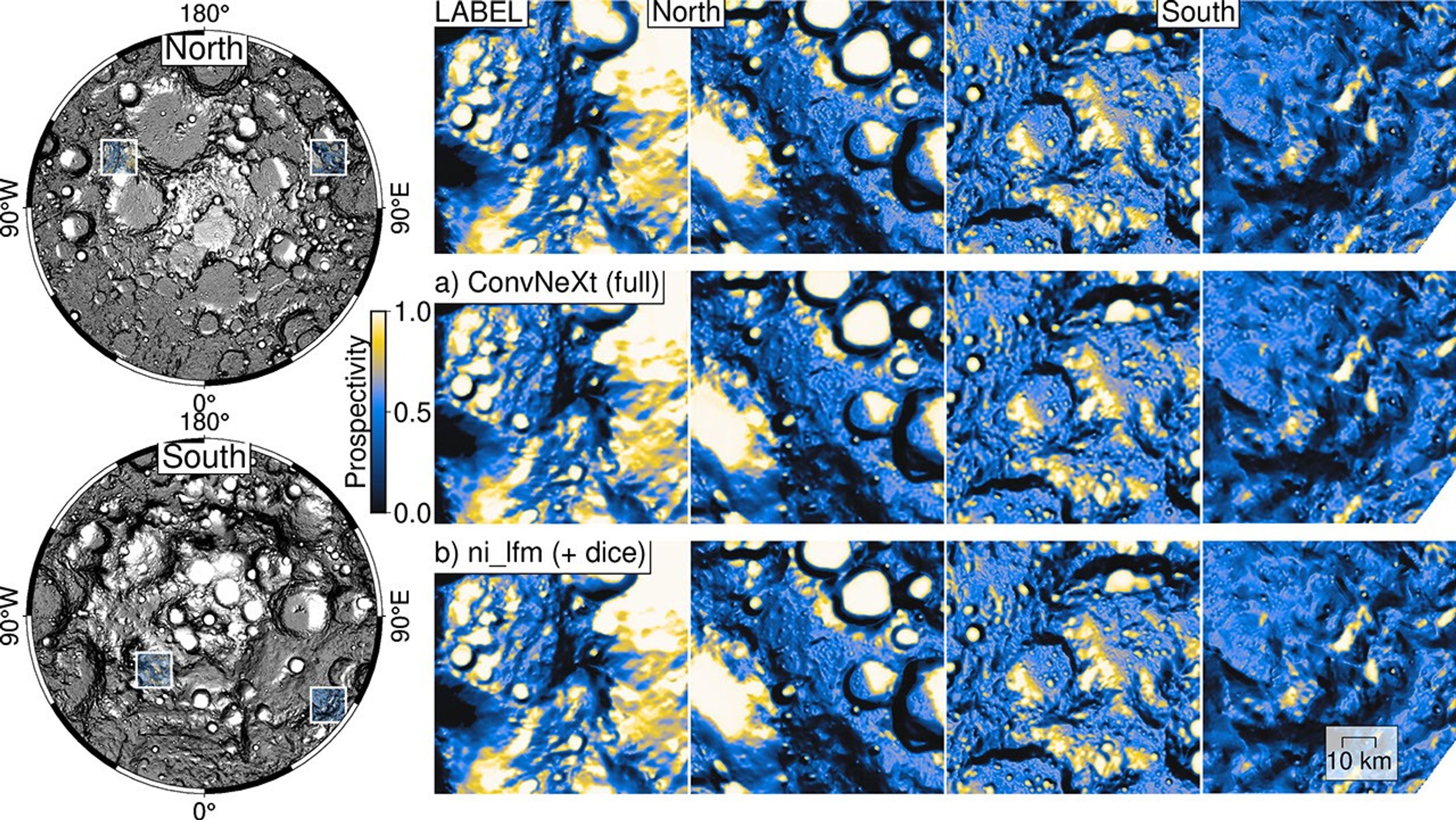
The "NASA-IBM model" reproduces the pattern of lunar ice detection (from blue to yellow), and the model retains many of the fine exploration patterns in the reference data. Image source: NASA/IBM Research Institute
Lunar research has long faced the contradiction of large amounts of data and difficulty in integration. The training data for this model is mainly from NASA's Lunar Reconnaissance Orbiter. LRO has been in orbit for about 17 years, covering most of the lunar surface, and its data scale exceeds NASA's other planetary missions combined. The model uses approximately 2 million lunar image slices, including more than 1 million 1-meter resolution narrow-angle camera images and nearly 964,000 100-meter resolution multispectral images, and integrates terrain and remote sensing data from GRAIL gravity, Lunar Prospector, and Japan's JAXA SELENE missions. In conjunction with the released data set, 9 instruments, 4 tasks, and more than 30 spatially aligned data layers are integrated to solve the problem that different resolutions and loads are difficult to call in a unified manner.
This model is of great significance to lunar resource exploration. The temperature of the moon's permanent shadow craters is extremely low and can preserve water ice for millions of years, making it difficult to observe directly with optical means. The model integrates multi-resolution and multi-modal observations to estimate the occurrence and stability of polar ice, helping researchers narrow the scope of field verification. Water ice is not only related to the drinking water and breathing oxygen of the lunar base, but can also produce oxygen and hydrogen through electrolysis to provide propellant raw materials for deep space missions. This is the starting point for long-term human missions to the moon and subsequent missions to Mars.
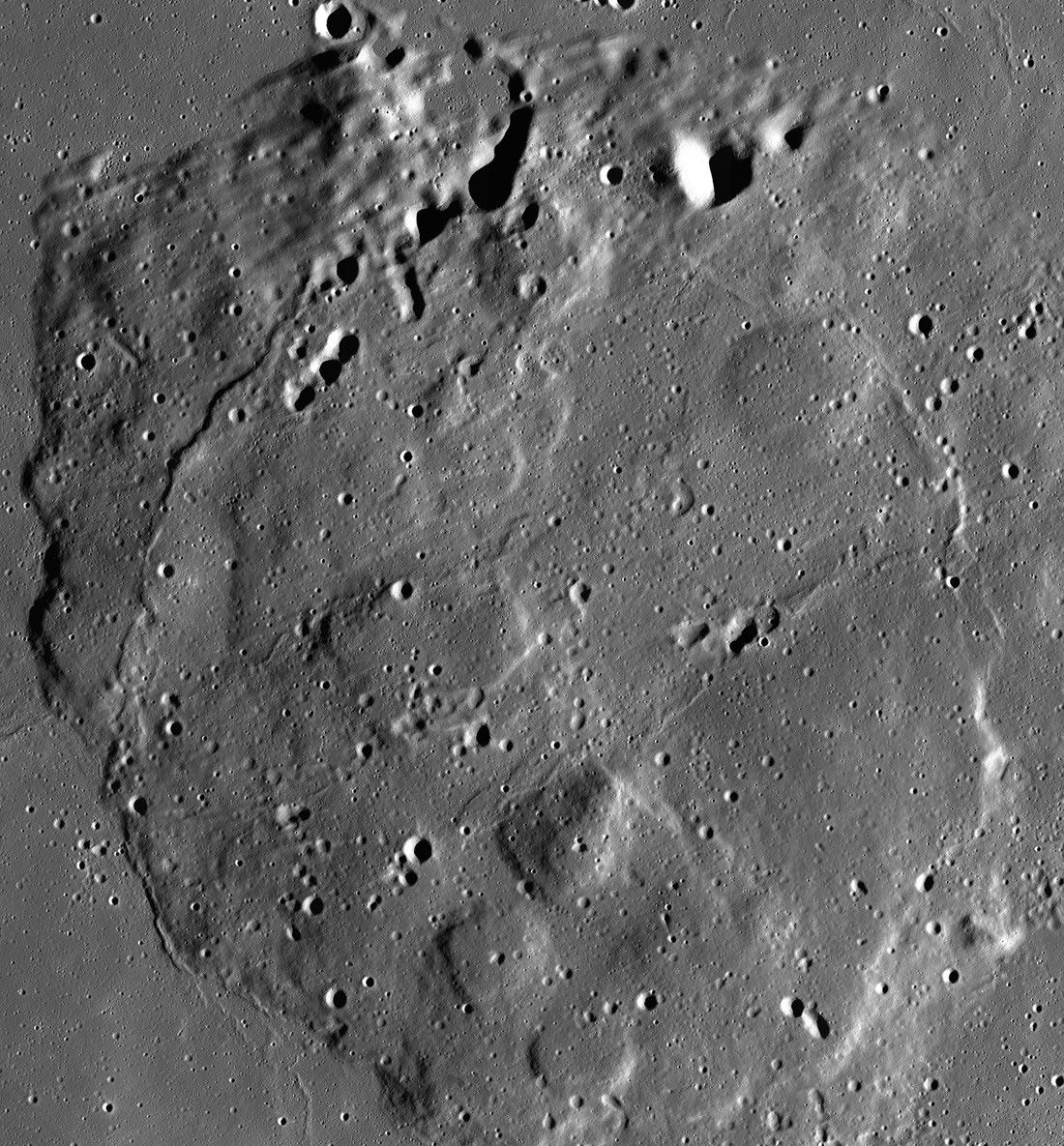
At the same time, in terms of safe landing of future spacecraft and geological understanding of landing sites, the new model can assist in the rapid extraction and classification of craters, reducing the workload of manual interpretation.
This model is incorporated into the "Scientific Artificial Intelligence" strategy of NASA's Chief Scientific Data Office and is collaboratively completed by multiple centers, universities, and research institutes. For the academic community, a unified and reproducible lunar data set is far more important than a single algorithm indicator. Future lunar exploration missions will continue to produce new images, and researchers can fine-tune the same model to connect observations from multiple missions and time periods into a consistent understanding, rather than reinventing the wheel each time.
Comments