
Abstract:
The latest research from the University of California, Riverside, shows that affluent communities located on hillsides, canyons, and at the interface between urban and wild areas have a significantly higher probability of encountering urban fires than ordinary communities. However, these areas also tend to recover more quickly after fires, while low-income communities are more susceptible to the long-term environmental impacts of fires.
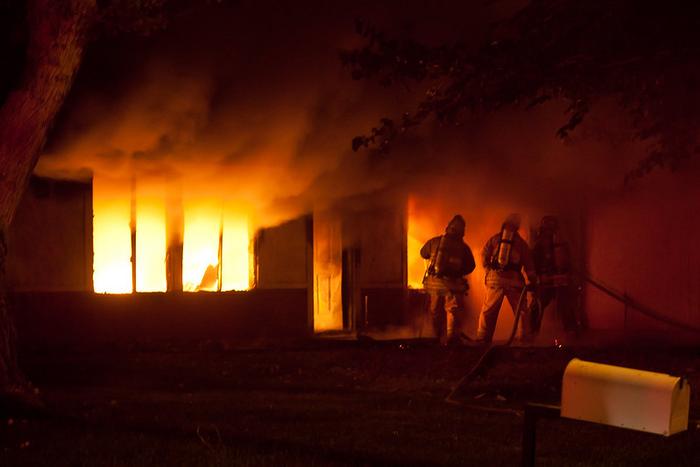
Unlike previous studies that mainly focused on forest fires or a single major disaster event, this study published in "NPJ Urban Sustainability" systematically analyzed 141 urban fire events in the United States since 1984. The research team combined fire records with population distribution, urban development, climate conditions and socioeconomic data to try to more fully understand the causes of urban fires and their long-term consequences.
Research results show that urban fire risks are not evenly distributed, but have obvious socio-spatial characteristics. Researchers found that these fires have long been concentrated in suburban, high-income, high-homeownership neighborhoods, a pattern that has changed little fundamentally over the past four decades.
Statistics show that communities with significantly higher household income than the average are approximately 30% more likely to experience fires. Researchers believe this is related to the fact that wealthy communities tend to be built on hillsides, canyons, or close to areas with natural vegetation. These areas have more beautiful landscapes but are also more vulnerable to fire threats.
The research also revealed a new finding of great reference value to urban planners. The key factor in increased fire risk is not long-lasting drought, but rather a short-term, high-intensity environmental drying process that occurs in the six months preceding a fire.
This means that for agencies responsible for emergency management and urban safety, monitoring moisture changes on a three- to six-month scale may be more useful for identifying periods of high fire risk than traditional long-term drought assessments, the researchers say.
After a fire, the recovery process is often much slower than outsiders imagine. The research team assessed whether communities could return to pre-disaster levels by tracking vegetation recovery and surface temperature changes over five years after the fire.
The results showed that most areas did not recover within five years. About 78% of severely affected areas have not returned to the pre-fire temperature range five years later, and about 73% of areas have not returned to their original greening levels.
Overall, urban areas that experience fires tend to become hotter and have significantly less green vegetation cover, and these effects can last for years.
Income levels also play an important role in the recovery process. Studies show that higher-income neighborhoods return to pre-disaster temperature levels significantly faster and experience relatively less loss of greenery. In contrast, low-income communities recover more slowly and are more likely to face long-term environmental degradation.
The research team believes that understanding urban fire problems cannot only start from the natural environment, but must also consider the demographic structure and social characteristics of the community in depth.
Further analysis found that there are significant differences between different regions. Across the country, neighborhoods with a higher proportion of white residents face lower fire risks overall. But in California and drier areas of the American West, the relationship is reversed, with communities with more white and black residents more likely to be affected by fires.
The study also found that there are obvious differences in the development trends of urban fires and wild fires. Over the past few decades, wildfires in the United States have continued to expand in size and frequency, but the number of fires entering urban areas has not shown a clear growth trend.
However, although the number of fires has not increased significantly, the area of burned urban land has continued to expand. The researchers noted that this increase was driven primarily by a handful of extreme fire years. In other words, while the number of urban fires is changing little, the damage caused by extreme years is becoming increasingly severe.
The research team believes that these findings may affect urban fire prevention planning, risk assessment and decision-making in the insurance industry in the future. However, the study itself did not directly analyze the insurance market, so the relevant impacts still require further research and verification.
The research leader said that for a long time, people have been accustomed to treating fires that enter cities as simple extensions of wildfires, but this is not the case. Urban fires have unique exposure patterns and recovery logics that are often shaped by urban planning, residential structure, and resource allocation.
Researchers emphasize that urban fires are not primarily determined by climate conditions like wildfires. As the intensity of urban fires continues to increase, the importance of social factors has become increasingly prominent. If we want to effectively deal with the increasing urban fire risk in the future, it is no longer enough to just focus on forests and natural environments. We must also have a deep understanding of the social structure within cities and the resource differences that exist between different communities.
Comments