
Abstract:
The Nancy Grace Roman Space Telescope developed by NASA has demonstrated optical performance beyond expectations after completing a series of on-orbit tests and precise calibration. By making minor adjustments to the telescope's optical system, the engineering team made the imaging performance of its main scientific instrument nearly 30% higher than originally expected.
This means that when the Roman Telescope conducts large-scale cosmic surveys in the future, it is expected to capture clearer images than the design indicators, providing more powerful observation tools for the study of dark matter, dark energy, and exoplanets.
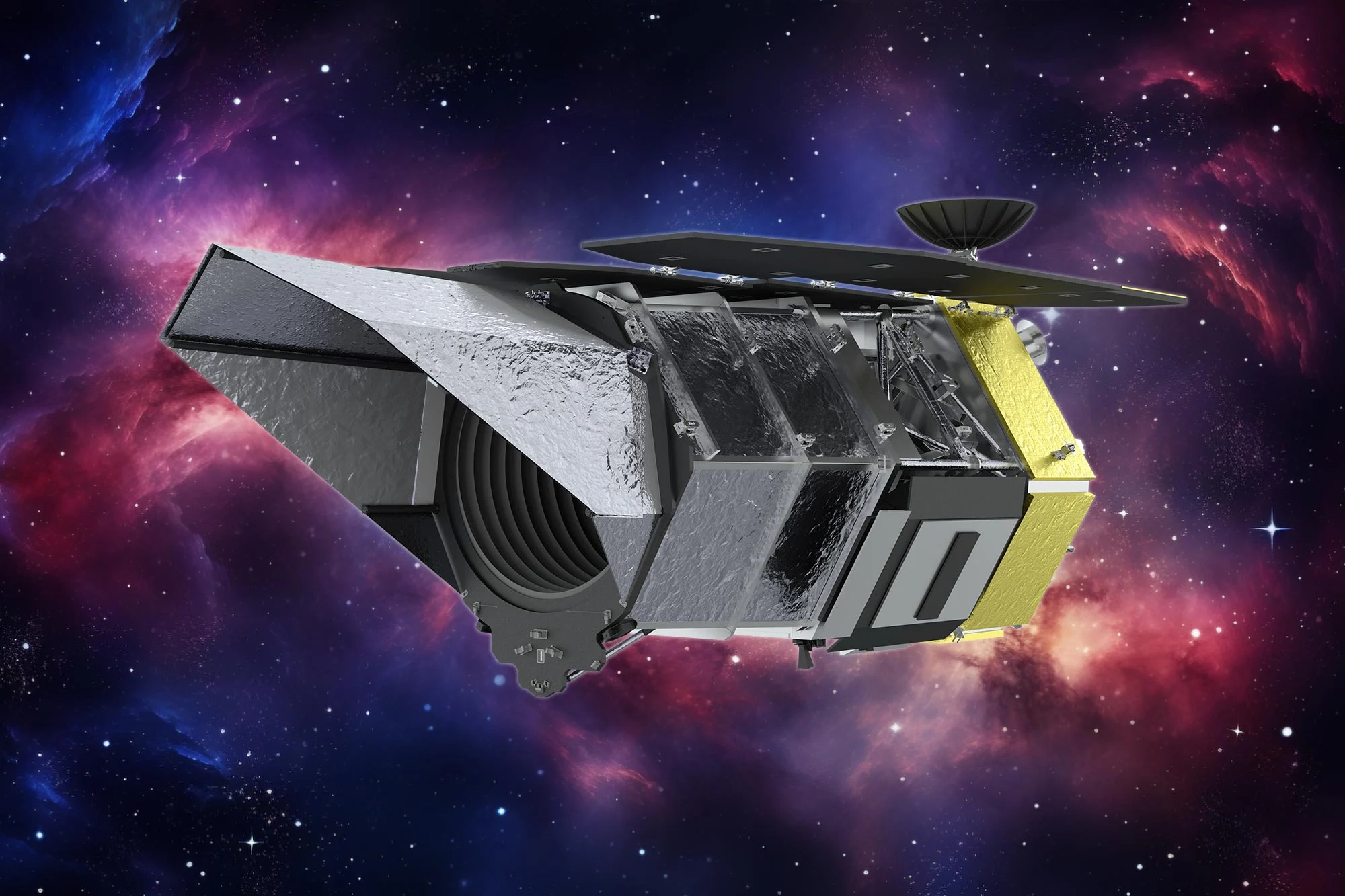
One of the main scientific missions of the Roman Space Telescope is to survey vast areas of the universe with high resolution and a large field of view. The Wide Field Instrument it carries is an infrared camera with approximately 300 million pixels and also has spectral observation capabilities. Compared with the Hubble Space Telescope, the outstanding advantage of the Roman Telescope is not only the image quality, but also the ability to capture a larger range of the sky at one time while maintaining a similar level of precision, thereby significantly improving the efficiency of cosmic sky surveys.
After the wide-area instrument was launched in September, NASA engineers began system inspections of its various components. The team first tested the 18 detectors and their electronic systems inside the instrument, and then examined the rotating mechanism used to switch filters and other optical components. These components are able to select specific wavelengths of light and break the received light into different colors so that scientists can analyze the properties of celestial objects.
Engineers also tested the instrument’s built-in calibration system. The system is equipped with light-emitting diodes that emit different colors of light, and ground teams can precisely control their brightness through instructions. By comparing the detectors' response to different light intensities, engineers can identify subtle sensitivity differences between individual detectors and correct the measurements.
At the same time, the team inspected the focusing mechanism of the wide-field instrument and adjusted it from the non-optimal focus position used during launch to the predetermined clear imaging position. Engineers also confirmed that the thermal control system can maintain various components at appropriate operating temperatures to ensure stable operation of the instrument in the space environment.
Maxim Rizzo, wide-area instrument systems engineer at NASA's Goddard Space Flight Center, likened the calibration process to tuning a piano or guitar before playing. Only by adjusting each part to the appropriate state can the instrument continue to provide stable and reliable data during formal observations.
In addition to inspecting the scientific instruments themselves, another group of engineers is also responsible for optimizing the alignment of the telescope's overall optical system. After light enters the telescope, it needs to travel in a precisely designed path between the primary mirror, secondary mirror and other optical components, and finally reaches the scientific instrument. Even extremely small deviations in the mirror position may affect the accuracy of light focusing, thereby reducing image clarity.
It is worth noting that the optical system of the Roman Telescope was already performing very well before this adjustment. Matthew Borka, optical systems manager at NASA's Goddard Space Flight Center, said that the ground team conducted a lot of modeling, testing and precision measurement work before launch, so that the telescope only needed a few corrections after entering space to achieve a near-ideal optical alignment.
However, ground testing cannot fully simulate the real space environment. The vibration and acceleration during rocket launch, the weightless state in space, as well as temperature changes and humidity differences may all have an impact on precision optical equipment. Therefore, after the telescope enters orbit, it still needs to pass actual tests to confirm whether each component is in optimal working condition.
The most striking detail of this adjustment is that engineers moved the telescope's secondary mirror by only about one-sixteenth of the diameter of a human hair. This displacement is too small to be noticed by the naked eye, but it is enough to further improve the light focusing effect. NASA engineer Elden Julin explained that if this change in height were scaled up to the height of the Empire State Building, the corresponding change would be less than the height gain of placing another U.S. one-cent coin on top of the building.
The reason why such small adjustments can produce significant effects is because the optical systems of modern space telescopes have reached an extremely high level of precision. When the errors in the system itself are very small, further improvements in mirror position and optical path alignment, even if they only involve nanometer-level changes, may have a significant impact on the final image quality.
During the debugging of the optical system, engineers also optimized the coronagraph instrument. The main purpose of this instrument is to block the strong light emitted by stars, allowing researchers to directly observe fainter celestial bodies in their vicinity, including some exoplanets. Previously, coronagraph images had been slightly out of focus, but the situation was easier to deal with than the team expected. After adjustments, the instrument has reached the performance level expected by the team.
The debugging work of the coronagraph will continue. Engineers plan to further optimize the camera settings and determine the optimal operating parameters for the deformable mirror. These special mirrors can make extremely subtle shape adjustments to correct for errors in the propagation of light. Next, the team will also test the coronagraph's ability to block unwanted bright light and highlight nearby faint targets.
After completing the relevant work, engineers adjusted the wide-area instrument again and obtained final measurement results that exceeded expectations.
The original image quality index set by the Lohmann telescope corresponded to a root mean square (RMS) optical error of approximately 90 nanometers. This metric measures the deviation of the actual light wavefront from its ideal state. 90 nanometers is an extremely small scale, only about one thousandth the thickness of a human hair.
After correction, the optical error of the wide-area instrument was further reduced to 63 nanometers RMS, which was significantly better than the original indicator. NASA said the instrument's optical performance was nearly 30% higher than the mission team's original predictions.
This development is of great significance to the future scientific missions of the Roman telescope. Studying dark matter and dark energy requires scientists to make precise measurements of the position, shape, distribution and evolution of a large number of distant galaxies. Clearer images help researchers more accurately identify the structure of galaxies and further analyze the distribution of invisible matter in the universe by observing subtle changes in the shape of galaxies affected by gravity.
At the same time, the large field of view of the Roman telescope means that it can cover a wide area of the sky in a relatively short observation time. The combination of high imaging quality and large field of view will allow scientists to build a large-scale universe image database and conduct research involving galaxy evolution, universe expansion history, exoplanets and other astronomical phenomena.
The NASA team stated that the actual performance of the telescope exceeded previous predictions and was the result of years of precise modeling, measurements, and ground testing. As various instruments are gradually completed and debugged, the Roman Space Telescope is preparing for formal scientific observations.
This achievement once again reflects an important feature in the development of space telescopes: it is not just the size of the telescope and the number of detector pixels that determine the observation capabilities. It is also crucial that the optical system can maintain precise alignment in extreme environments. For the Lohmann telescope, the improvement brought about by moving the secondary mirror by just one-sixteenth of a hair's diameter may ultimately translate into more precise observations of billions of celestial objects and help scientists further explore the structure, composition and evolution of the universe.
Comments