
Abstract:
NASA's Nancy Grace Roman Space Telescope is about to launch. This telescope will observe the universe in a completely new way: while maintaining Hubble Space Telescope-level imaging clarity, it will have a much larger field of view, helping scientists study dark energy, dark matter, distant galaxies, dying stars, and planets hidden in the glare of other stars.
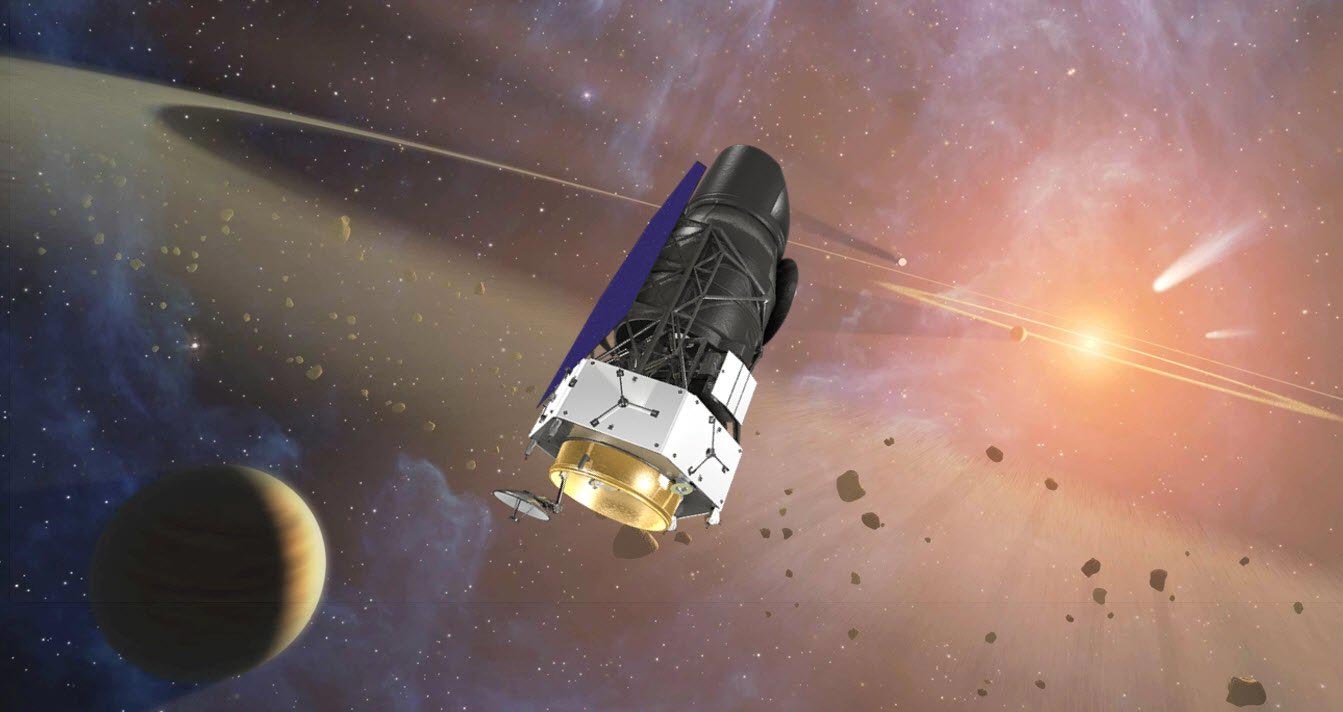
The Roman Space Telescope is only one day away from launch. As the next flagship astrophysics mission launched by NASA after the James Webb Space Telescope, it will become one of the first space telescopes capable of surveying the universe on a large scale and with high efficiency. NASA expects that the Roman Telescope will begin scientific observations in January 2027.
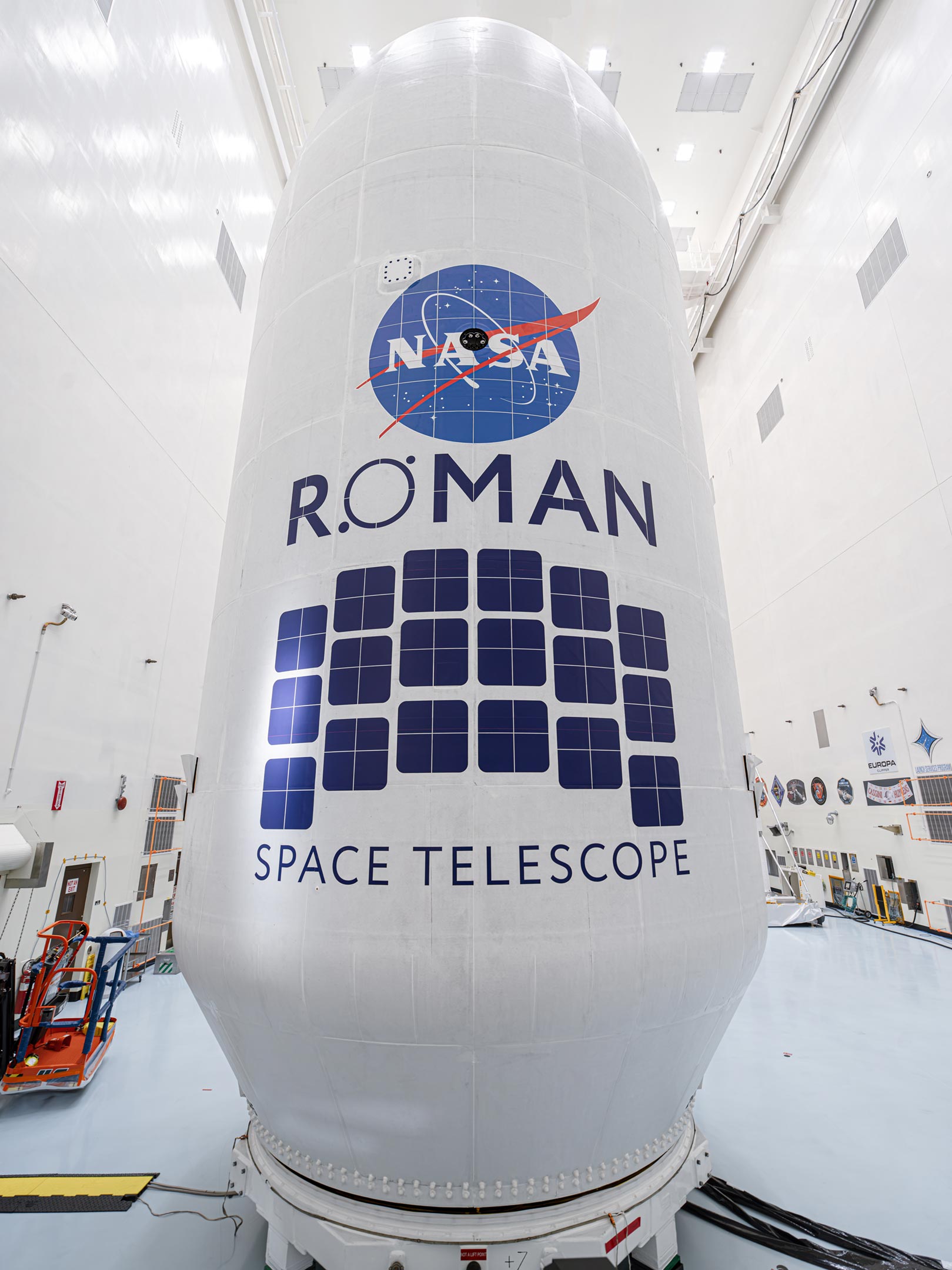
Several University of Arizona faculty and students will travel to Cape Canaveral, Florida, to participate in the launch of this important mission. On August 24, 2026, the Roman Space Telescope completed the fairing packaging and will then be docked with the Falcon Heavy rocket.
The James Webb Space Telescope is mainly used to deeply observe a relatively small area of the universe, while the outstanding advantage of the Roman Space Telescope is its wide coverage. Both telescopes are capable of observing infrared light, so astronomers can combine their observations to obtain a more complete picture of the universe that would be difficult to achieve with either telescope alone.
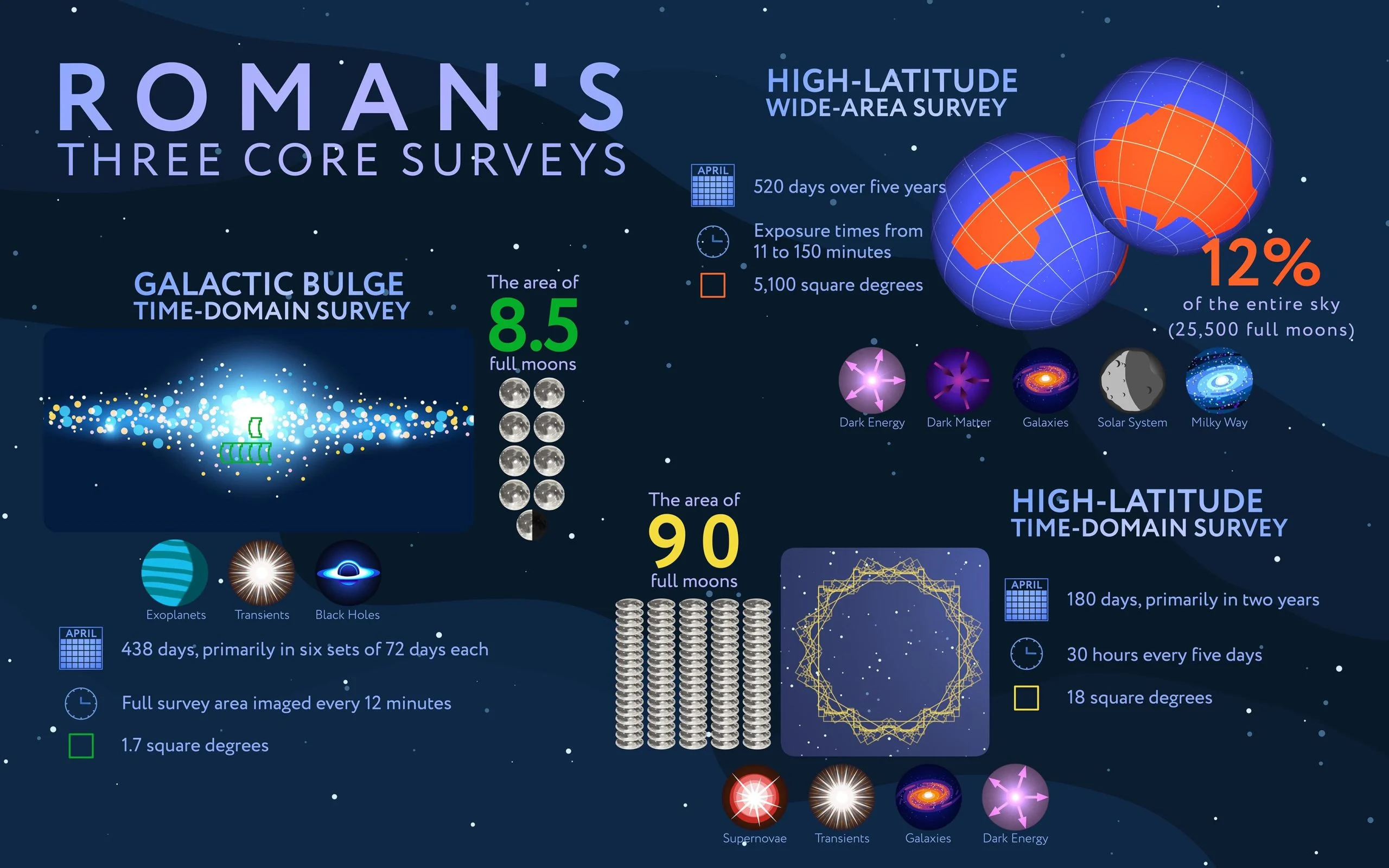
The main mirror of the Roman Telescope is about 2.4 meters in diameter, which is the same size as the main mirror of the Hubble Space Telescope. However, Lohmann will carry an instrument that will significantly expand the range of observations. Its wide-field instrument is capable of capturing approximately 100 times the area of the sky as Hubble's camera while maintaining sensitivity similar to Hubble's.
The Hubble Space Telescope has been operating for more than 30 years and has observed approximately 0.1% of the night sky. In contrast, the Lohmann telescope is expected to cover the entire sky with the same level of resolution. Such a wide field of view will make it particularly good at finding rare objects, including dying stars, newly formed planets and giant galaxy clusters.
Researchers from the University of Arizona will be involved in analyzing these observational data and looking for new scientific discoveries.
Dark matter and dark energy are the main research targets of the Roman Telescope, and they are also the two most profound mysteries in modern cosmology. Dark matter itself does not emit light, but its gravity affects galaxies and other structures in the universe. Dark energy is what scientists call a mysterious influence that appears to be driving the expansion of the universe to accelerate. Dark matter and dark energy together make up almost all of the ingredients in the universe.
NASA has selected the Arizona Cosmology Laboratory at the University of Arizona to support two studies aimed at revealing the nature of dark matter and dark energy. One involves the wide-field science team and the other is responsible for building the project infrastructure.
Elizabeth Krauser, professor of astronomy and physics at the University of Arizona, leads the wide-field science team "Kinematic Gravitational Lensing Research Using the Roman Space Telescope." The team received $2 million in funding to develop a cosmological measurement method called "kinematic gravitational lensing."
The researchers plan to combine the images taken by Roman with spectral data to measure dark matter and dark energy more precisely than ever before.
Another team from the University of Arizona will also be responsible for project infrastructure construction in the multi-institutional collaboration project "Maximizing cosmological science results using the Lohmann High-latitude Imaging Survey." Tim Eifler, professor of astronomy and physics, leads the working group responsible for interpreting the Roman cosmology data.
The Roman Telescope will detect galaxies closer to Earth as well as extremely distant galaxies. Astronomers will locate these galaxies and measure their properties, creating a massive catalog of galaxies. Researchers will then use computer models to translate these catalogs into information about the fundamental physical laws of the universe.
Completing this work requires significant computing power. NASA's Lohmann program has allocated $800,000 to the Eifler Laboratory to purchase computing resources. These resources will be part of a new university-scale high-performance computing system that is expected to be in place this fall. Eifler's lab will also receive $2.4 million over the next five years to conduct related research.
Eifler said this infrastructure will help researchers complete the conversion from galaxy catalogs to cosmological explanations, allowing them to determine the content of dark energy and dark matter in the universe. He also serves as co-chair of the Cosmology Group, which brings together more than 1,000 scientists from around the world. Eifler said that being able to organize the global scientific research community to collaborate around this scientific goal is a "dream job."
The Roman Space Telescope will not only draw large-scale maps of the universe, but will also test new methods of directly photographing exoplanets. The coronagraph it carries will use light shields, prisms, detectors, filters and self-adjusting mirrors to suppress the extremely intense light of the star.
When the star's bright light is weakened, astronomers have the opportunity to observe much fainter planets and dust disks orbiting the star.
At present, most of the exoplanets discovered by humans rely on indirect methods to confirm. For example, scientists can measure the tiny dips in starlight caused by planets passing in front of stars. Roman's coronagraph will take a different approach, trying to directly reveal the planet itself.
This instrument is expected to be able to detect planets that are 100 million times dimmer than their host stars. Compared with existing space coronagraphs, its performance will be improved by about 100 to 1,000 times.
Skyler Wolf, associate research professor of astronomy and who leads the coronagraph observation planning working group, said the technology will provide critical validation for future habitable world observatories. The Habitable World Observatory is a proposed telescope project specifically designed to look for signs of possible life in other star systems.
Several University of Arizona researchers participated in the development of the Roman coronagraph and will participate in future observations, including Lunar and Planetary Laboratory Director Mark Marley, Associate Professor of Astronomy Euan S. Douglas, Steward Observatory Assistant Research Professor Lamia Anche, and Astronomy Postdoctoral Research Assistant Justin Holm.
Maley will work with Lunar and Planetary Laboratory associate professor Ty Robinson and postdoctoral research associate Zara Brown to use coronagraph data to study the atmospheres of objects outside our solar system.
Brown has been building climate and spectral models of the self-luminous giant planets. These planets are often very young and extremely hot, producing their own thermal infrared light. Her model can predict a planet's atmospheric temperature, chemical composition, cloud conditions and the infrared spectrum each planet is likely to emit.
These predictions are important because many of these objects have never been studied in these wavelengths before. Brown said the predicted spectra are critical for observation planning. The Roman coronagraph faces extremely faint and high-contrast targets, so the research team must arrange sufficient observation time to ensure that candidate targets can be detected, while not overly occupying the mission's limited observation resources.
Anche's team is studying the structure of exoplanetary systems. Holm is responsible for finding the stars most suitable for calibrating the coronagraph, and also leading preliminary observation projects using ground-based telescopes to provide support for future Roman mission confirmation targets.
The Roman Space Telescope is expected to begin scientific operation in January 2027, when the observation data it obtains will be open to the global scientific community. The University of Arizona will be responsible for nine NASA-approved Roman data research projects with more than $2 million in related funding.
The research scope of these projects includes not only dark energy and exoplanets, but also topics such as supermassive black holes, gravitational lensing, galaxy formation, reionization processes, and cosmic dust.
With Hubble Space Telescope-like imaging details and a field of view far beyond Hubble, Roman Space Telescope will help scientists discover celestial objects that other telescopes tend to miss, and further reveal how these discoveries fit into the larger picture of the evolution of the universe.
Comments