
Abstract:
Not long after NASA's Nancy Grace Roman Space Telescope took off, it received good news that far exceeded expectations. Due to the extremely accurate launch trajectory, the propellant consumption for the first orbit correction being far lower than budgeted, and the actual weight of the telescope being lower than the original design value, NASA currently estimates that the fuel carried by the Roman Space Telescope can support the scientific observation mission for at least 22 years, which is more than twice the original 10-year design life.
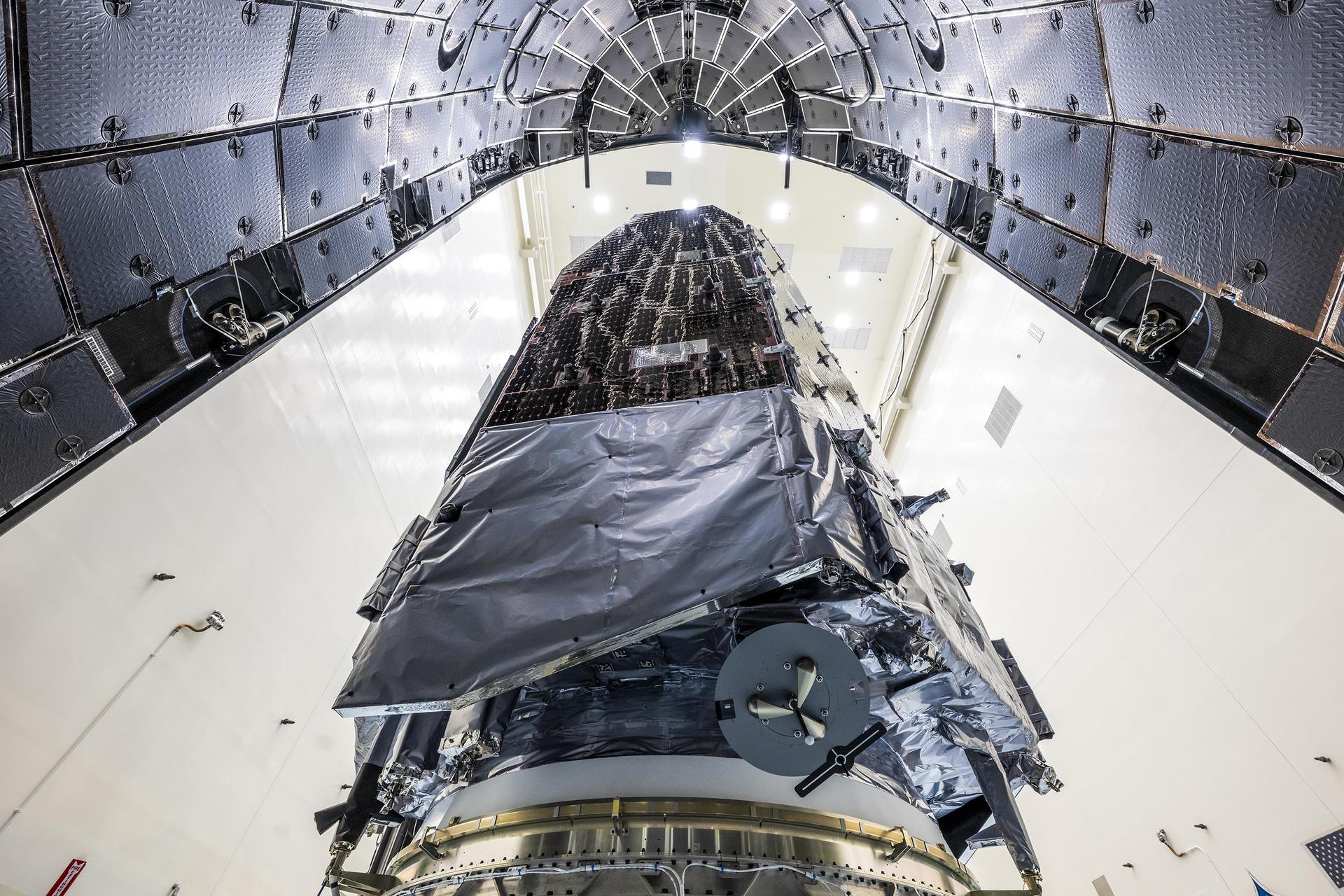
The Roman Space Telescope was launched on August 30, 2026 aboard a SpaceX Falcon Heavy rocket from the Kennedy Space Center in Florida, USA, with the goal of heading to the Sun-Earth second Lagrangian point L2, about 1.6 million kilometers away from the Earth. NASA originally prepared a 10-year propellant reserve for the telescope based on a five-year main mission plus a five-year extended mission. However, the actual mission performance was far better than expected, allowing a large amount of fuel originally used for orbital maneuvers to be saved.
One of the most critical savings came from the first mid-course orbit correction after launch. When the Roman Telescope made its first large-scale orbit correction on August 31, the engine working results matched the expected trajectory by more than 99%. In the end, it only consumed about 40 pounds, or 18 kilograms, of hydrazine fuel. The mission team had reserved as much as 441 pounds, or 200 kilograms, of fuel for this operation before launch. In other words, the actual propellant consumed by this correction was less than 10% of the original plan.
The reason why such significant fuel savings can be achieved is first of all due to the extremely precise launch of the Falcon Heavy rocket. The initial flight trajectory of the rocket after sending Roman into space was very close to the ideal route, so the telescope itself did not need to make major corrections. Subsequently, Roman's own navigation and propulsion system accurately performed this small correction operation.
Jamie Dunn, director of NASA's Goddard Space Flight Center, said that the orbital dynamics team conducted careful planning, the mission operation team executed accurately, and SpaceX achieved precise launches, so Roman currently has at least 22 years of potential scientific operation fuel.
Another important reason is that the actual launch weight of the Roman Space Telescope is lower than the maximum design weight. When NASA designed the mission in its early stages, the propellant budget was based on a conservative maximum weight of about 21,605 pounds, or 9,800 kilograms, to ensure that even if the final spacecraft was heavier than expected, there would be no fuel shortage problem.
But the actual weight of Roman after completion was only 17,760 pounds, which is about 8,056 kilograms, about 2 tons lighter than the budgeted maximum weight. Because the spacecraft is lighter and requires less propellant to complete the orbit correction, teams on the ground are able to fill the propellant tanks as full as possible before launch, rather than only filling the fuel required for a 10-year mission.
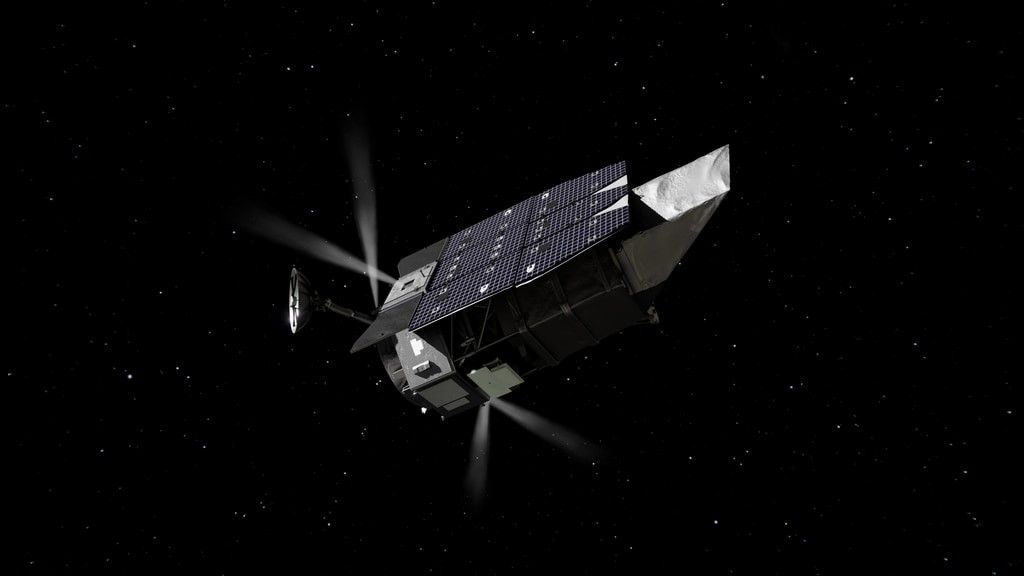
In the end, Roman's total weight at launch was approximately 20,224 pounds, or 9,173.5 kilograms, still about half a ton lighter than the maximum weight allowed by the design. Larger fuel reserves are therefore brought directly into space, providing additional assurance for future long-term operations.
NASA also expects that Roman’s second mid-course orbit correction later this month will also save fuel than originally planned. The size of the second correction has been significantly reduced due to the precise execution of the first correction, and the telescope will then make final orbital maneuvers in early December to enter its final orbit around L2. Current calculations show that both operations are expected to consume less propellant than originally budgeted, and so could end up further increasing Roman's fuel reserves that can be used for future scientific observations.
After Roman arrives at L2, the main work of the propulsion system will change to regular orbit maintenance. To stay on target, the telescope needs to make small attitude and orbit corrections approximately every 28 days. In addition, it also needs to regularly use thrusters to unload the momentum accumulated by the reaction flywheel to maintain the telescope's ability to accurately point to the target. These operations require far less fuel than the large orbital maneuvers en route to L2.
The significant savings in fuel also mean that NASA has little need to consider carrying out a resupply mission for Roman in the short term. In fact, Roman has been considering future resupply in space from the beginning of the project design. NASA even installed a special gripping interface at the bottom of the telescope, equipped with reflectors and external reference markers, so that future robotic supply spacecraft can approach, capture and dock with the telescope.
Roman is also one of NASA's first large scientific telescopes to consider future on-orbit replenishment capabilities from the design stage. The insulation around its propellant filling port is specially designed to allow the robot to open and re-close easily. NASA project manager Jackie Townsend said that although Roman's repairability is far from comparable to that of the Hubble Space Telescope, it currently has the basic conditions required to perform automated rendezvous, capture, docking and resupply missions in the future.
However, the United States currently does not have a ready-made spacecraft that can go to the L2 position about 1.6 million kilometers from the earth and specifically provide supplies to Roman. Some companies in the United States are developing orbital supply satellites, but currently they are mainly targeting low-Earth orbit and geosynchronous orbit missions. Therefore, even if Roman does need to supplement propellant in the future, NASA still needs to wait for relevant technologies and commercial services to further mature.
In addition to the propulsion system, the current status of Roman's other equipment is also satisfactory. The telescope opened the aperture cover of the optical system on September 1, allowing starlight to hit the primary mirror for the first time. NASA then began a series of inspections of the telescope and scientific instruments.
NASA officials said that all preliminary inspection results so far are good. Lohmann's wide-area imager has obtained early data. Its 18 detectors are all in normal condition. The mirrors and detectors are gradually cooling down as expected. Connection, current and other basic tests have all passed. Another coronagraph, designed to directly image exoplanets, also performed well in preliminary inspections. NASA expects that Roman will officially enter the scientific observation stage as the telescope completes subsequent debugging and truly obtains the "first light."
The Roman Space Telescope costs approximately US$4.3 billion. Its main mission is to study dark energy, dark matter and the large-scale structure of the universe, and to search for extrasolar planets. Its wide-area imaging capabilities are particularly powerful. Although the resolution of a single image is similar to that of the Hubble Space Telescope, its field of view is about 100 times that of Hubble. According to NASA, Roman is expected to complete the sky observation range that Hubble may take 100 years to complete in about a month.
The wide-area instrument carried by Roman has 18 near-infrared detectors, and its imaging capability is equivalent to a giant camera with approximately 300 million pixels. By scanning the sky quickly and over large areas, scientists can map galaxy clusters and filaments of matter and dark matter throughout the universe, and study dark energy, the mysterious force driving the accelerating expansion of the universe.
If current fuel estimates are ultimately verified, the Roman Space Telescope will have a potential scientific operation capability of at least 22 years, and its mission cycle may even extend into the late 2040s. This not only means that NASA can use the same telescope to obtain cosmic observation data over a longer time span, but also means that scientists can track dark energy, dark matter, exoplanets and other research objects for a long time, thereby significantly expanding the scope of scientific tasks that this new generation flagship observatory can complete.
Comments