
Abstract:
NASA announced that important core equipment of the Nancy Grace Roman Space Telescope has successfully completed testing. This new-generation space observatory with high hopes has officially demonstrated its ultra-large field of view imaging capability with 300 million pixels, taking a key step for future exploration of dark energy, exoplanets, and the history of universe evolution.
The Roman Space Telescope is considered an important complement to the Hubble Space Telescope and the James Webb Space Telescope. Although the size of its primary mirror is similar to that of Hubble, its field of view far exceeds that of the latter. Scientists say that if Hubble is like a telescope that can observe individual trees in detail, Rome is more like a wide-angle camera that can capture an entire forest at once.
What was tested this time was the wide-field instrument of the Roman Telescope. This set of equipment consists of 18 advanced infrared detectors with a total resolution of approximately 300 million pixels. Each detector has approximately 16 million pixels, and together they form one of the largest astronomical imaging arrays currently used in space.
The research team stated that these detectors can capture extremely weak cosmic signals in the near-infrared band, helping scientists observe galaxies and celestial objects billions of light-years away. At the same time, due to its extremely wide observation range, Rome can cover an area equivalent to hundreds of Hubble fields in a single shot.
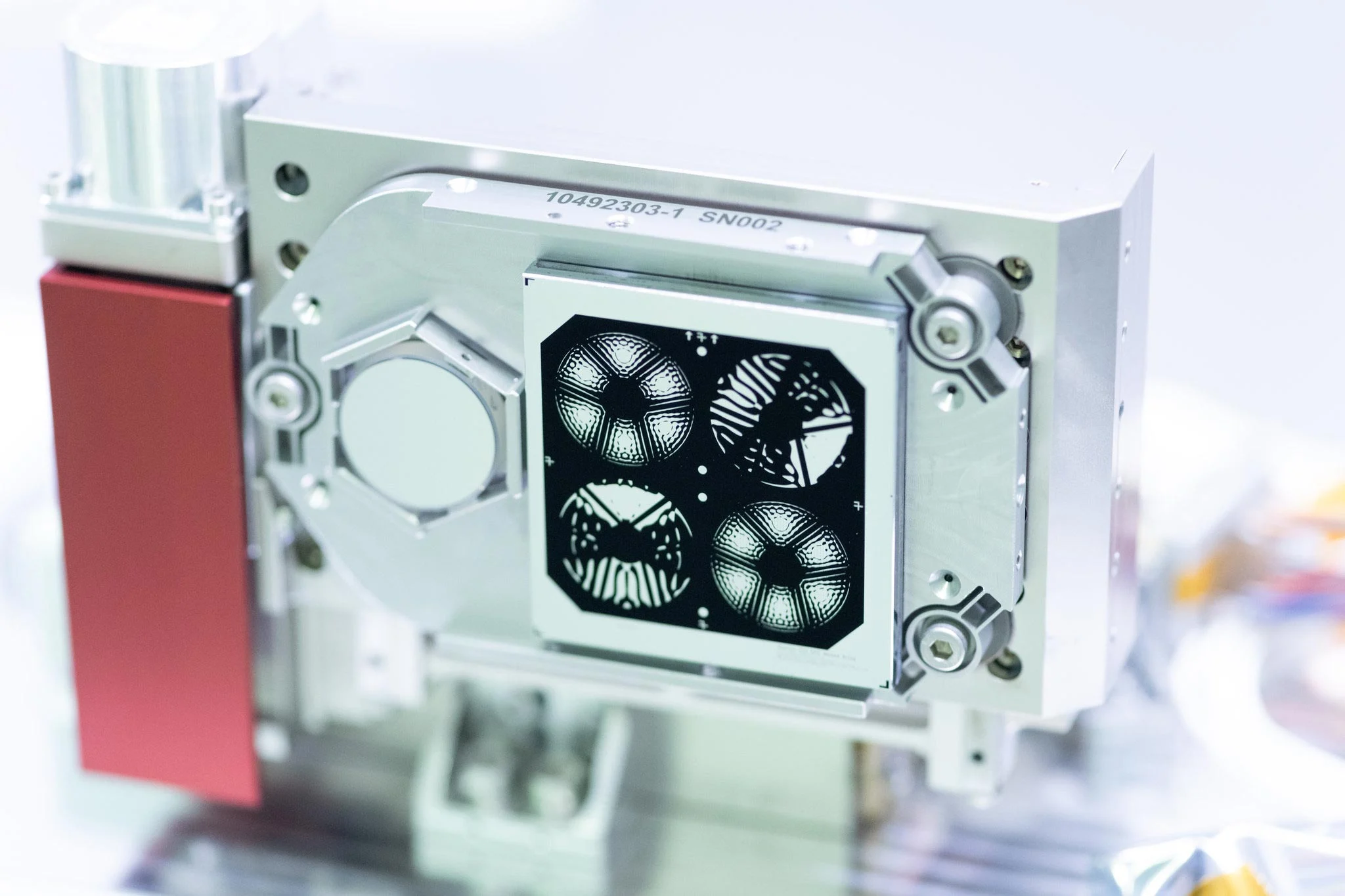
During the latest testing process, engineers conducted functional verification on all detectors. The results show that all performance indicators meet the design requirements, and the system can stably acquire high-quality images and accurately process massive observation data.
Scientists pointed out that one of the most important tasks of the Roman Telescope in the future is to study dark energy. Current observations show that the expansion of the universe is accelerating, and the mysterious force driving this process is called dark energy. However, the true nature of dark energy remains unclear.
In order to solve this mystery, Rome will conduct large-scale sky surveys of billions of galaxies, and help researchers build more accurate cosmological models by studying the distribution of galaxies and the evolution of the structure of the universe.
In addition to studying dark energy, the Roman telescope will also conduct a large-scale exoplanet search mission. Relying on gravitational microlensing technology, it is expected to discover a large number of exoplanets that were previously difficult to detect, including some objects with a mass close to the Earth.
Researchers expect that this mission may significantly increase the number of known exoplanets and help humans further understand the formation and distribution of planetary systems in the Milky Way.
At the same time, Rome is also equipped with a set of advanced coronagraph technology verification equipment. By actively blocking the glare of the star, this system can directly photograph planets orbiting stars and their surroundings. Although the main task is still technical verification, the relevant results will provide important experience for future telescopes dedicated to searching for Earth-like habitable planets.
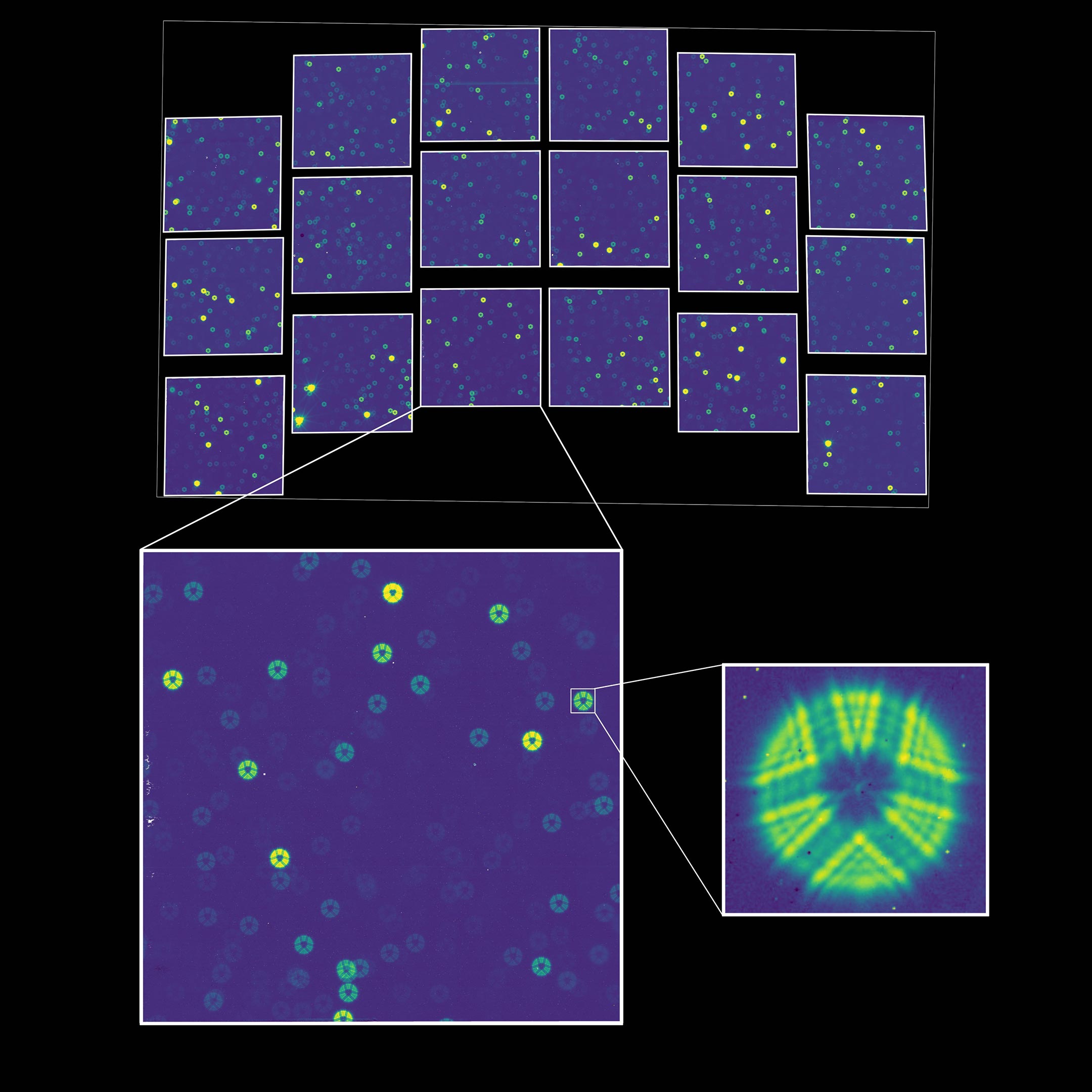
NASA stated that the Roman Space Telescope is currently continuing to advance final assembly and testing. With the completion of wide-field instrument verification, the project has entered a new milestone stage.
After launching into space in the future, Rome will map the large-scale structure of the universe with unprecedented efficiency, capture massive astronomical targets, and generate an astonishing amount of scientific data. Researchers believe that this new generation of survey telescope with a 300 million pixel "sky eye" will help mankind discover a large number of previously unknown mysteries of the universe in the next few decades.
Comments