
Abstract:
NASA announced that the Nancy Grace Roman Space Telescope recently successfully completed a series of key pointing tests, and its coronagraph successfully received light signals from the universe for the first time. This marks that this new generation of astronomical observation equipment, tasked with finding and studying exoplanets, has made important progress before officially launching scientific exploration.
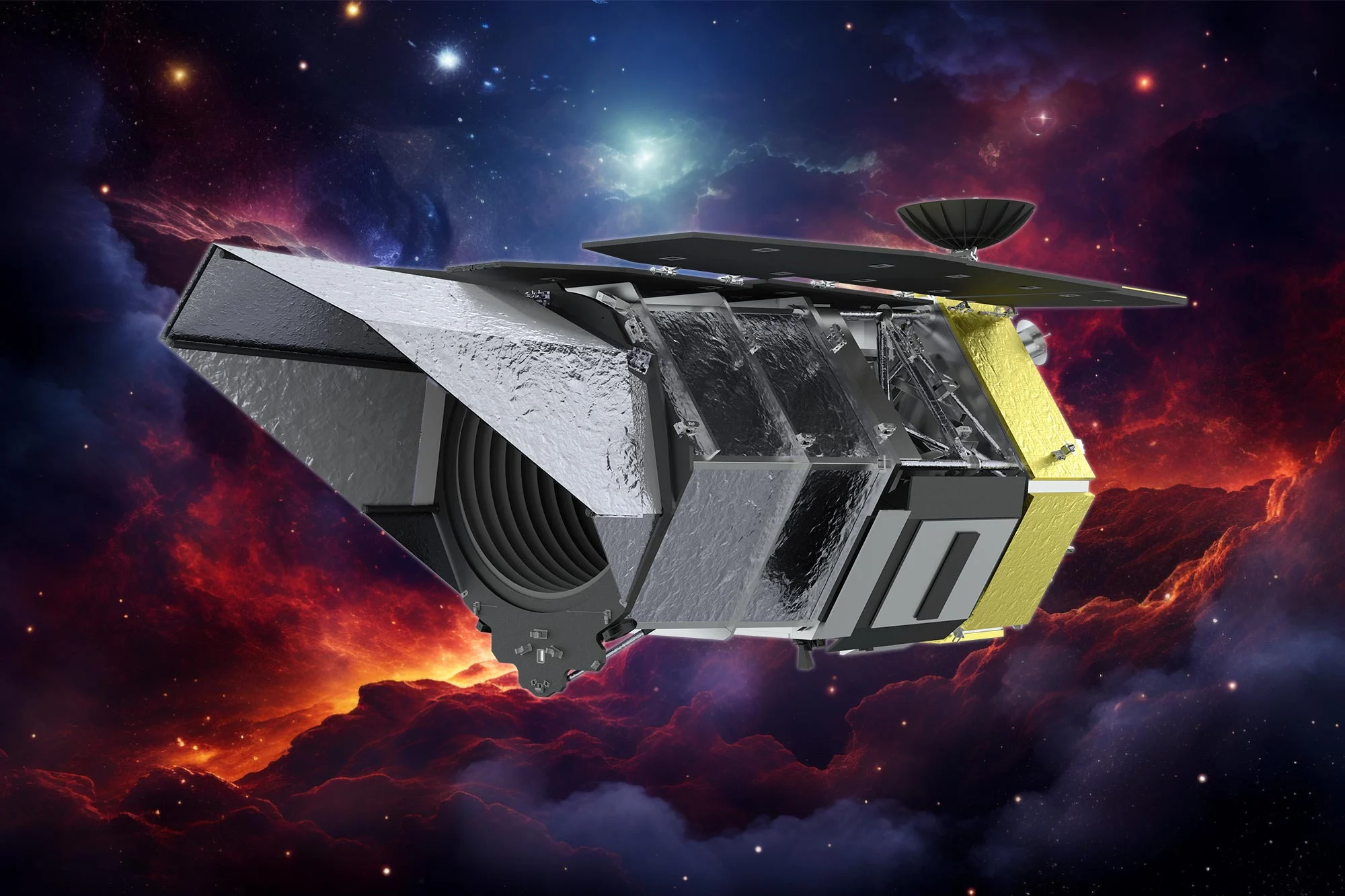
According to NASA, the Roman Space Telescope completed the precision guidance system test from September 15th to 21st. This system is responsible for ensuring that the telescope remains stable on the same area of the sky during long-term observations. Then on September 22, the coronagraph mounted on the telescope successfully detected light from the universe, completing the first "eye-opening look at the universe."
The Roman Telescope's main scientific equipment, the Wide Field Surveyor, is equipped with 18 detectors. Each detector will reserve a small area to continuously track guide stars whose positions are known. When the observation begins, the spacecraft attitude control system will first point the telescope at the predetermined target area, and then the precision guidance system will continuously monitor the position of the guide star and make real-time corrections for any small drifts. Without these adjustment mechanisms, the telescope will not be able to obtain high-quality images that are clear enough.
Begonia Vera, director of the guidance instrument system at NASA's Goddard Space Flight Center, said that each Roman telescope observation relies on its ability to maintain precise pointing of the target area for a long time, and a deep exposure may last for minutes or even hours. The guidance system sends guide star position information to the attitude control system about four times per second so that the system can correct drift in a timely manner. Test results show that in the wide-field surveyor observation mode, the telescope can maintain stability better than one hundred thousandth of a degree for 30 minutes continuously; in the coronagraph mode with longer observation time, it can work continuously and stably for up to 8 hours.
The researchers pointed out that this level of stability is equivalent to continuously and accurately shining a laser beam on a U.S. dime from about 240 kilometers away. The engineering team will further optimize the system performance in the future, with the goal of improving this accuracy to the same level of targeting capability at a distance of 370 kilometers.
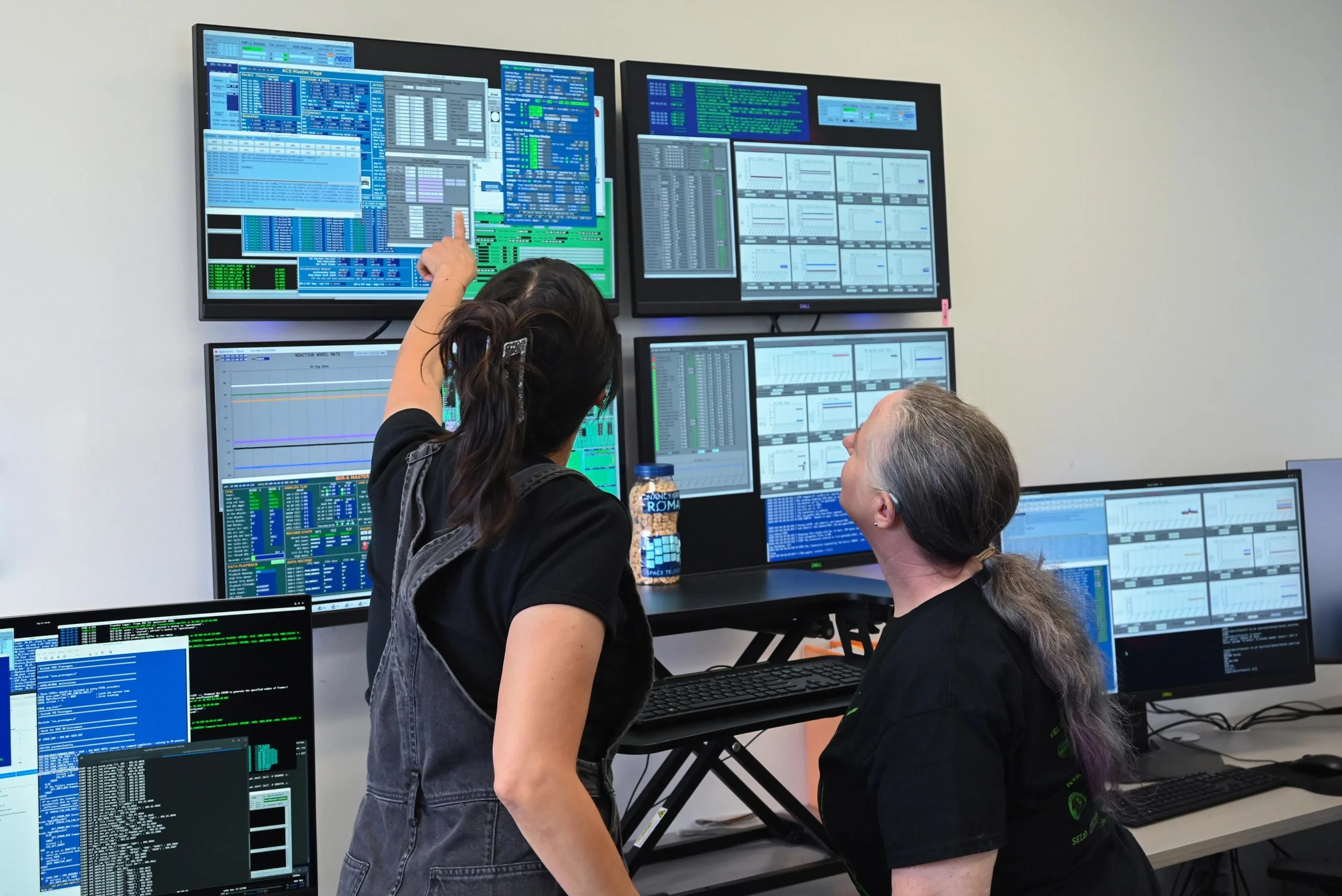
In addition to traditional guidance methods, the Roman telescope will also test a new guidance technology. Unlike many other space telescopes, Roman is not equipped with independent guidance instruments. It will use spectral data obtained during scientific observations as a positioning reference instead of just relying on star point images for tracking. Since the telescope itself has spectral measurement capabilities, it can directly use these data to achieve high-precision attitude control. The research team plans to validate this innovative model in the coming weeks.
After the verification of the precision guidance system was completed, the researchers conducted further tests in conjunction with the coronagraph on September 22 and 27. The main task of a coronagraph is to screen out the extremely bright light of a star, allowing scientists to observe planets orbiting the star that are much less luminous than the star itself, as well as the dust disk surrounding the star.
Villa said that the coronagraph has an independent internal stabilization mechanism, and its stability is even higher than that of the wide-area surveyor. This ultra-high stability is crucial for directly photographing exoplanets, because even tiny vibrations or pointing errors may cause strong light from the star to leak into the instrument, completely drowning the originally weak planetary signal.
The coronagraph was started up on September 1, and the status of the digital, electronic and mechanical systems was continuously checked in the middle of the month. After confirming that the precision guidance system could meet the stability requirements, the team adjusted the focus of the instrument and conducted the first imperfect space observation. This initial data will help engineers further optimize instrument performance.
Vanessa Bailey, a coronagraph scientist at NASA's Jet Propulsion Laboratory, said that this observation proves that the instrument can form focused images. Although this is only a limited-scope test, it starts a series of verification tasks that are gradually upgraded and increasingly complex to prepare for future formal scientific observations.
In its first test, the coronagraph targeted a faint star in the Large Magellanic Cloud. Some additional noise appears in the image because the detector is deliberately kept above its final operating temperature to prevent contaminants from adhering to the detector surface.
The initial task, Bailey explained, was simply to confirm that light could travel smoothly through the entire system. The subsequent second phase of testing further verified the pointing capabilities of the instrument. The team lowered the temperature of the detector to increase sensitivity and observed another region in the Large Magellanic Cloud. The researchers had expected to see a large number of stars in a single image, and the end result was exactly as expected, much to the team's relief.
As the precision guidance system and coronagraph have successively passed key verifications, the Roman Space Telescope is gradually entering the stage of scientific operation. In the future, it will not only undertake large-scale cosmic survey missions, but also use advanced coronal imaging technology to explore planetary systems around nearby stars, providing humans with new capabilities to directly observe distant worlds and search for potentially habitable planets.
Comments