
Abstract:
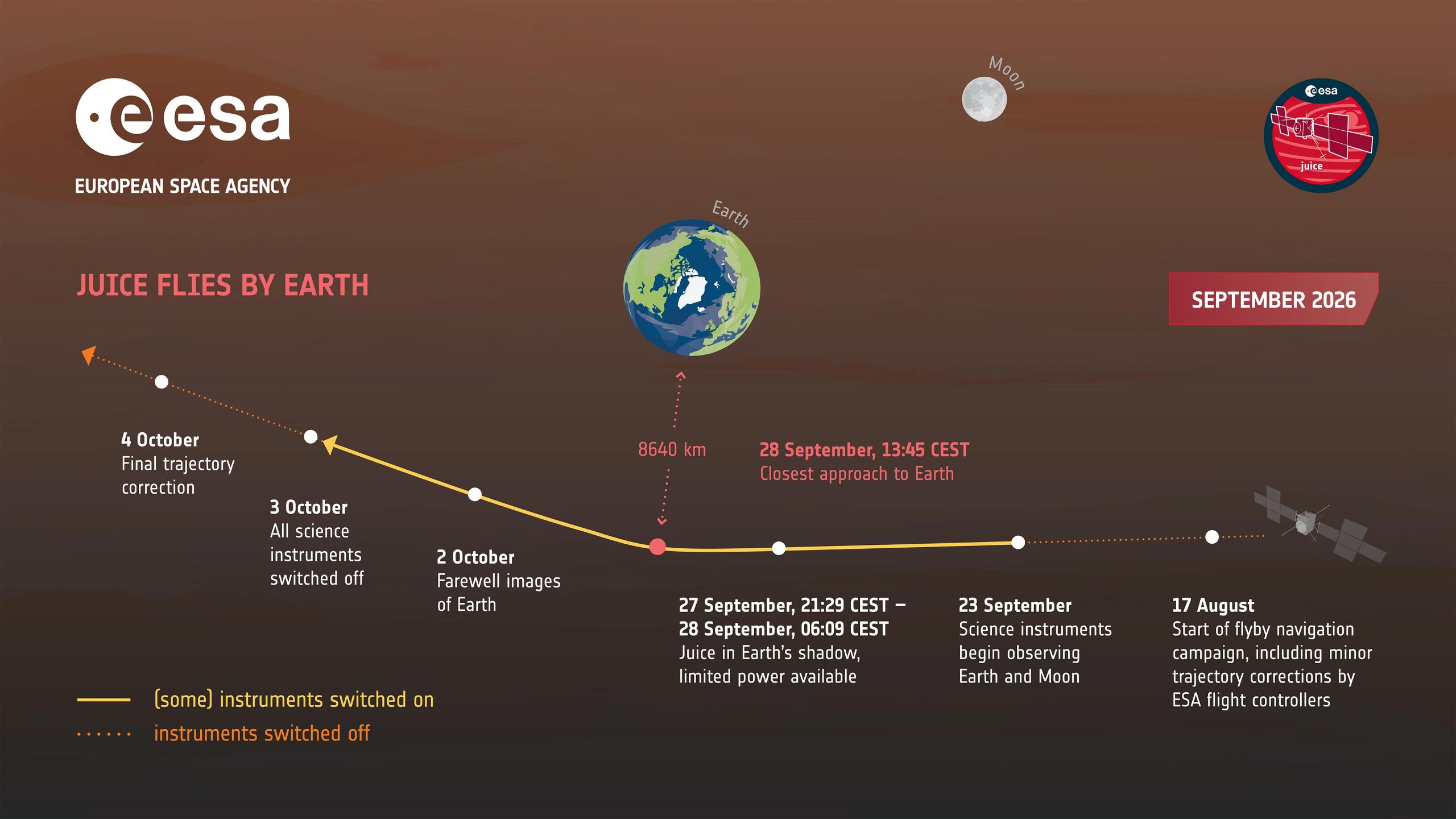
The European Space Agency's (ESA) Jupiter ice satellite probe JUICE completed a flyby of Earth on September 28, using the Earth's gravity to adjust its orbit to Jupiter. When the probe recently passed over the Indian Ocean, it was about 8,640 kilometers from the surface; ESA said it passed through the outermost edge of the Earth's atmosphere, but it did not enter the dense atmosphere for aerodynamic deceleration.
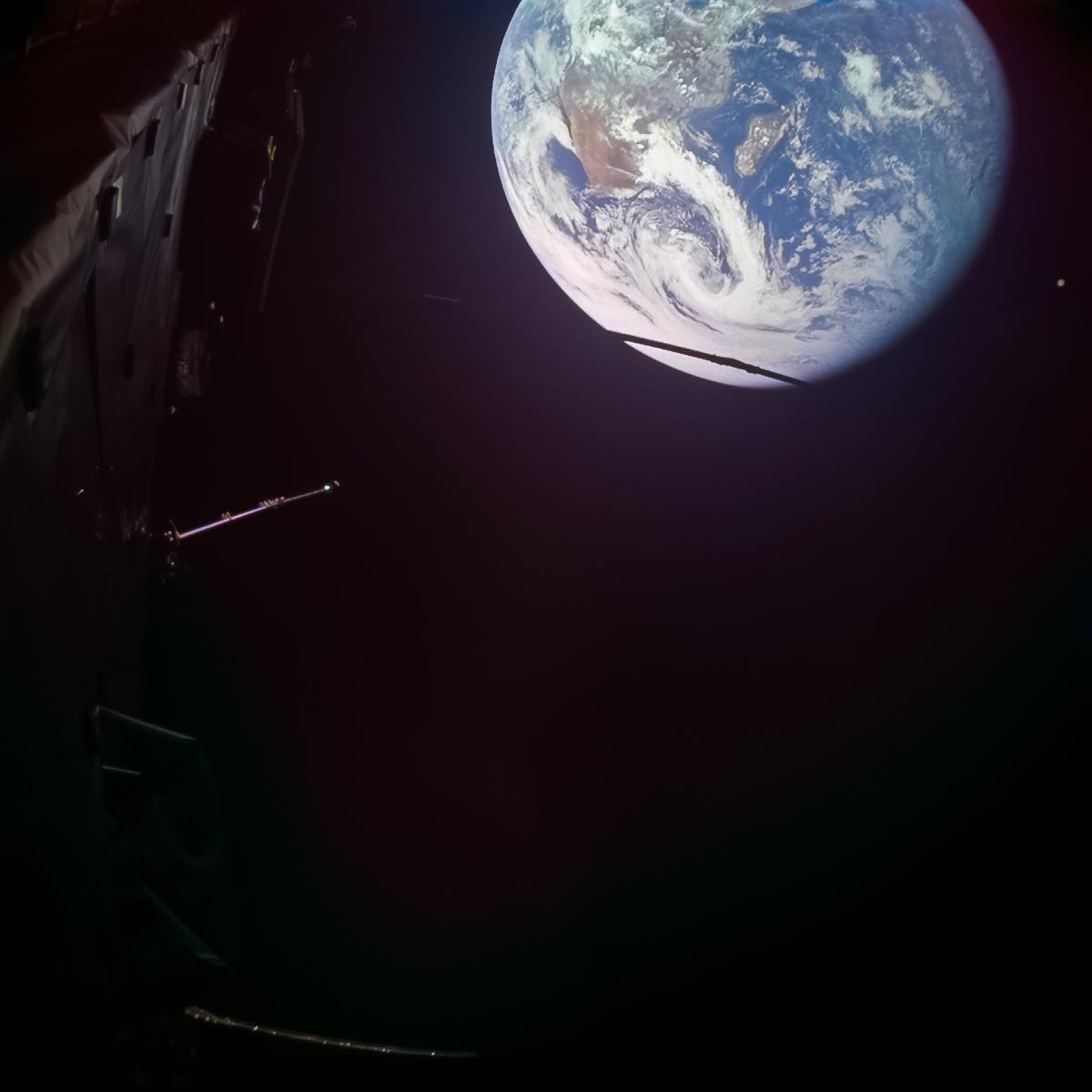
This gravitational boost deflected JUICE's flight direction by about 20 degrees relative to its original trajectory, and its speed increased by 3.5 kilometers per second. The mission team reserved six orbit correction windows before the flyby, and finally made only one small correction to send the probe into the ideal orbit; ESA said that precise navigation also reduced the propellant consumption required for this flyby, leaving more fuel for Jupiter's orbit and satellite observation missions.
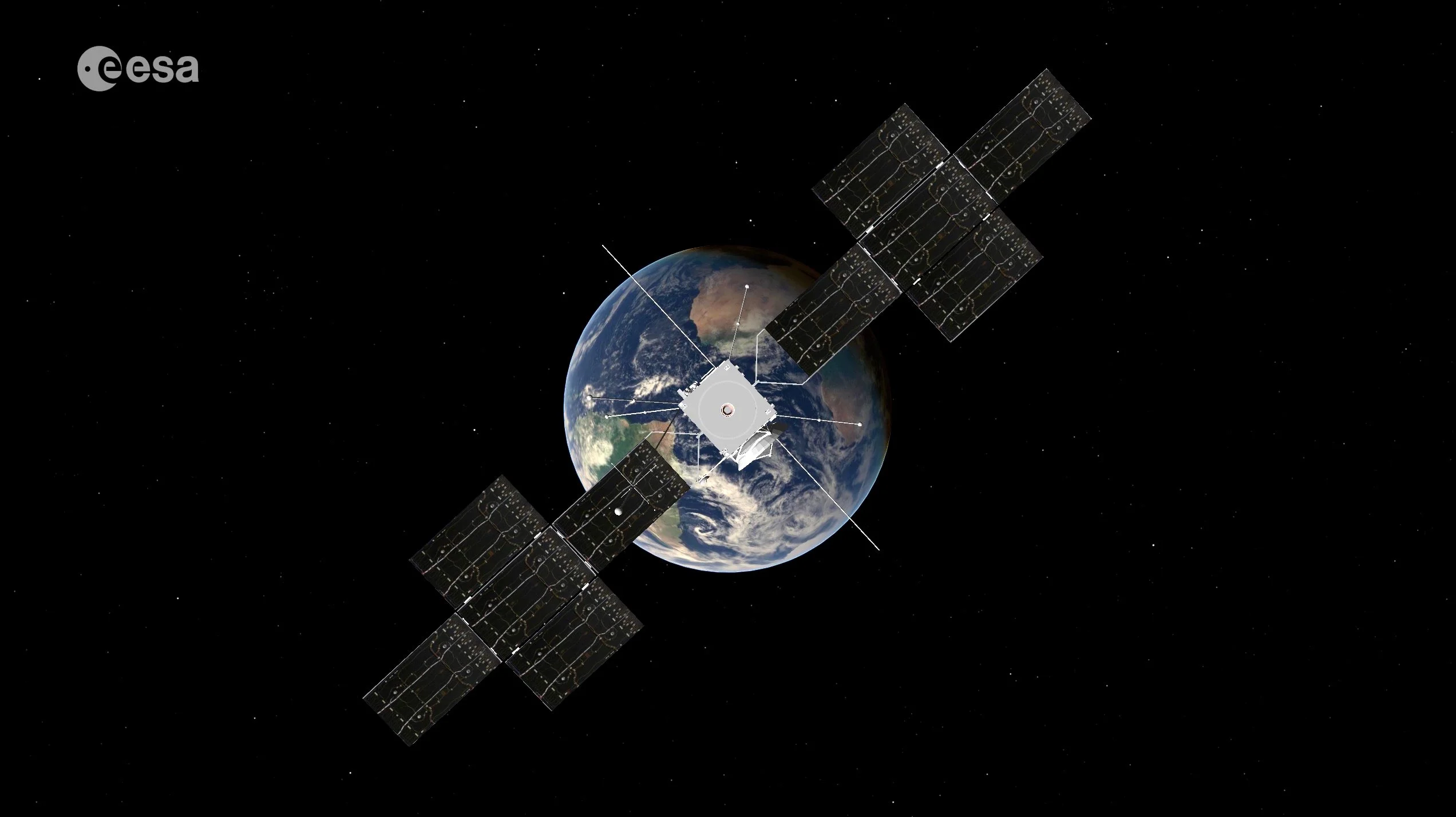
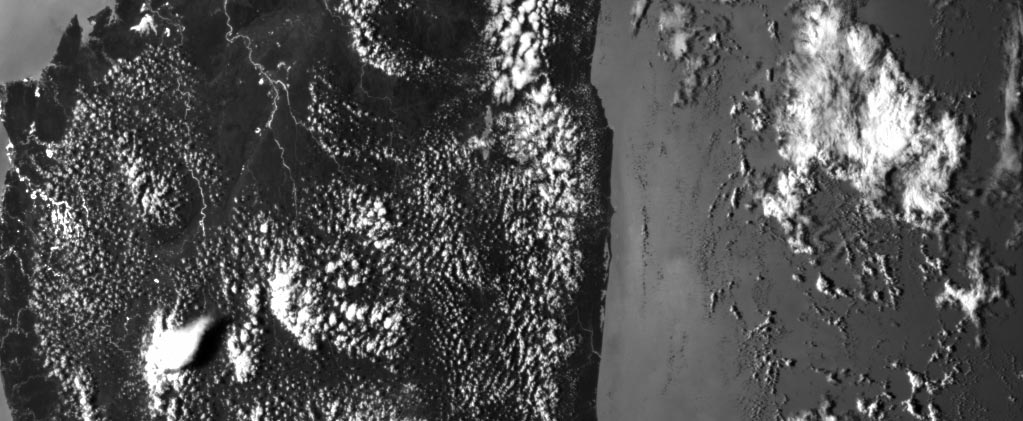
The closest point of the flyby occurred at 13:45 Central European Daylight Time on September 28, which is 11:45 UTC. JUICE took images of the Earth, the moon, and Madagascar as it passed near the Earth, and allowed equipment including the scientific camera JANUS to observe the Earth and the moon; relevant images and spectral data are still being transmitted back to the Earth and analyzed by the research team.
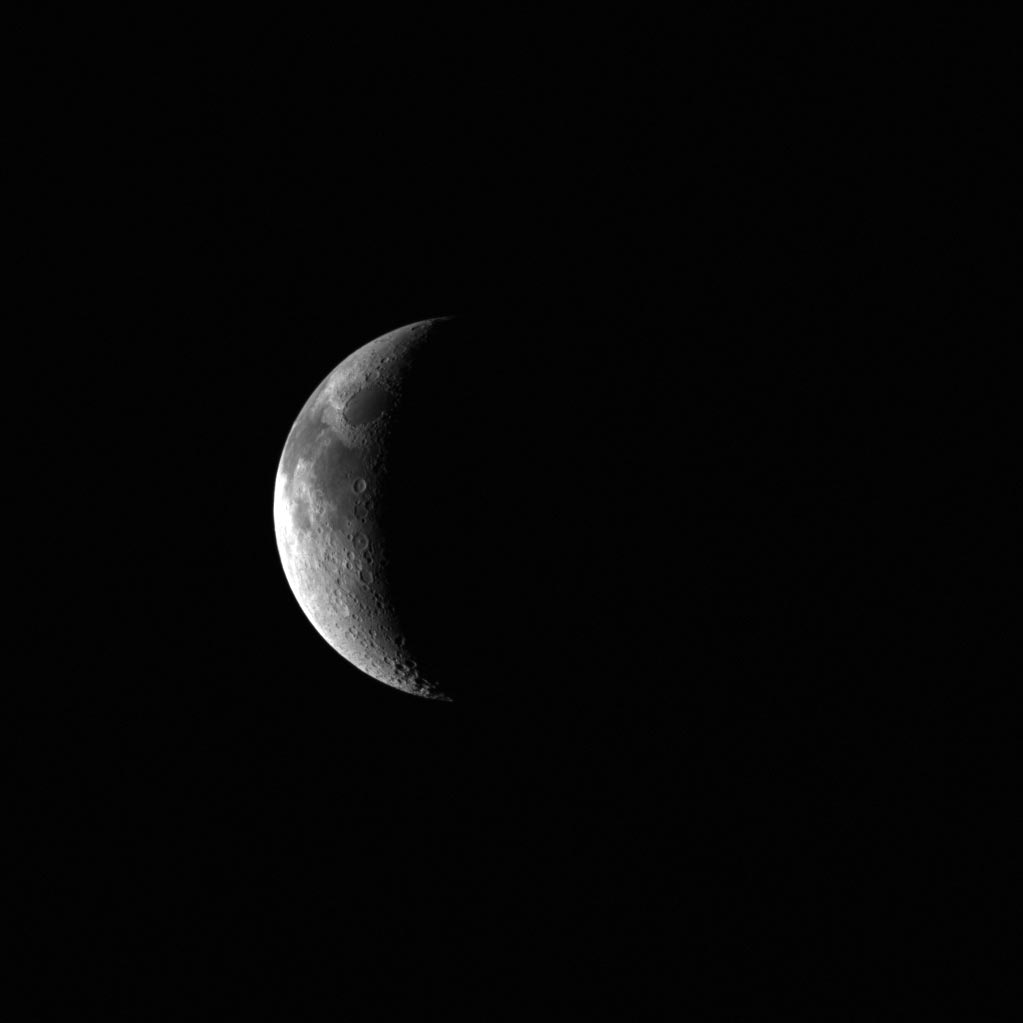
This approach to the Earth is also an opportunity for the probe to calibrate its instruments and test their working status in the space environment. JUICE passed through the Earth's magnetotail in the days before and after the flyby, measuring the magnetic field and charged particles far away from the Earth; these data are expected to be combined with the observations of the SMILE mission, a collaboration between Europe and China, to help study how solar wind activity affects the Earth's magnetosphere and polar regions. The probe can only rely on battery power when passing through the Earth's shadow, so the team arranged the instrument work based on scientific value and operating conditions.
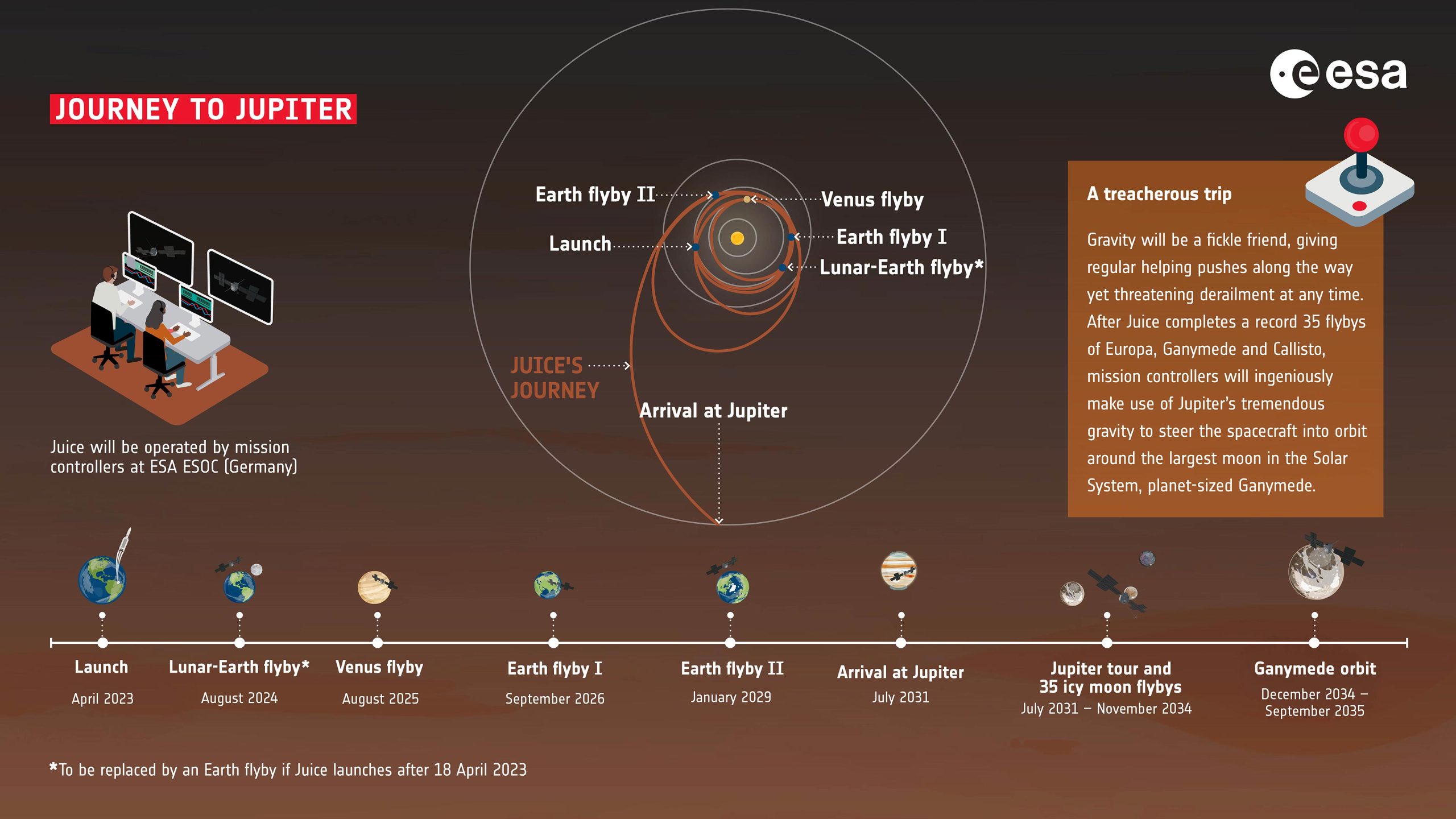
JUICE will be launched in April 2023. During the eight-year journey to Jupiter, it will need to use the gravity of the moon, Earth and Venus to adjust its speed and direction multiple times to save fuel. It plans to fly by the Earth again and for the last time in January 2029, and is expected to arrive at Jupiter in July 2031. It will then conduct observations of Jupiter, Ganymede, Callisto and Europa, and plans to conduct 35 satellite flybys and eventually enter the orbit of Ganymede. The mission is designed to study the geology and ocean environment of these icy moons and whether they have the conditions to support past or present life. It is not a direct confirmation mission to find life.
Comments