
Abstract:
Anduril Industries, a US defense technology company, announced that its first independently developed satellite has successfully completed an important technology demonstration. The long-wave infrared sensor carried by the satellite can detect other spacecraft in the absence of sunlight. By capturing the thermal radiation released by the target, it can fill the observation blind spot in the shadow area of the earth that exists in the traditional satellite monitoring system.
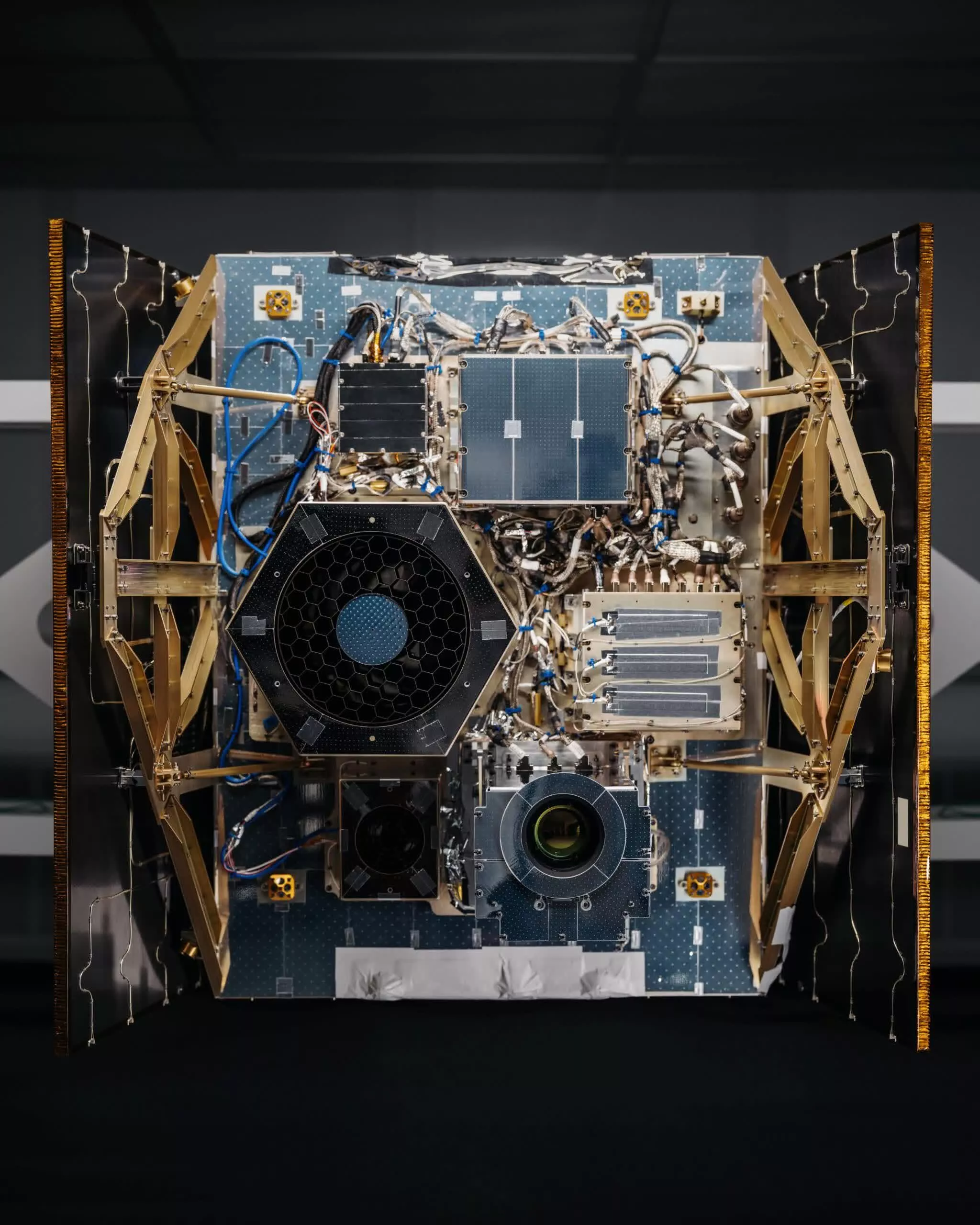
The satellite, named Anduril-216, entered space on a SpaceX ride-sharing launch mission in July this year and is operating in a low-Earth orbit about 590 kilometers from the earth. The satellite was funded and developed by Anduril itself. The overall size is roughly equivalent to an oven. It is mainly used to verify the space monitoring technology independently developed by the company.
Anduril said that every time Anduril-216 orbits the Earth, it spends about one-third of its time in the Earth's shadow. At this stage, traditional optical sensors that rely on visible light cannot effectively observe spacecraft that are not illuminated by the sun. If the target satellite happens to adjust its orbit or maneuver at this time, the ground monitoring system may temporarily lose track of it.
This is especially important for military space surveillance. The U.S. Space Force needs to continuously monitor the operating status of other countries' satellites, determine whether potential opponents are implementing threatening orbital maneuvers, and also issue early warnings of possible collisions to global satellite operators.
Currently, satellite monitoring mainly relies on ground radar, ground optical telescopes and optical sensors deployed in space. However, the ground monitoring network cannot cover all regions of the world, and the United States cannot arbitrarily deploy observation equipment on the sovereign territory of potential opponents. Therefore, when a satellite enters the Earth's shadow region, the monitoring system may experience brief tracking gaps.
The solution adopted by Anduril this time is long-wave infrared imaging technology. Unlike traditional optical cameras that rely on sunlight to illuminate the target and then image it through reflected light, long-wave infrared sensors can directly detect the thermal radiation released by the object itself. Even if the target satellite is in a completely dark environment, as long as its thermal radiation can be recognized by the sensor, there is still a chance of being discovered and tracked.
Gokul Subramanian, senior vice president of engineering at Anduril, said that this set of sensors has a very large dynamic range and is relatively less interfered by sunlight, so it can work in a completely dark environment. He believes that this capability can help the U.S. military maintain surveillance of other spacecraft in orbital areas that have been difficult to observe continuously in the past.
Adam Thurn, head of Anduril's Orbital Systems Department, also pointed out that traditional visible light sensors often have difficulty continuing to work after satellites enter the Earth's shadow, while long-wave infrared systems can use the thermal signature of targets to fill this gap, giving monitors the opportunity to observe the orbital maneuvers implemented by opponents during these periods.
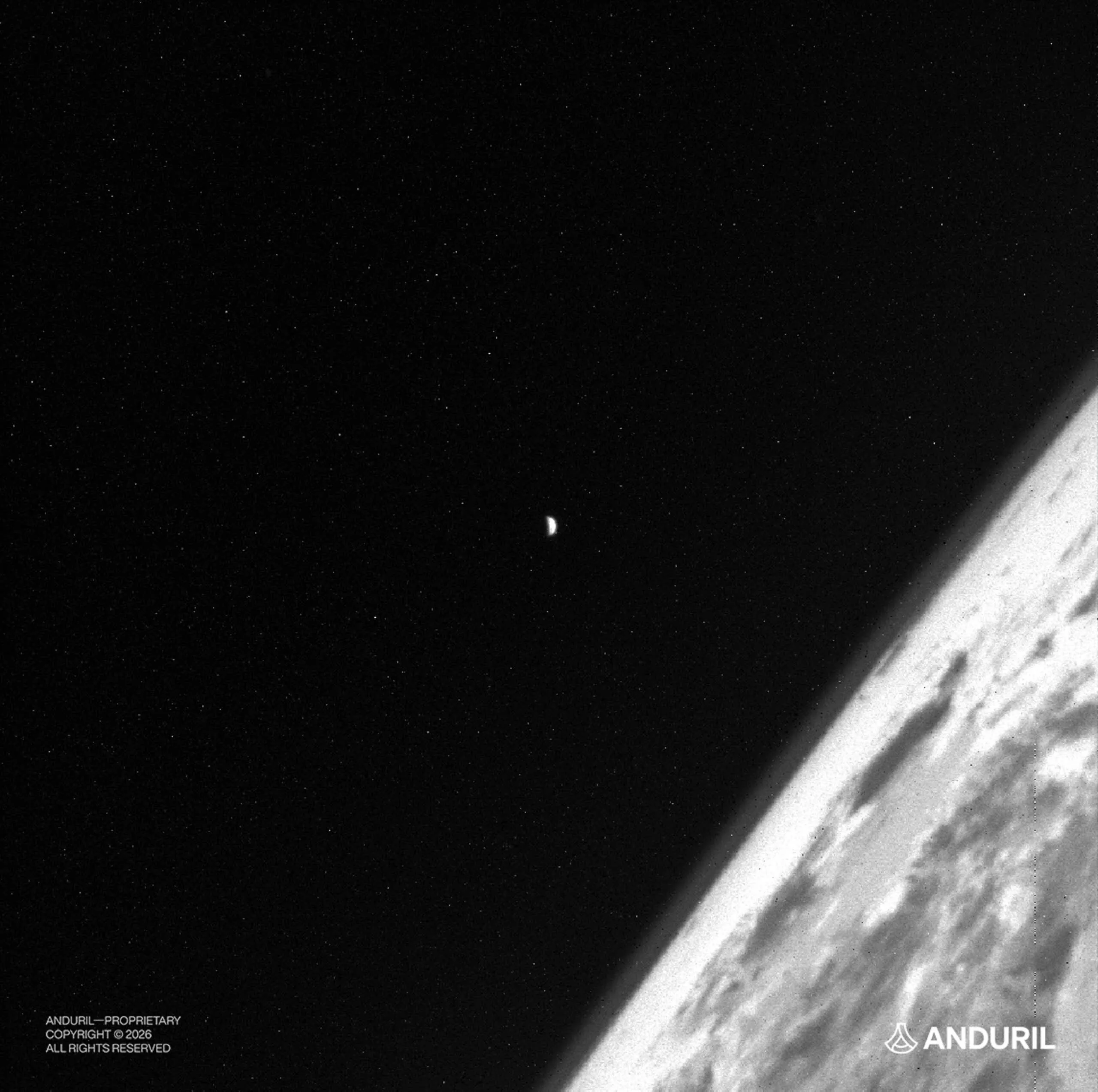
This technology was not developed entirely from scratch. Anduril has applied its infrared imaging technology accumulated in autonomous weapons systems to the space field. The company has released an infrared image taken by Anduril-216, showing the moon appearing near the Earth's horizon. This is one of a small number of images currently on display, mainly used to illustrate that the sensor is able to work normally in an orbital environment.
Thurn said that this long-wave infrared system can not only detect distant spacecraft as unresolved targets, but also obtain more detailed imaging information when the distance is close enough. The so-called unresolved imaging means that the sensor can identify the target and its location, but cannot clearly distinguish the specific structure of the target; when the observation satellite is close to the target, it is possible to obtain more detailed images that can be used to check the external conditions of other satellites.
At present, Anduril mainly focuses its research and development on low-Earth orbit monitoring, but the company believes that this technology can also be applied to other orbits in the future, and even extended to the cislunar space to monitor spacecraft activities near the moon.
In addition to the infrared sensor, Anduril-216 is also equipped with two other important systems, namely the mission calculation module and the dynamic load power module.
The mission computing module is responsible for processing and merging data collected by different sensors within the satellite, such as infrared images and visible light images, and directly generating target tracking results without having to transmit all raw data back to the ground for manual analysis. This on-board processing capability reduces data transmission requirements and shortens the time between target discovery and judgment.
The dynamic load power module is responsible for adjusting and managing power supply according to the needs of different mission loads, allowing different equipment to be more flexibly integrated into the satellite platform. Anduril hopes to reduce the adaptation costs between different satellite missions through standardized modules and avoid the need to redesign the entire power system every time the load is changed.
It is worth noting that Anduril has no plans to establish its own satellite manufacturing production line. The satellite platform of Anduril-216 is provided by the start-up Apex Space. The company prefers to purchase third-party satellite platforms and then integrate self-developed sensors, computing modules and power systems to form a space system suitable for different missions.
Anduril currently has more than 350 employees engaged in space business and is expanding related technical teams and infrastructure. The company also previously acquired commercial satellite tracking company ExoAnalytic Solutions to further enhance its space situational awareness capabilities.
In terms of business model, Anduril currently does not plan to sell entire satellites or sensors to the U.S. government. Instead, it hopes to acquire space monitoring data by deploying its own equipment and then provide this data to the U.S. military. The company stated that it has not yet sold the system demonstrated by Anduril-216 to external customers as an independent product, but it does not rule out changing this strategy in the future.
This technology demonstration marks Anduril's official expansion of its business scope from traditional land, air and sea autonomous systems to the space field. As the number of global satellites continues to increase, close approaches, orbit adjustments, and potential collision risks between satellites have received increasing attention. Technology that can continuously track spacecraft under all-weather conditions is also becoming an important part of military and commercial aerospace monitoring.
However, Anduril currently publicly displays mainly lunar images taken by infrared sensors, and the company has not released complete test data that is sufficient to independently evaluate its actual tracking accuracy for other satellites. Therefore, this successful demonstration proved that the relevant equipment has entered orbit and has preliminary working capabilities, but there is still room for further testing before it can verify its full performance in complex military surveillance missions.
Comments