
Abstract:
NASA’s Voyager 1 probe reached an unprecedented milestone on November 18, 2026: the distance between it and the Earth reached one light-day, which is the distance that light can travel in 24 hours. This is also the first time a human-made spacecraft has reached this distance.
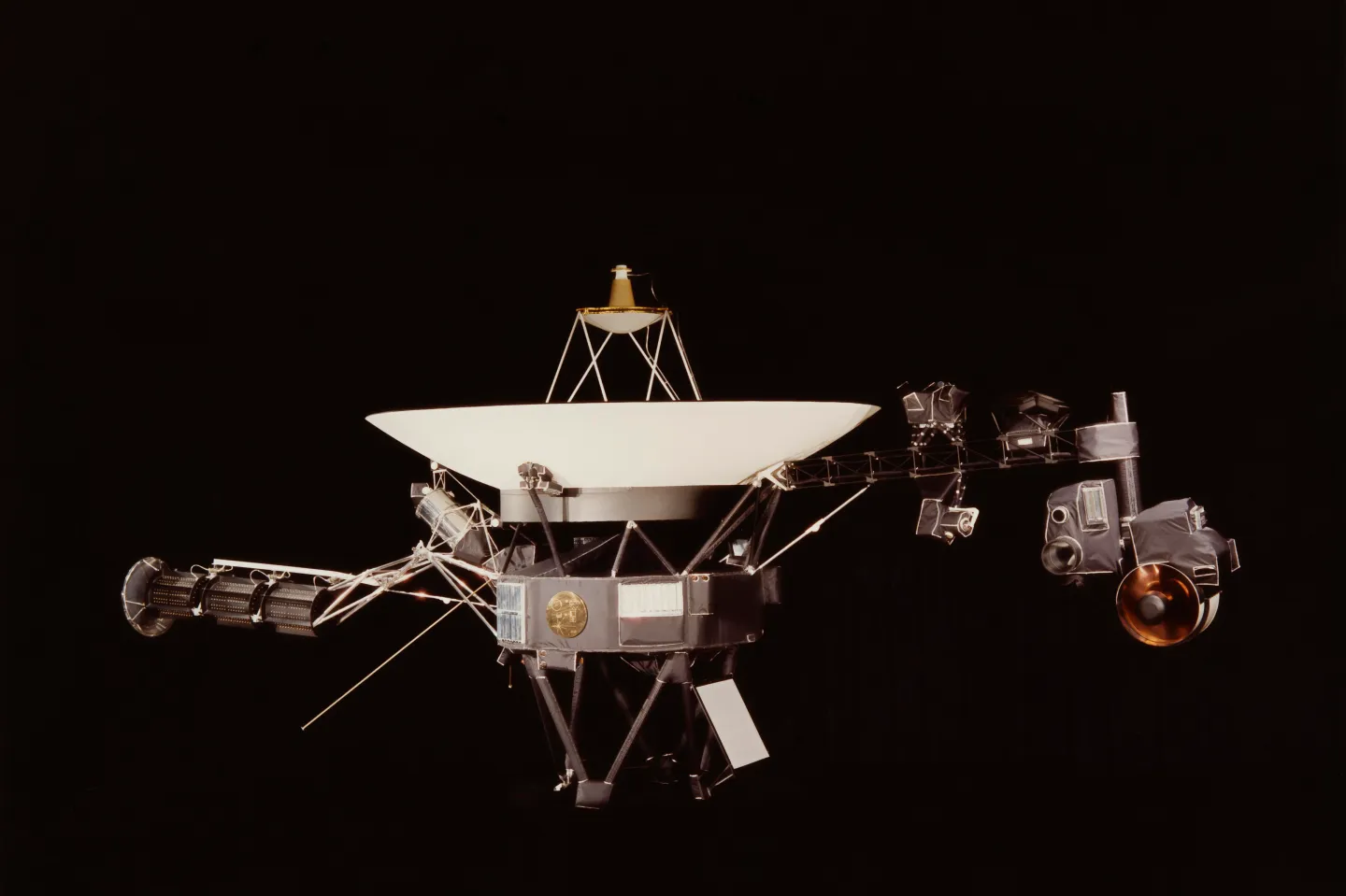
According to NASA's calculations, Voyager 1 reached this position at about 5:16 a.m. Eastern Time on November 18, about 16.094 billion miles (about 25.9 billion kilometers) from the Earth. Because the probe continues to send scientific data to Earth, this milestone also means that radio commands from the ground control center take a full day to reach the probe, and the probe's response also takes a day to return.
A light day is not a unit of time, but a unit of distance, which refers to the distance traveled by light in a vacuum for 24 hours. The speed of light is about 299,800 kilometers per second, so one light day is about 25.9 billion kilometers. By comparison, the average distance between the Earth and the Sun is about 150 million kilometers, and it only takes about 8 minutes and 20 seconds for sunlight to reach the Earth.
Voyager 1 was launched on September 5, 1977 and has been flying in space for more than 49 years. It is currently moving away from the solar system at a speed of about 38,000 miles (about 61,000 kilometers) per hour, making it the farthest man-made object from Earth.
The original mission of this probe is to explore the giant planets in the outer solar system. It has flown by Jupiter and Saturn, returning a large amount of scientific data about the planet's atmosphere, satellites, magnetic fields and rings. After completing the exploration of Saturn in 1980, Voyager 1 changed its flight direction and began its continuous voyage to the outer space of the solar system.
In August 2012, Voyager 1 passed through the heliopause and became the first spacecraft in human history to enter interstellar space. The so-called heliosphere is a huge area formed by the continuous release of charged particles and magnetic fields from the sun. The top of the heliosphere is the boundary between this protective bubble and interstellar space.
Voyager 1 is now far away from the area where the solar wind can directly dominate, but it is still continuing to measure magnetic fields, cosmic rays and plasma waves in interstellar space. Scientists use these data to study the boundary between the solar system and the surrounding interstellar medium, as well as the impact of solar activity on the distant space environment.
Suzanne Dodd, head of the Traveler Project, said that reaching a day of light is an amazing achievement, and she had not even expected that she would be able to witness this moment. She pointed out that the detector is still continuing to provide valuable scientific data, and researchers hope to extend its working time as much as possible.
One of the noteworthy findings is that after Voyager 1 passed through the heliopause, the measured magnetic field direction did not quickly change to the typical interstellar magnetic field direction as some scientists had expected, but still maintained the direction related to the influence of the sun. The research team is continuing to observe when magnetic fields change to further understand the space environment near the boundaries of the solar system.
The detector also detected extremely weak plasma oscillations in interstellar space. These signals reflect the continuous vibrations of the thin gas and provide scientists with rare data to study the density and physical properties of the interstellar medium.
Voyager 1’s twin detector, Voyager 2, is still operating in interstellar space. It was launched on August 20, 1977, about 16 days earlier than Voyager 1, but is still closer to Earth due to a different flight path. Voyager 2 passed through the heliopause in 2018 and is not expected to reach a light-day distance until November 2035.
Both probes carry the famous Voyager Golden Record, which records natural sounds, music, language, images and information about human civilization on Earth. These contents were originally intended as a symbolic interstellar message in the hope that alien civilizations that may encounter them in the future can understand the Earth and humans.
However, the detector's energy has become a major limitation on the continuation of the mission. Voyager 1 and Voyager 2 used radioisotope thermoelectric generators for power. As plutonium-238 continues to decay, the power it can provide decreases year by year. NASA has continued to shut down some heaters and scientific instruments in recent years to save energy and maintain critical system operations.
Staff at NASA's Jet Propulsion Laboratory said that recent energy-saving measures may allow the two probes to maintain communication capabilities for another three to four years. However, existing power is sufficient to keep currently operating scientific instruments operating until at least 2027, the 50th anniversary of the Voyager mission. As for what will happen next, it is difficult to predict accurately.
Even if the detectors eventually stop working, they will continue to fly along their established orbits. Voyager 1 is currently flying toward Gliese 445, a star in the constellation Ursa Minor, which is more than 17 light-years away from Earth. On its current trajectory, the probe is expected to pass about 1.7 light-years away from the star in about 40,000 years.
From its launch in 1977 to its arrival on one light day, Voyager 1 took more than 49 years to travel approximately 25.9 billion kilometers. Although its speed reaches tens of thousands of kilometers per hour, it is still extremely slow compared to the speed of light. This milestone most intuitively demonstrates the huge scale of interstellar space: even a radio communication between the farthest spacecraft currently flown by humans and the Earth already requires calculations in days.
Comments