
Abstract:
The Neil Gehrels Swift Observatory under the National Aeronautics and Space Administration (NASA) has finally ended its scientific exploration mission after operating in space for nearly 22 years. This space telescope, which was originally planned to work for only two years, returned to the Earth's atmosphere on November 4, 2026. During the high-speed reentry process, most of its structure is expected to have burned and disintegrated, bringing an end to its more than two-decade cosmic observation mission.
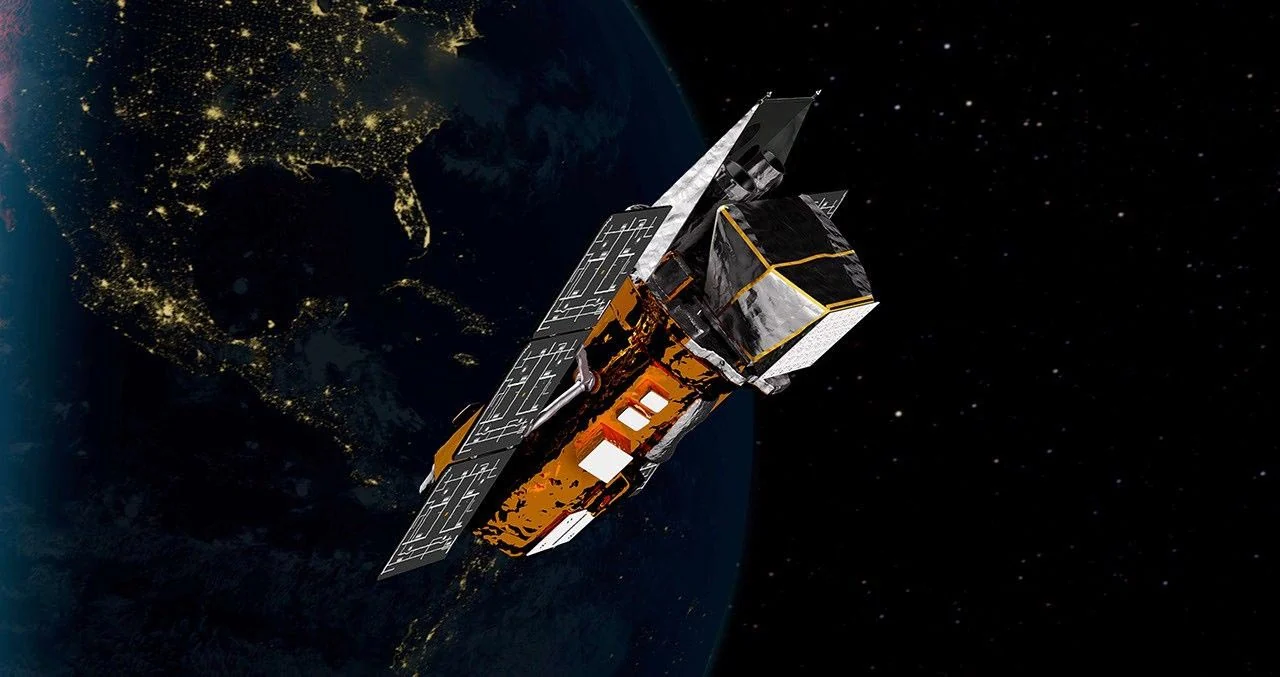
The U.S. Space Force confirmed that the Swift Observatory entered the Earth's atmosphere at 7:39 a.m. Eastern Time on November 4, located over the northern part of Sumatra, Indonesia, at approximately 3.4 degrees north latitude and 98.6 degrees east longitude. NASA had previously predicted that most of the spacecraft's structure would burn up as it passed through the atmosphere, but it did not rule out that a small amount of debris could remain and fall to the ground or ocean.
The Swift Observatory was launched in 2004. The original design mission was only two years, and its main goal was to study gamma ray bursts. This is one of the most powerful explosions in the universe, often associated with extreme astrophysical processes such as the death of massive stars or the merger of compact objects. Because gamma-ray bursts may last only a few seconds to minutes, scientists must quickly locate and conduct observations after the burst occurs in order to capture key data.
To achieve this goal, Swift Observatory adopted a groundbreaking design at the time, equipped with three telescopes capable of detecting light in different wavelength bands, allowing it to study high-energy events in the universe from multiple angles. Unlike traditional space telescopes, it can quickly adjust its attitude after detecting a sudden energy burst, turn the observation equipment to the target area, and send timely alerts to the ground and other astronomical observation facilities.
This rapid response capability allows other observatories to follow up within brief observation windows, documenting cosmic phenomena that might otherwise disappear if responses were slower. Swift Observatory has therefore become an important tool for studying gamma ray bursts and has promoted astronomers' understanding of the phenomenon of high-energy bursts in the universe.
As the mission continued to extend, its scientific value gradually exceeded its original design goals. In addition to gamma-ray bursts, Swift is also involved in the study of active galaxies, supermassive black holes, and violent X-ray flares from stars. It also observes supernova explosions that occur at the end of the life of massive stars, providing important data for scientists to understand stellar evolution and the circulation of matter in the universe.
The observation range of this telescope even extends to the inner solar system. It has provided valuable information for the study of comets and asteroids, and demonstrated the application potential of multi-band space observation equipment in different fields of astronomy.
The Swift Observatory was originally designed as a short-term science mission, but ended up in orbit for nearly 22 years, far longer than originally expected. Its long-term operation not only accumulated a large amount of observation data, but also proved the importance of rapid response and multi-band collaborative observation for modern astronomy.
The mission officially ends as the spacecraft reenters the atmosphere. However, the scientific data it left behind will continue to serve astronomical research. For scientists, the retirement of a telescope does not mean the end of research. The observation records accumulated in the past 22 years may still help humans discover new laws of the universe in the future.
Comments