
Abstract:
According to the Associated Press,
The U.S. Space Force predicts that NASA's Swift observatory will plunge into the atmosphere as early as this Friday.
A previous private space rescue mission costing $30 million failed, and the telescope, which has been in orbit for 22 years, is irreversibly sinking lower and lower. According to reports, the Swift Observatory conducted its last observation on October 20 and is currently orbiting less than 171 miles above the Earth's surface.
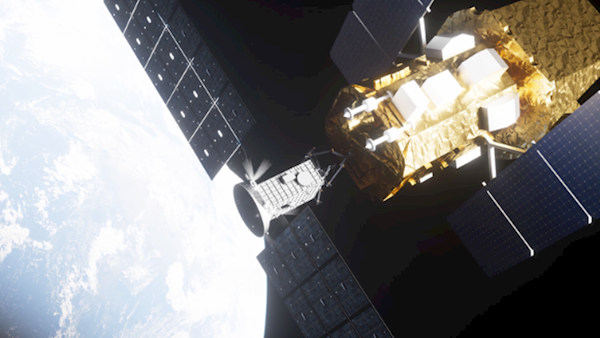
Swiss Observatory
The observatory weighs about 1.5 tons, and most of its structure will burn when it re-enters the atmosphere. However, NASA mission chief scientist Brad Chenko said that a small number of parts made of tungsten alloy that is denser than lead and some mirror components may withstand the high temperatures of re-entry, and the wreckage may fall to the ground.
The U.S. Space Force is continuing to track the telescope's declining trajectory.
The current predicted debris landing area covers parts of Africa, Australia, India, Southeast Asia, and Central and South America, but most of the debris will most likely fall into the ocean.
This "space funeral" made the Swift team both sad and grateful. The Swift telescope was launched on November 20, 2004.
It is specially designed to detect the most violent explosion phenomena in the universe - gamma ray bursts and supernovae.
During its 22 years of service, Swift has observed more than 2,000 gamma ray bursts, more than 1,400 supernova explosions, and detected rare astronomical events such as stars being torn apart by black holes. It has made irreplaceable contributions to human understanding of the extreme physical processes of the universe.
The trigger for this crash was a failed rescue deal. The Swift Observatory is currently valued at approximately US$450 million (taking into account inflation). Due to the continued decline in orbital altitude, NASA urgently contracted an Arizona aerospace company this year to spend US$30 million to implement a private rescue mission code-named "Swift Boost" in an attempt to push it back to a higher orbit with a private spacecraft.
However, the LINK spacecraft performing the rescue mission was launched into orbit by a "Pegasus XL" air-launched rocket on July 3. About three weeks later, its attitude lost control (multi-axis roll about 9 degrees/second, two reaction wheels failed). Although it was repaired and slowed down by the software, it was only close to 12-15 kilometers away from Swift recently.
NASA announced on August 19 that it would cancel the capture and boost mission. The LINK spacecraft itself crashed again in September. The $30 million rescue mission was in vain, and Swift’s crash could no longer be prevented.

A 200,000 light-year-wide area captured by the telescope at Swift Observatory
Comments