
Abstract:
NASA announced that the Neil Gehrels Swift Observatory is expected to reenter the Earth's atmosphere on November 4, 2026, bringing an end to this scientific mission that has lasted nearly 22 years.
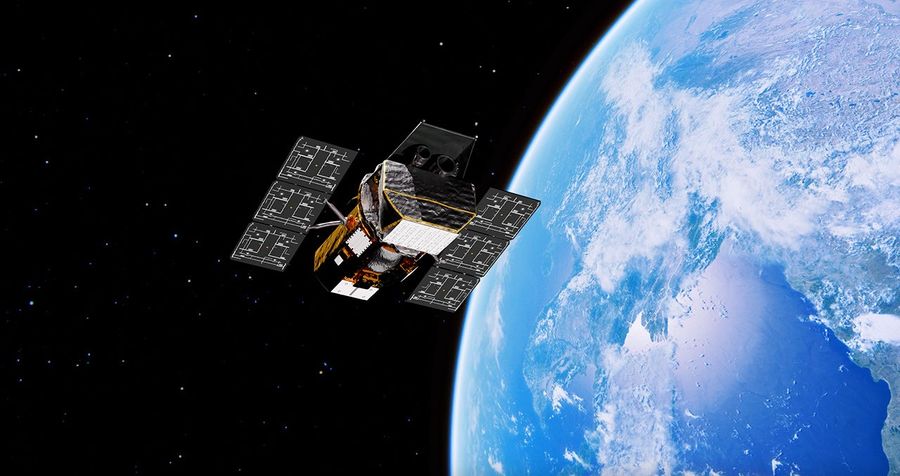
NASA stated that the U.S. Space Force predicts based on orbital data that the spacecraft weighing approximately 1,450 kilograms will enter the atmosphere on November 4, but there is still an uncertainty range of about 11 hours for the specific time. As the orbit continues to decay, the observatory will eventually be unable to maintain stable operation and fall into the Earth's atmosphere due to atmospheric drag.
According to NASA's assessment, most of the Swift Observatory's structures will be burned due to high temperatures during the reentry process, but some components may still pass through the atmosphere and eventually fall to the surface. Due to the low inclination of the spacecraft's orbit, the potential fall zone for any surviving debris will be limited to the area between 20.6 degrees south latitude and 20.6 degrees north latitude.
NASA emphasized that the risk of debris causing harm to people on the ground is extremely low, with an estimated probability of about 1 in 2,100. The U.S. Space Force and NASA will continue to track the status of the vehicle throughout the process and update reentry predictions based on the latest orbital data.
The Swift Observatory was launched in November 2004 and was originally designed to have a lifespan of only two years. Its main task is to study one of the most violent explosive phenomena in the universe - gamma ray bursts. Equipped with three scientific instruments capable of covering different wavelength bands, the mission was the first multi-band space observatory dedicated to rapidly detecting and tracking gamma-ray bursts.
During more than 20 years of service, the Swift Observatory has far exceeded its original design life. It can quickly adjust its attitude after detecting a short and strong cosmic explosion, observe the target, and issue timely warnings to the global astronomical observation network, so that ground and other space telescopes can carry out follow-up research.
In addition to gamma ray bursts, Swift Observatory also observes a large number of different types of celestial objects and cosmic events. It helps scientists study active galactic nuclei driven by supermassive black holes, X-ray flares produced by stars, supernova explosions, and comets and asteroids in the solar system. It has made important contributions to the development of high-energy astrophysics.
NASA pointed out that the Swift Observatory not only changed the way of studying gamma ray bursts, but also became an important pioneer in modern rapid response astronomy. By locking in on sudden celestial phenomena within minutes or even tens of seconds, it enables astronomers to obtain critical observational data at unprecedented speeds.
In fact, NASA tried to extend the life of the Swift Observatory through commercial space services this year. According to the plan, the LINK service aircraft developed by the private aerospace company Katalyst Space will dock with the Swift Observatory and push it to a higher orbit. However, the mission encountered an attitude control failure during execution and ultimately failed to achieve its intended goal. As the orbit continued to decline, NASA finally decided to end the mission and prepare for its natural re-entry process.
As of the end of the mission, the Swift Observatory has been in orbit for nearly 22 years, far exceeding its original lifespan by more than ten times. NASA said that this telescope has left an extremely rich scientific legacy, and a large amount of observation data will continue to be studied and used by scientists around the world in the future.
As Swift Observatory is about to leave the space stage, an era of astronomical observation that lasted for more than 20 years has officially come to an end. Although its physical carrier is about to disappear into the atmosphere, its results in exploring the most powerful explosion phenomena in the universe will still have a long-term impact on future astronomical research.
Comments