
Abstract:
An international research team of astronomers recently announced that they may have discovered for the first time a universal mechanism that drives black holes to produce high-speed jets. Researchers say that whether it is a stellar black hole with a mass only a few times that of the sun, or a supermassive black hole located in the center of a galaxy with a mass of millions or even billions of times the mass of the sun, it is possible that the same jet initiation law is followed.
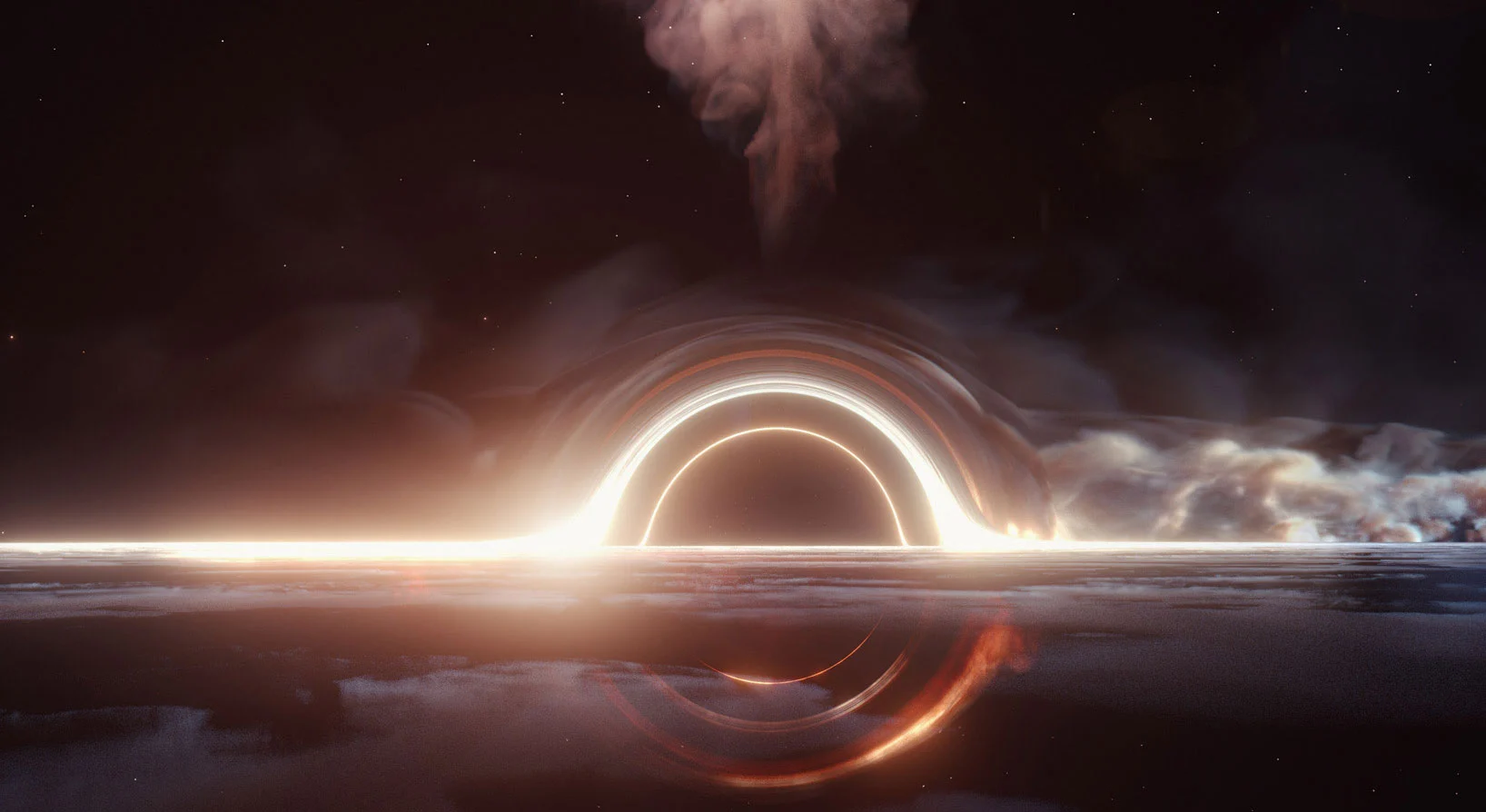
Black hole jets are one of the most spectacular phenomena in the universe. When matter falls into the vicinity of a black hole, some of the gas is not swallowed up, but is ejected into space along the black hole's poles at speeds close to the speed of light. These jets can extend thousands or even millions of light-years and have a profound impact on star formation, galaxy evolution, and even the entire cosmic environment. However, exactly what conditions trigger the formation of jets has always been an important mystery in astrophysics.
In this latest study, the research team analyzed observational data from multiple different types of black hole systems, including stellar black holes in the Milky Way and supermassive black holes in distant galaxies. The researchers focused on the relationship between the radiation released by the accretion disk around the black hole and the jet activity.
Research has found that when the rate at which a black hole accretes matter reaches a certain critical state, the system will undergo a significant transformation. At this time, the accretion disk, which originally released energy mainly in the form of radiation, began to transfer more and more energy into the jet structure, thereby generating a powerful high-speed particle flow. Researchers believe that this critical state appears to be widespread in black hole systems of all sizes.
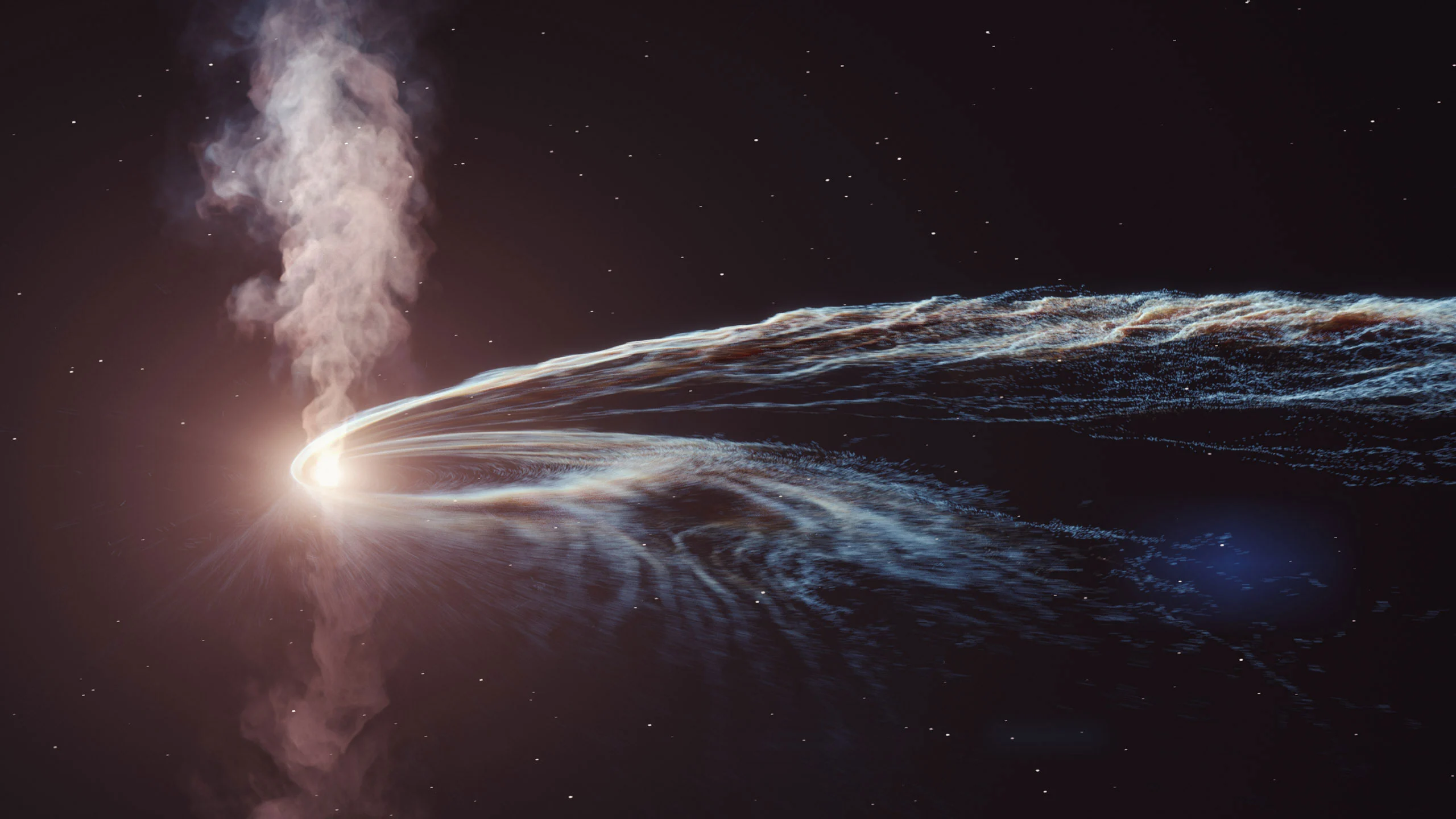
The authors of the paper pointed out that although different black holes vary greatly in mass, size and environment, they show surprising consistency in the formation process of jets. This means that the fundamental mechanism controlling the birth of jets may not depend on the size of the black hole, but is determined by certain universal physical conditions in the accretion process.
The research team said that this unified law helps explain a phenomenon that has puzzled astronomers for a long time. In the past, scientists have studied stellar black holes and supermassive black holes separately, but now more and more evidence shows that the two may only be "scaled versions" of the relationship in behavioral patterns. In other words, the corresponding process of a stellar black hole that lasts for hours or days may take hundreds to thousands of years to complete in a supermassive black hole, but the physical mechanism behind the two is basically the same.
Researchers believe that this discovery will help astronomers establish a more unified theoretical model of black holes. Because stellar black holes change quickly and are easy to observe, scientists in the future may be able to use these smaller black holes as "laboratories" to study the behavior of supermassive black holes that would otherwise take a very long time to observe.
In addition, understanding the mechanism of jet formation is also crucial to studying the evolution of the universe. Black hole jets can heat surrounding gas, inhibit or promote star formation, and change the trajectory of entire galaxies. Therefore, understanding how jets are generated is not only related to the black hole itself, but also related to the formation history of galaxies and large-scale structures of the universe.
The research team stated that in the future, it will further verify this unified model by combining data from more radio telescopes, X-ray observation equipment and new generation astronomical facilities. If the results of subsequent research are confirmed, scientists will be one step closer to solving the long-standing mystery of the formation mechanism of black hole jets.
Comments