
Abstract:
Astronomers have long hoped to look for evidence of dark matter through gaps, bends and other unusual structures in the streams of stars around the Milky Way. However, a new study from the University of Washington shows that even without the tiny clumps of dark matter thought to create these features, the gravitational structure of the galaxy itself may produce much the same phenomenon.
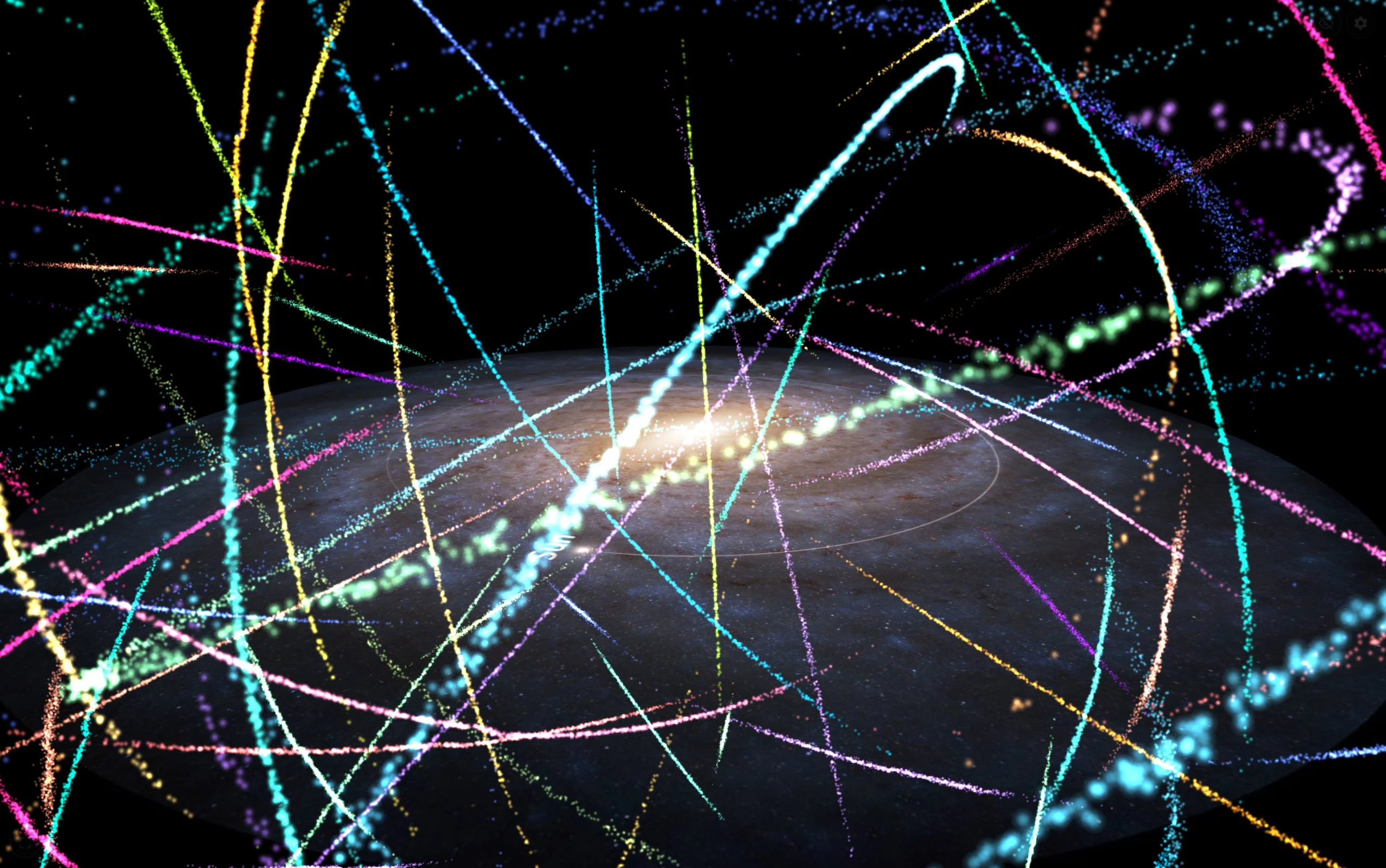
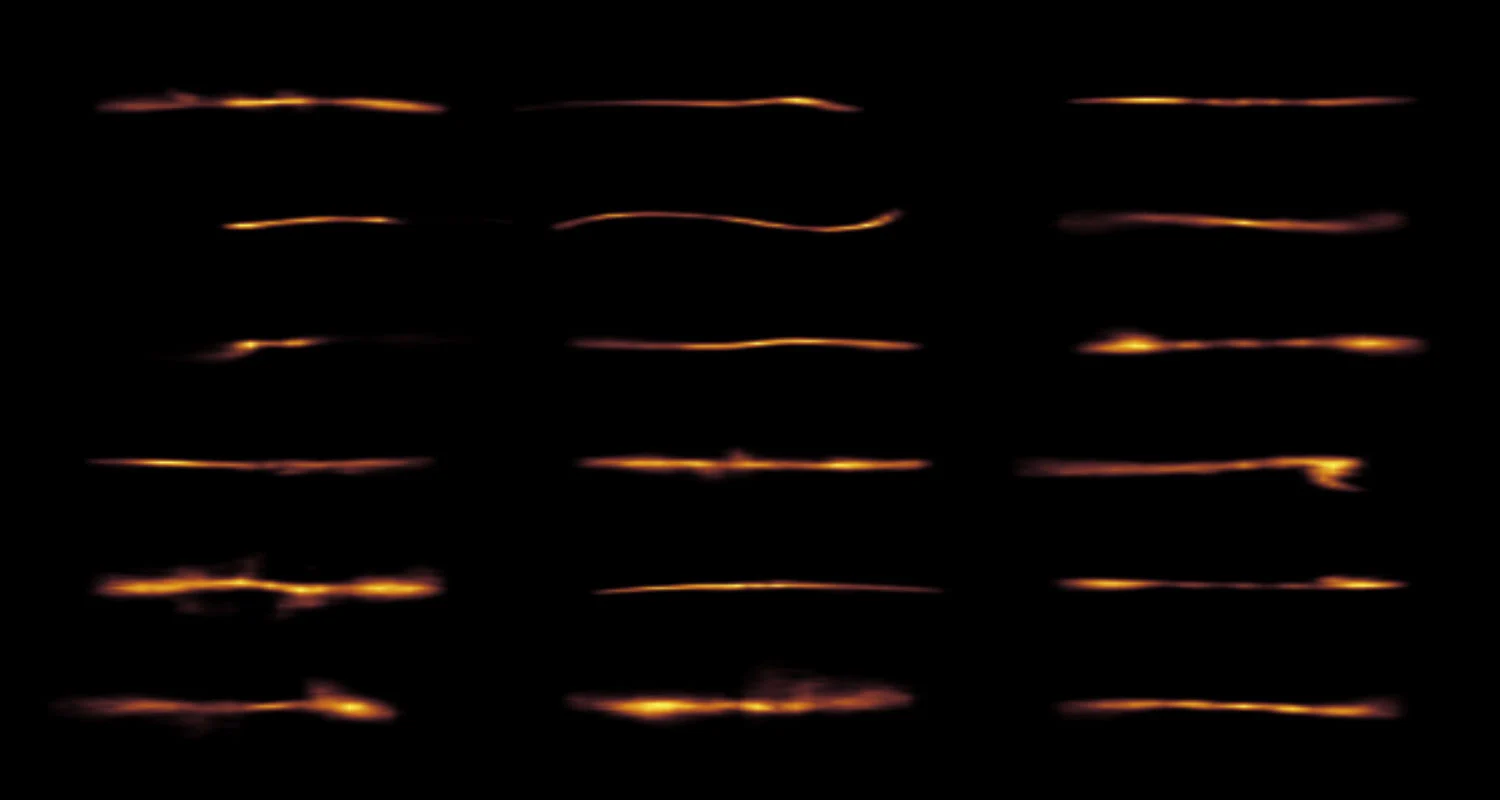
Stellar streams are elongated ribbons of stars orbiting galaxies. The researchers simulated about 15,000 stellar streams in four virtual galaxies similar in size to the Milky Way, and deliberately excluded small dark matter clumps called "dark matter subhalos." After the equivalent of 5 billion years of simulated evolution, almost all stellar streams developed irregular structures to varying degrees, and only 70 remained completely smooth.
Arpit Arora, the first author of the research paper and a postdoctoral fellow in astronomy at the University of Washington, said that the simulation results show that the host galaxy itself can form a variety of anomalies common in real star streams. Now, researchers can first predict the effects of the galaxies themselves and then further isolate the portion that may actually be caused by dark matter.
Relevant research has been published in the Astrophysical Journal.
These distortions mainly originate from the inhomogeneity of the internal structure of the galaxy. In the simulation, stars are not evenly distributed across the disk of the galaxy, but form regions with different densities, similar to the complex structures in real galaxies. As streams of stars pass through denser regions, uneven gravitational fields can bend, tear or scatter them.
Alora originally expected that the galaxy would create some anomalies, but she did not expect that there would be such a large number. Nearly every stream has some kind of structural change, he said, meaning the traditional assumption that streams are inherently elongated and smooth doesn't necessarily hold true.
Morphologies that emerged in the simulation included ripples, bends, kinks, protrusions, branches, gaps and stellar clumps. Some stellar streams are even completely torn apart by the complex and constantly changing gravitational environment of the host galaxy. Streams of stars closer to the galaxy's core tend to develop more irregular features because they pass through dense and structurally complex regions more frequently.
This discovery makes it more difficult to use stellar streams to study dark matter. Dark matter is believed to occupy the vast majority of the mass of the universe and provide the "skeleton" for the formation of galaxies. However, it does not interact with light and hardly interacts directly with ordinary matter. Scientists can currently only infer its existence through gravitational effects.
Nora Shipp, assistant professor of astronomy at the University of Washington and co-author of the paper, said that the Milky Way is one of the best laboratories for studying dark matter, and stellar streams are one of its sharpest tools. Stellar streams are formed when a group of stars enter a galaxy and are captured by its gravity. As this group of stars orbits the galaxy, the galaxy's gravity stretches it into elongated ribbons. Most galaxies may have stellar streams, but those around the Milky Way are the easiest to observe.
Many star streams in the Milky Way have gaps and kinks. In the past, astronomers have speculated that these structures may be formed by gravitational disturbances in streams of stars passing near dark matter subhalos. If this explanation holds true, the shape of the stellar stream is expected to help scientists understand the composition and distribution of dark matter.
However, new simulations show that before attributing these distortions to dark matter, researchers must first rule out similar effects from the host galaxy itself. Arora plans to add dark matter clumps back into subsequent simulations and test whether they produce unique patterns that are distinguishable from the effects of the galaxy itself.
Future observations may also help scientists make this distinction. The Simoni Survey Telescope at the National Science Foundation and the Department of Energy's Vera C. Rubin Observatory is expected to discover more of the Milky Way's stellar streams. A richer amount of observational data may help astronomers classify different structures in stellar streams and look for "fingerprints" more confidently related to dark matter.
James Davenport, a research assistant professor of astronomy at the University of Washington, pointed out that there is no simple and direct way to reveal the structure of dark matter. Although stellar streams are complex systems, they are still one of the most valuable ways to study dark matter near the solar system.
Comments