
Abstract:
A remnant of a star that exploded about 850 years ago is challenging people's traditional understanding of supernova explosions. An international research team used the Gemini North telescope to obtain the clearest observational images to date, and discovered that there are a large number of previously unresolved gas structures hidden inside the famous supernova remnant Pa 30. What is even more surprising is that the star that caused the explosion was not completely destroyed, but has survived to this day.
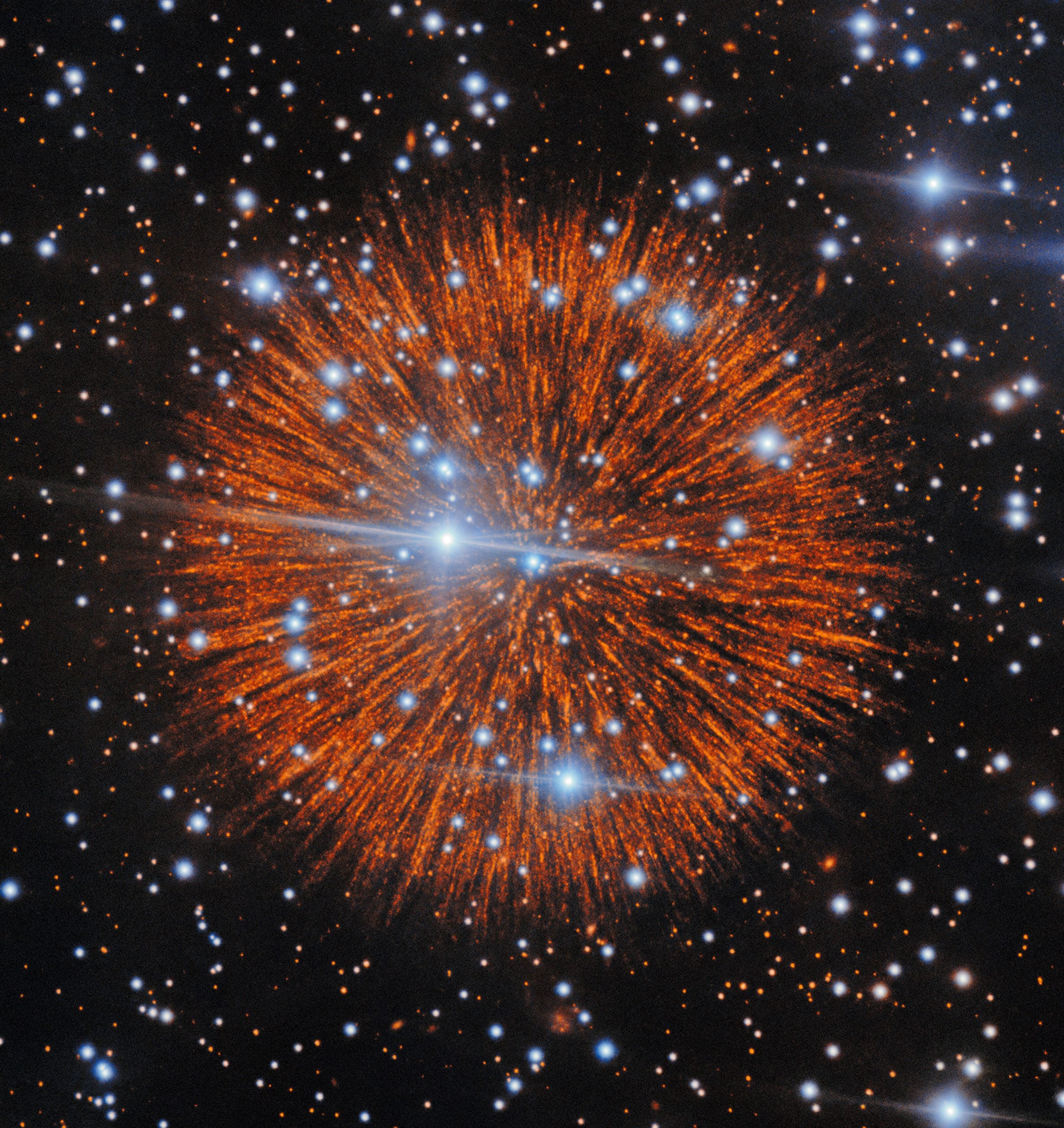
Pa 30 is about 7,500 light-years away from the Earth. Its outer periphery shows a radial shape similar to a dandelion, so it has long attracted the attention of astronomers. This target was originally discovered by a citizen scientist in 2013. Later, astronomers determined that it was related to a supernova explosion recorded in 1181 AD. This astronomical event was independently recorded by astronomers from China, Japan and the Arab region. With this confirmation, Pa 30 becomes one of only five historical supernovae that were clearly documented before the invention of telescopes and for which remnant counterparts were eventually found.
The research was co-led by Tim Cunningham of the Harvard-Smithsonian Center for Astrophysics and Ilaria Caiazzo, assistant professor at the Institute of Science and Technology Austria (ISTA), and the results have been published in the Astrophysical Journal.
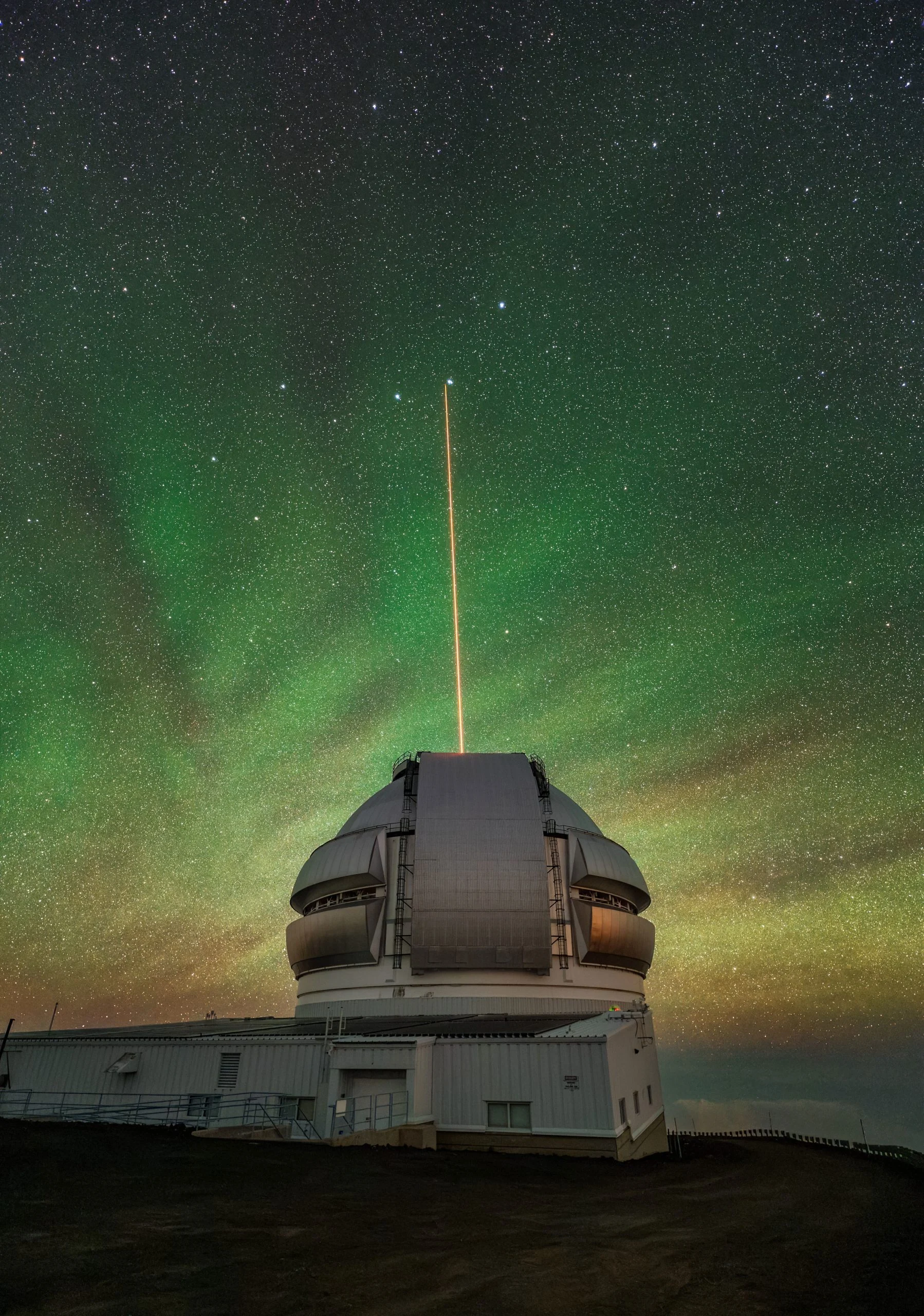
The research team used the Gemini North Telescope on Mauna Kea, Hawaii, to conduct high-resolution observations of Pa 30. By analyzing the specific wavelengths of light emitted by ionized sulfur and doubly ionized oxygen, the researchers were able to observe the inner structure of the ruins with unprecedented precision.
The results show that the new image reveals about ten times the number of filament-like gas structures than previously observed. Rather than smooth, continuous flows, these structures are made up of large, tightly packed knots of gas, like pearls on a string.
Caiazzo said that because Pa 30 is relatively close to Earth, scientists can see such rich details. She pointed out that the scale of each gas knot is extremely large, and even the area of the solar system extending from the sun to the orbit of Neptune can easily accommodate more than ten of them. The consistency in shape and size of these gas knots is particularly surprising. The research team hopes to explain their formation mechanism through theoretical models in the future.
The research also further confirmed that the star located at the center of the relic is a "zombie star" that survived the explosion of a Type Iax supernova.
Type Iax supernova is an extremely rare incomplete explosion event. Unlike traditional supernovae that completely destroy the star, this type of explosion leaves behind a remaining core. Pa 30 is currently the only known Type Iax supernova remnant in the Milky Way. Although scientists have found similar objects in other galaxies, Pa 30 is the only case where a surviving star has been directly observed.
Previous research believed that Pa 30 may have been formed by the collision of two white dwarf stars. White dwarfs are the high-density remnants of stars that have evolved, with a volume close to the size of the Earth but extremely high mass. When two white dwarfs collide, they can trigger a rare Type Iax supernova explosion.
In many supernova events, because the explosion is not completely symmetrical, the surviving objects usually acquire a "recoil"-like velocity and are violently pushed away from the center of the explosion. However, the research team found that the surviving stars in Pa 30 are located almost exactly in the center of the nebula, and their lateral motion speeds are extremely slow.
Caiazzo explained that the conservation of momentum in physics means that if the explosion process is highly symmetrical, the ejected material should also maintain a symmetrical distribution, and the remaining star will not gain significant recoil velocity. The team's measurements showed that the upper limit of the star's lateral velocity was so small that it could barely be seen leaving the explosion site.
This discovery provides important clues to understanding how type Iax supernovae are formed.
Although Type Iax supernovae are rare, researchers believe there may be many more such relics hidden in the Milky Way. Cunningham pointed out that the history of humans reliably recording stellar explosion events is only about a thousand years, so it cannot be ruled out that there are a large number of similar targets that have not yet been discovered, but are just hidden in the dark regions deep in the Milky Way.
He said that scientists are very lucky to be able to study such a special celestial body now, because this explosion not only occurred in a historical period, but also left independent observation records from multiple civilizations, providing valuable time coordinates for modern astronomy.
The research team believes that as a new generation of large telescopes continue to be put into use, humans are expected to discover more similar "zombie star" systems. At the same time, Pa 30 will also become an important reference sample for identifying such objects.
At present, there are still many unsolved mysteries in Pa 30, such as how those gas knots with highly uniform structures are formed. Researchers hope to use more in-depth observations and big data analysis in the future to screen candidate targets in the Milky Way and nearby galaxies.
Cunningham said that modern astronomy has entered the era of big data, and the unique characteristics displayed by Pa 30 will help researchers find more similar relics from massive observation data.
Caiazzo pointed out that as the observation distance increases, the celestial signals will become weaker and more difficult to resolve. Although Type Iax supernovae can be detected in distant galaxies, their remnant structures are often unresolved. Therefore, a relatively close and well-preserved target like Pa 30 is particularly valuable. In the future, the research team plans to use the unique properties of Pa 30 to continue to search for more stars that have exploded but survived in the Milky Way and surrounding galaxies.
Comments