
Abstract:
Recently, an international research team composed of astrophysicists from many countries published the latest results saying that the expansion of the universe is still accelerating and has not begun to slow down as claimed by a previous study that attracted widespread attention. Researchers believe that the conclusion that the expansion of the universe may be slowing down stems from a misunderstanding of observational data, while the mainstream theory of modern cosmology that dark energy drives the accelerated expansion of the universe still holds.
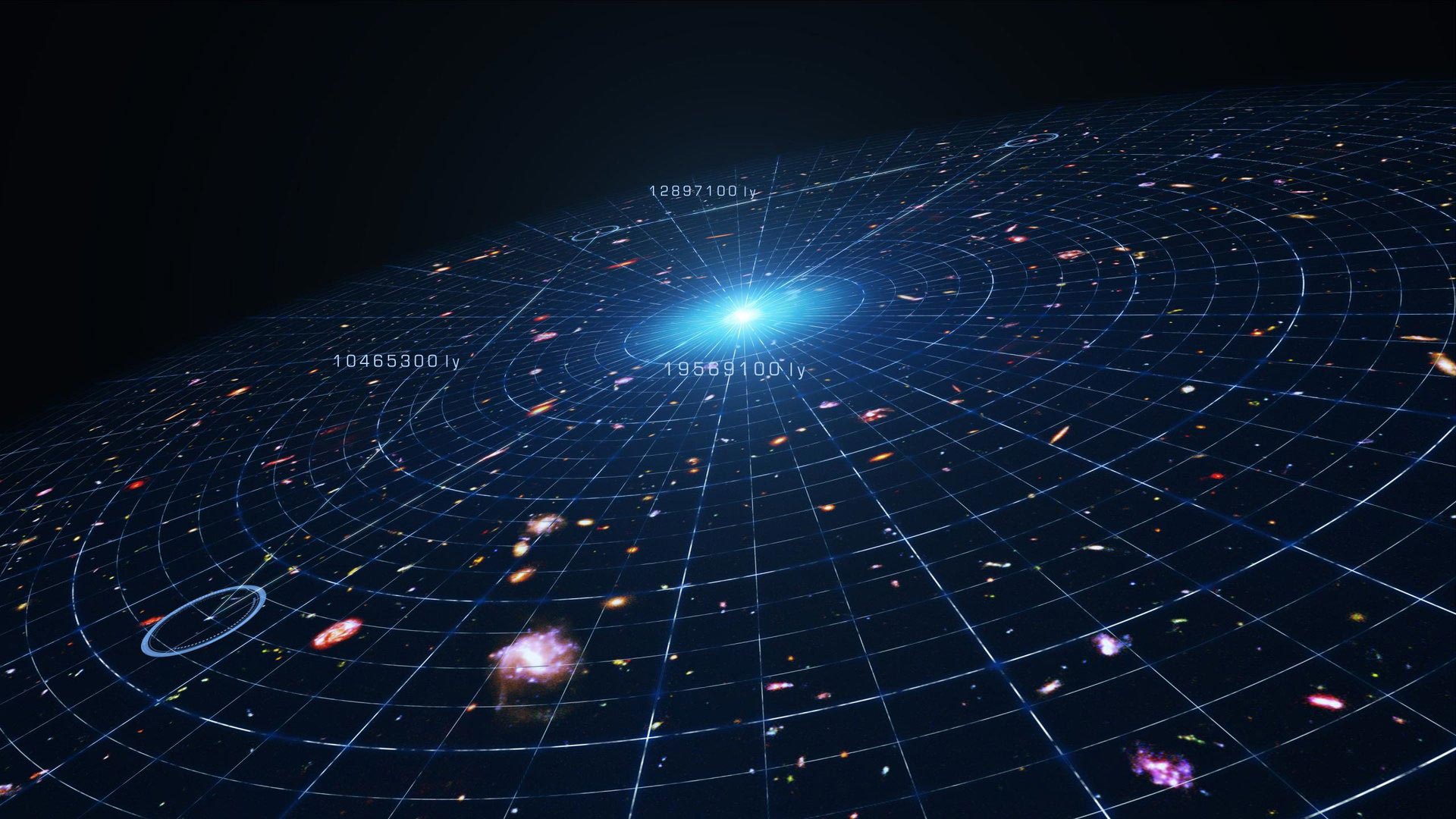
The research results have been published in the Monthly Notices of the Royal Astronomical Society. Members of the research team include many well-known scientists such as Adam Rees and Brian Schmidt, winners of the 2011 Nobel Prize in Physics.
The controversy originated from a South Korean study published in November last year. The study proposes that the expansion of the universe may have entered a deceleration stage, and it is speculated that the "dark energy" thought to be driving the accelerated expansion of the universe may be gradually weakening. If this conclusion is true, it will pose a major challenge to the current theoretical framework of cosmology.
According to current theory, dark energy is a mysterious energy whose properties are not fully understood. It exhibits an effect similar to "antigravity" and is considered to be the main driving force for the accelerated expansion of the universe. Since the end of the last century, numerous observations have supported this idea.
Dr. Phil Wiseman of the University of Southampton in the UK said that there is actually nothing wrong with the measurements that were widely accepted in the past, and that people's current understanding of the ultimate fate of the universe remains reliable. He pointed out that although this controversy once attracted academic attention, the latest analysis shows that there is no so-called "cosmological crisis." However, why dark energy continues to drive the accelerated expansion of the universe is still a major mystery that has not yet been solved by the scientific community.
Important evidence for the modern theory of accelerated expansion of the universe comes from observations of Type Ia supernovae. Type Ia supernovae are extremely bright celestial events formed after a violent explosion of a white dwarf star. Around 1998, scientists measured the brightness and distance of these supernovae and discovered that distant galaxies were moving away from us faster than expected, leading to the conclusion that the expansion of the universe is accelerating. This discovery ultimately earned Rees, Schmidt, and Saul Perlmutter the 2011 Nobel Prize in Physics.
However, a South Korean research team proposed another explanation last year. They believe that Type Ia supernovae from different eras may not have the same peak brightness. If the brightness of supernovae themselves changes with the age of the universe, then astronomers could mistake this brightness difference as evidence that the expansion of the universe is accelerating, when in fact the expansion of the universe may be slowing down.
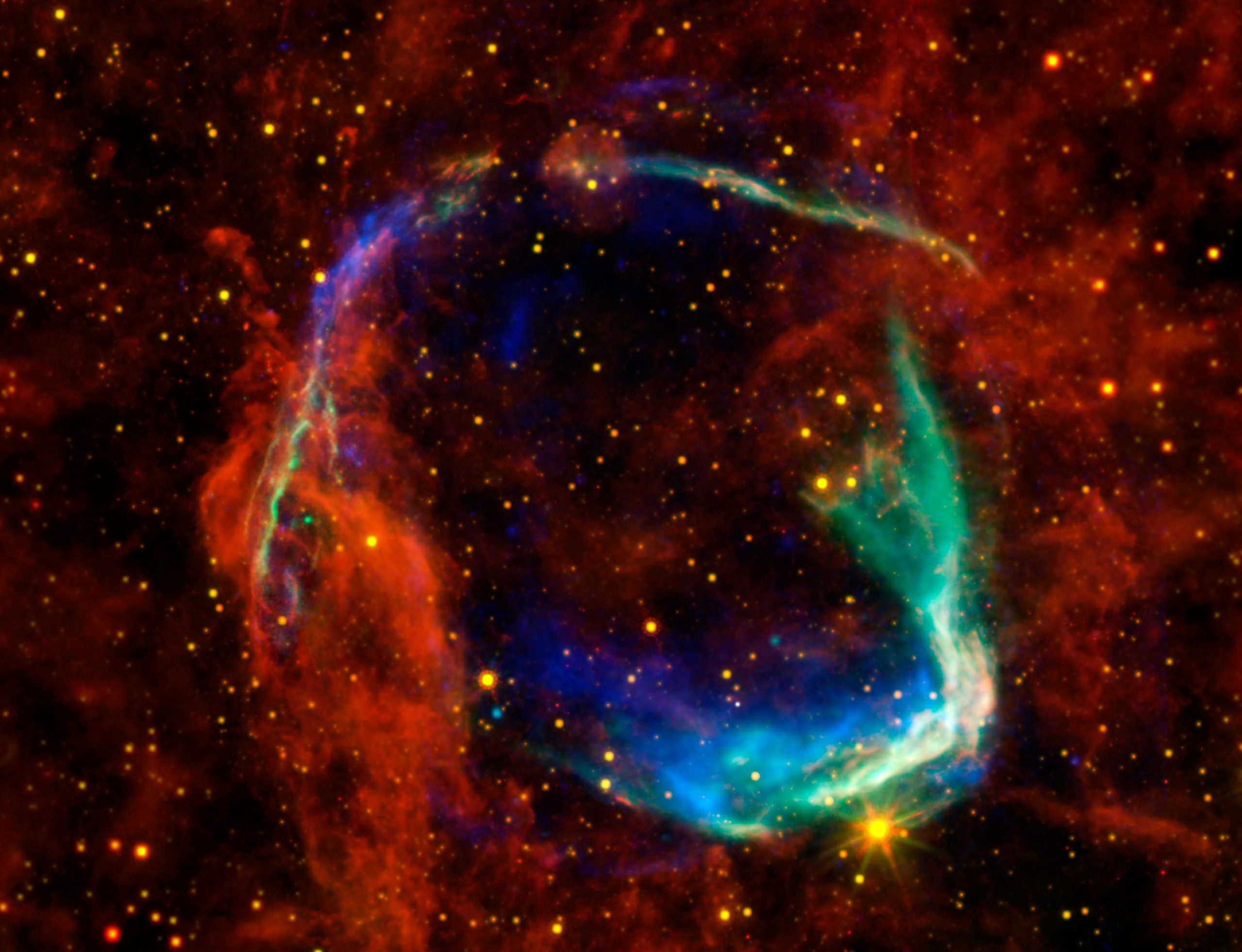
In response to this point of view, the new research team re-examined relevant data and analysis methods. They believe that the key problem in the Korean study lies in the bias in the way stellar ages are estimated. Previous research directly equated the age of the host galaxy to the age of the star that subsequently exploded as a supernova, but the new analysis shows that this assumption does not hold.
The researchers also pointed out that previous studies did not fully consider the impact of the mass of the host galaxy on supernova measurements. In fact, correcting the host galaxy mass is already a standard step in modern cosmological analysis, helping to improve observational accuracy and reduce systematic errors.
Professor Adam Rees said that any major claims that challenge existing theories need to undergo extremely rigorous testing. He pointed out that when researchers calibrate the supernova environment and different star populations according to modern standards, the evidence supporting the accelerated expansion of the universe is still highly consistent, and there is no sign of shaking the mainstream theory.
The research team believes that although this debate did not ultimately overturn the dark energy theory, it still has positive significance. Professor Mark Sullivan of the University of Southampton said questioning established theories was an important part of scientific development. Even if the relevant hypothesis turns out to be incorrect, it still prompts scientists to think about the mechanism of supernova explosions from a new perspective and pushes researchers to find more accurate methods of measuring dark energy.
Co-author Dr. Brody Popovich said that in recent years the research team has been committed to exploring the astrophysical processes of supernova explosions and the impact of these processes on cosmological measurements. After re-examining various basic assumptions this time, the researchers found that the existing theoretical framework already has a relatively complete understanding of these factors, and the related effects have been incorporated into the cosmological measurement system.
The latest research therefore concludes: There is currently no reliable evidence that the universe has begun to slow down its expansion, and dark energy is still the best theoretical framework to explain the accelerated expansion of the universe. For scientists, the real unanswered question is no longer whether dark energy exists, but what exactly this mysterious energy is and why it continues to dominate the evolution of the universe.
Comments