
Abstract:
Astronomers have long believed that supernova explosions in the early universe could open up channels for high-energy ultraviolet light through powerful outflows of gas, helping light penetrate the gas and dust inside galaxies, ultimately pushing the entire universe to transition from an opaque state to a transparent state. However, a recent study using the Hubble Space Telescope found evidence contrary to this traditional explanation: in some galaxies, the faster the gas outflow, the less ionizing radiation that can escape.
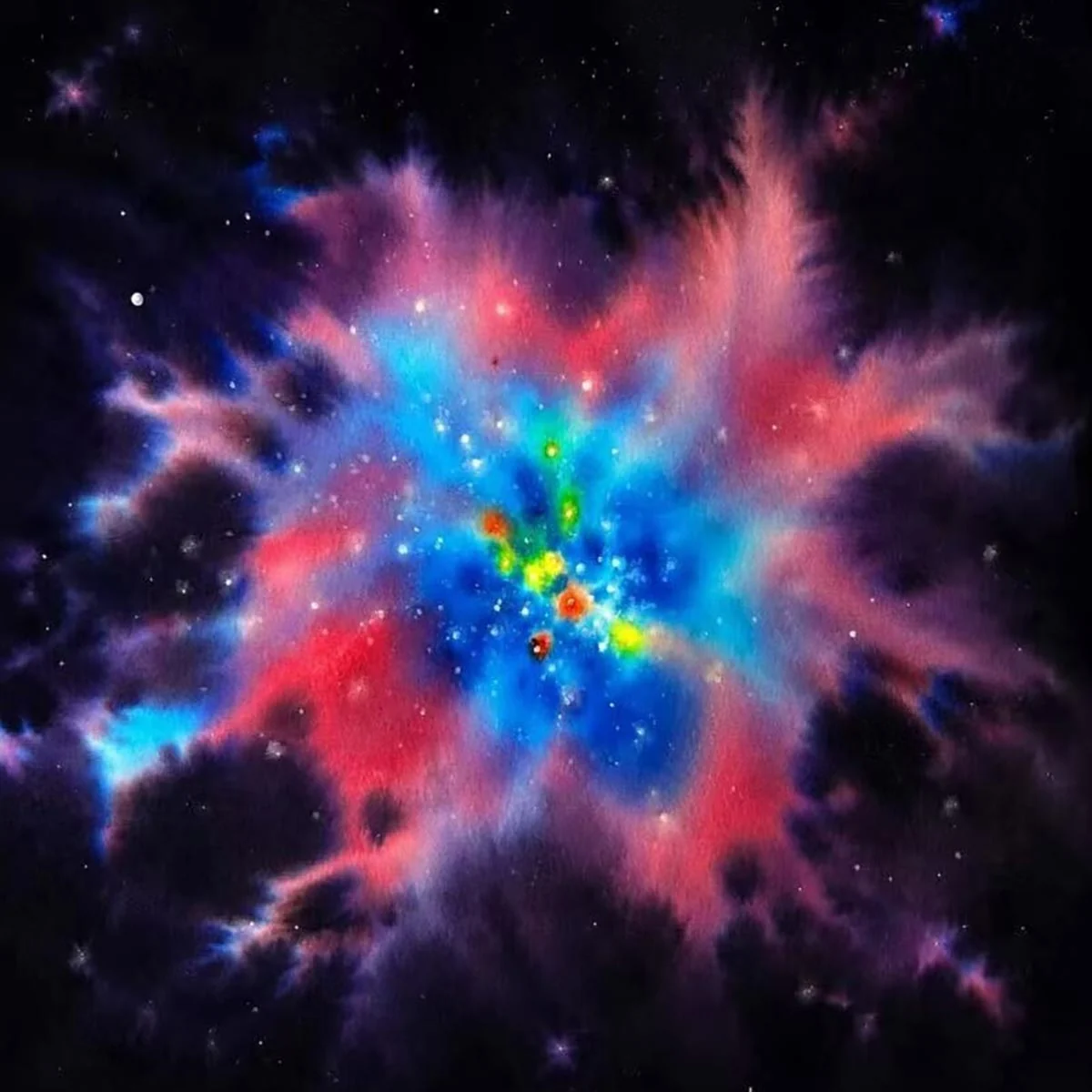
This research was published in "Nature Astronomy" on October 15, 2026. By observing nearby starburst galaxies, researchers found that the strong galactic winds caused by supernovae may not have opened up a path for ultraviolet light, but instead increased the blocking of radiation by neutral gas and dust. This result provides new clues for understanding how the early universe ended its long "dark ages" and also means that scientists may need to re-examine the role of supernovae in the reionization process of the universe.
After the Big Bang, the universe went through a long process of expansion and cooling. Initially, the matter in the universe was mainly composed of hydrogen, helium and other elements. As the temperature dropped, protons and electrons combined to form neutral atoms. After that, before the first stars and galaxies appeared, the universe lacked celestial objects that could continuously emit strong light, thus entering what is commonly known as the "dark ages" of the universe.
Things began to change after the first stars and galaxies formed. Young, hot, massive stars can emit high-energy ultraviolet light, and some of the photons are energetic enough to ionize hydrogen atoms, causing the originally neutral hydrogen atoms to lose their electrons and become positively charged protons. As ionized regions expand and become connected, the gas between galaxies becomes more permeable to light.
This process is called "cosmic reionization." It is an important turning point in the history of the evolution of the universe. It not only changes the physical state of the gas between galaxies, but also determines whether the high-energy radiation emitted by early galaxies can spread to distant space.
However, the ultraviolet light emitted by young stars does not necessarily escape the galaxy directly. The interior of the galaxy is filled with gas and dust, and the neutral hydrogen in it can effectively absorb ultraviolet light of specific wavelengths. Even if a star can produce a large amount of ionizing radiation, if this light is absorbed by the surrounding material, it will be difficult to affect the cosmic gas outside the galaxy.
In order to explain how ionizing radiation escapes, scientists have previously proposed an important mechanism: a massive star undergoes a supernova explosion at the end of its evolution, releasing huge energy and pushing the surrounding gas to move outward at high speed. In theory, these bursts could disperse the gas within the galaxy, creating less dense channels that allow ultraviolet light from young stars to more easily penetrate the galaxy.
This explanation has been incorporated into many cosmological simulations. But new observations show that supernova-driven galactic winds are not always conducive to radiation escape, and in some cases may even have the opposite effect.
The research team used the Hubble Space Telescope's Cosmic Origins Spectrograph to observe six nearby starburst galaxies. A star burst galaxy refers to a galaxy with extremely active star formation activity and the ability to produce a large number of new stars per unit time. Their relative proximity to Earth allows them to study details such as gas movement, star formation and the spread of radiation, and help scientists understand similar processes that may have occurred in the distant early universe.
The researchers analyzed the ultraviolet spectra of these galaxies, measured the escape proportion of ionizing radiation, and used gas absorption characteristics to determine the speed of the galactic wind. Because gas at different velocities leaves absorption features at different positions and widths in the spectrum, researchers can infer the flow of gas and compare the relationship between galactic winds and radiation escape.
The results show that among the galaxies involved in the study, the faster the galactic wind speed, the lower the proportion of ionizing radiation that can escape. In other words, the stronger the gas outflow, the harder it is for the ultraviolet light inside the galaxy to penetrate the surrounding material.
Researchers believe that this may be because supernova explosions inject a large amount of energy into the gas around the galaxy, disturbing the originally relatively stable distribution of gas and dust. Although outflows can push material to the outer reaches of galaxies, they may also cause neutral hydrogen and dust to form a wider obstruction in certain directions, thereby reducing the chance of ionizing radiation escaping.
This means that the more gas galactic winds remove, the easier it is for ultraviolet light to escape. Its actual effect depends on the density, distribution and motion of the gas, as well as the specific path of the radiation propagating inside the galaxy. Strong gas movement may produce both clearing and blocking effects at the same time, and which one is dominant needs to be judged through actual observations.
The research team proposed that there may be an important early escape stage for ionizing radiation: after the formation of massive stars and before the first large-scale supernova explosions, the radiation produced by young stars may have begun to penetrate the surrounding gas. When supernovae explode one after another and strong gas outflows form, radiation escape may be suppressed.
This explanation is obviously different from the traditional theory. Past models often emphasized that supernova explosions can create a more favorable environment for the propagation of ionizing radiation by cleaning up material within galaxies. New research suggests that supernova-driven gas outflow may not be a necessary condition for initiating radiation escape. At least in some stages of galaxy evolution, the radiation of young stars themselves and the gas structure surrounding the star formation region may play a more direct role.
Stephen McCandless, a researcher at Johns Hopkins University, said that the observations show that the energy injected by the supernova into the surrounding environment may increase the coverage of neutral gas and dust that blocks ionizing radiation. This discovery requires scientists to further study how the radiation and stellar winds of young stars change their surroundings before intense supernova activity occurs.
Cen Renyu, a researcher at Zhejiang University, also pointed out that supernovae have always played an important role in cosmological fluid dynamics simulations that explain the escape of ionizing radiation. The study suggests that simulations need to more carefully consider how radiation and stellar winds from young stars affect the gas inside galaxies before the first supernovae explode.
However, this study did not directly observe galaxies during the reionization period of the universe. Because reionization occurred about 13 billion years ago, researchers cannot directly analyze the movement of gas inside the galaxy at that time, as they can by observing nearby galaxies. Therefore, they chose to observe nearby star burst galaxies and use these relatively easy-to-study objects to test possible physical mechanisms that existed in the early universe.
This also means that the research conclusions still have certain limitations. There are only six galaxies in this sample, so it cannot be proven that supernova winds in all galaxies inhibit the escape of ionizing radiation. The masses, star formation rates, chemical compositions, and gas structures of different galaxies can vary greatly, and the mechanisms involved can work differently in different environments.
The research team plans to gain more observation time with the Hubble Telescope, expand the sample size, and further study the relationship between the proportion of radiation escape and the speed of gas outflow in different galaxies. More observations will help determine whether radiation escape is common in young stars and what role supernova explosions play in the overall process.
For the study of cosmic reionization, a key question is not only when the first stars and galaxies appeared, but also how the high-energy light they produced passed through their own galaxies and affected the wider cosmic environment. Even if early galaxies were able to produce strong enough ultraviolet light, if this radiation could not escape, its impact on the intergalactic gas would still be limited.
This discovery by Hubble suggests that the process of the universe emerging from the "fog" of primordial hydrogen may be more complex than previous simple models. Supernova explosions can not only reshape the distribution of matter inside galaxies, but may also hinder the spread of ionizing radiation under certain conditions. As more observational data accumulate, scientists are expected to further clarify the interactions between young stars, supernovae, gas and dust, and reconstruct a picture of the evolution of the universe from darkness to transparency.
Comments