
Abstract:
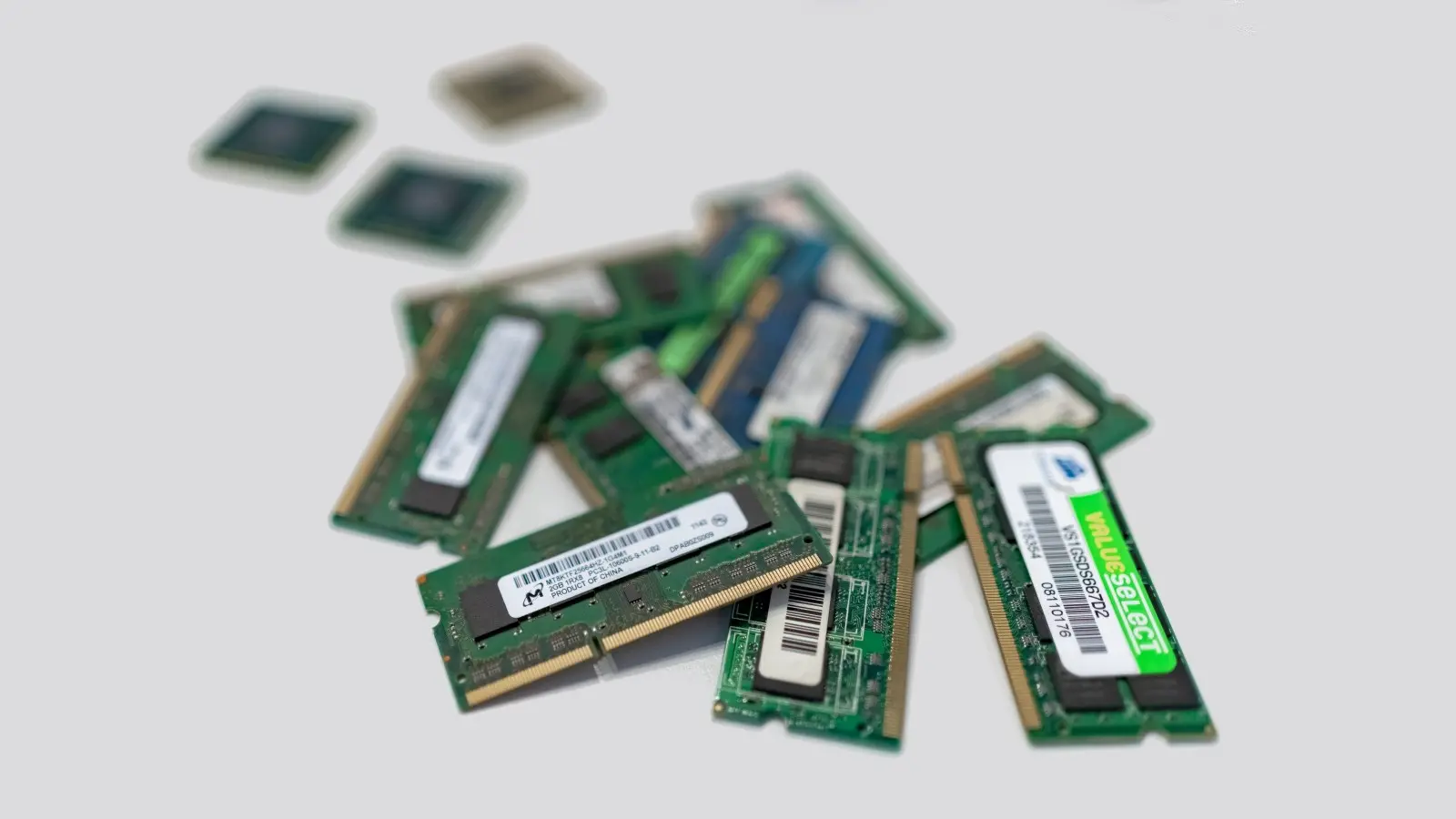
As the construction of artificial intelligence data centers continues to heat up, the global memory market is facing an increasingly severe imbalance between supply and demand. South Korean memory chip giant SK Hynix stated in its latest financial report that the global memory supply shortage is expected to continue until 2030 due to factors such as the growth in investment in artificial intelligence infrastructure, the increasing difficulty of advanced process technology, and the long time required to build new production capacity. This means that memory used in personal computers, smartphones and other consumer electronics may still face rising prices and tight supply pressures in the coming years.
SK hynix announced its third quarter financial results on October 28, 2026. The company's revenue for the quarter reached 104.6155 trillion won, operating profit was 83.3338 trillion won, and net profit was 39.7756 trillion won. It was the first time that revenue in a single quarter exceeded 100 trillion won. Operating profit margin reached 80%, reflecting the strong demand for artificial intelligence-related memory chips and strong profitability brought about by rising prices of high value-added products.
The company stated that its performance growth in the third quarter was mainly due to the shipment of DDR5 server memory, high-bandwidth memory HBM4, and the sales growth of 321-layer TLC enterprise-class solid-state drives. As the scale of artificial intelligence models continues to expand, data centers not only require more storage capacity, but also higher data transmission bandwidth and lower access latency, which makes memory one of the key hardware in the construction of AI infrastructure.
Compared with traditional personal computer memory, HBM's manufacturing process is more complex, requiring stacking of multiple layers of memory chips and working together with computing chips through advanced packaging technology. As companies such as NVIDIA continue to launch new generations of AI accelerators, the demand for HBM has grown rapidly, forcing storage manufacturers to invest more production resources into products with higher profit margins.
SK hynix said that current investment in artificial intelligence is forming a cycle of continuous expansion: companies use AI to improve the efficiency of software development, customer service, search and other businesses, and gain new revenue from it, and then continue to expand investment in artificial intelligence applications and infrastructure. At the same time, AI investment entities are no longer limited to a few large technology companies. More and more ordinary companies and national-level projects have begun to participate, further expanding the demand for data center construction.
The company also expects that future memory demand will no longer be driven solely by large language models and cloud computing data centers. With the development of physical artificial intelligence applications such as self-driving cars and robots, equipment needs to process more and more data from sensors, cameras and real-time control systems, and the requirements for memory capacity, speed and reliability will also further increase.
However, memory production capacity cannot keep pace with demand. The R&D and mass production of advanced DRAM processes are increasingly difficult, and building a new semiconductor factory also involves factory construction, clean room deployment, production equipment installation, process debugging, and yield ramping, which often takes several years. Even if manufacturers decide to significantly increase investment, the new production capacity cannot be immediately converted into market supply.
Based on these factors, SK Hynix predicts that the structural situation of short supply in the global memory market will continue until 2030. The company has also previously warned that 2027 may become one of the tightest years for memory supply. Even if production capacity continues to expand in the coming years, new supply may still be unable to fully meet the demand brought about by the continued expansion of AI infrastructure.
This financial report also shows that SK hynix is accelerating the expansion of production capacity. The company plans to increase the production capacity of the M15X factory in South Korea to the highest level by the end of the year to increase HBM4 production. The company expects that by the fourth quarter of 2026, HBM4's shipments and sales revenue will exceed the previous generation HBM3E, making the new generation of products gradually become mainstream.
In the traditional DRAM field, SK Hynix will increase the proportion of products using the sixth-generation 10-nanometer process technology, that is, the 1c process, and expand the sales of DDR5 and LPDDR5 SOCAMM products for AI servers. At the same time, the company plans to increase the production proportion of 321-layer NAND flash memory to increase the supply of high-performance, large-capacity enterprise-class solid-state drives.
Although these investments will help alleviate future supply pressure, they are still difficult to completely change the market structure in the short term. SK Hynix predicts that demand for DRAM and NAND flash memory will continue to grow rapidly in 2027. As supply capacity is limited by factory construction cycles and advanced manufacturing processes, new capacity is likely to continue to be absorbed by strong demand.
In order to reduce operating risks caused by demand fluctuations, SK hynix is also expanding long-term supply agreements with major customers. Currently, the company has signed long-term agreements with 14 major customers, including large global cloud service providers. According to the information disclosed by the company, the quantity covered by the signed agreement is equivalent to more than 50% of the total production capacity in 2027 and 2028.
These agreements usually have longer contract terms, helping customers lock in supply in advance and allowing SK Hynix to more accurately plan production equipment, factory construction and capital expenditures. The company also said it was discussing the possibility of extending contract terms with more customers, with common terms for some agreements being about five years.
However, long-term supply agreements do not mean that all consumer market customers can obtain stable supply. Large cloud service providers and AI chip companies have strong procurement capabilities and can lock in large amounts of production capacity through long-term contracts; PC manufacturers, mobile phone manufacturers, and retail channels may be affected by remaining supply and market price fluctuations.
For ordinary consumers, this supply and demand structure may have multiple impacts. First of all, rising prices of memory and flash memory will directly increase the manufacturing costs of computers, mobile phones and solid-state drives. Secondly, manufacturers may respond to cost pressures by reducing basic configurations, increasing the price of high-capacity versions, or adjusting the price gap between different products. Some manufacturers may also postpone upgrade plans or prioritize allocating limited memory chips to higher-profit products.
At the same time, the continued growth in server memory demand may also change the supply structure of traditional memory products. When storage manufacturers devote more wafer and advanced packaging resources to high value-added products such as HBM, the supply of traditional DRAM products may also be indirectly affected. Even if ordinary computer memory and HBM are not exactly the same products, they will still be jointly affected by production resources, investment direction and the supply and demand relationship of the overall semiconductor market.
It should be noted that SK Hynix predicts that supply shortages will continue until 2030, which does not mean that the prices of all memory products will continue to rise in the next four years, nor does it mean that every product will always be out of stock. There may be significant differences in the supply and demand of different types of memory. Manufacturer expansion progress, competitors' investments, customer procurement plans, and the development and changes of the AI industry itself may all affect actual price trends.
The performance released by SK Hynix this time shows that the artificial intelligence boom has profoundly changed the investment direction of the global memory chip industry. In the past, the memory market often experienced obvious cyclical ups and downs due to changes in demand for personal computers and smartphones; now, large-scale AI data centers are becoming an important new source of demand, and related infrastructure investments have a long construction cycle.
If AI applications continue to expand, memory chip manufacturers will have the incentive to maintain high capital expenditures and prioritize the development of products such as HBM, server DRAM and enterprise-class solid-state drives. However, if the growth rate of AI investment slows down, or new production capacity is released intensively in the future, the market may also see supply and demand changes again.
Currently, SK Hynix’s judgment is that the expansion rate of advanced memory manufacturing capabilities still cannot keep up with demand growth. For the consumer electronics industry, this means that memory may no longer be just a relatively stable component of the overall machine cost, but will become an important variable affecting product pricing, hardware configuration and supply chain planning in the next few years.
Comments