
Abstract:
An international astronomy research team recently used a giant radio telescope array to successfully detect extremely weak radio signals of neutral hydrogen atoms from a distant galaxy billions of light-years away. This detection result broke the previous record for the longest distance of similar observations, and provided astronomers with a new key observation window to directly trace back the gas fuel reserves in the early stages of the formation of early stars and galaxies in the universe.
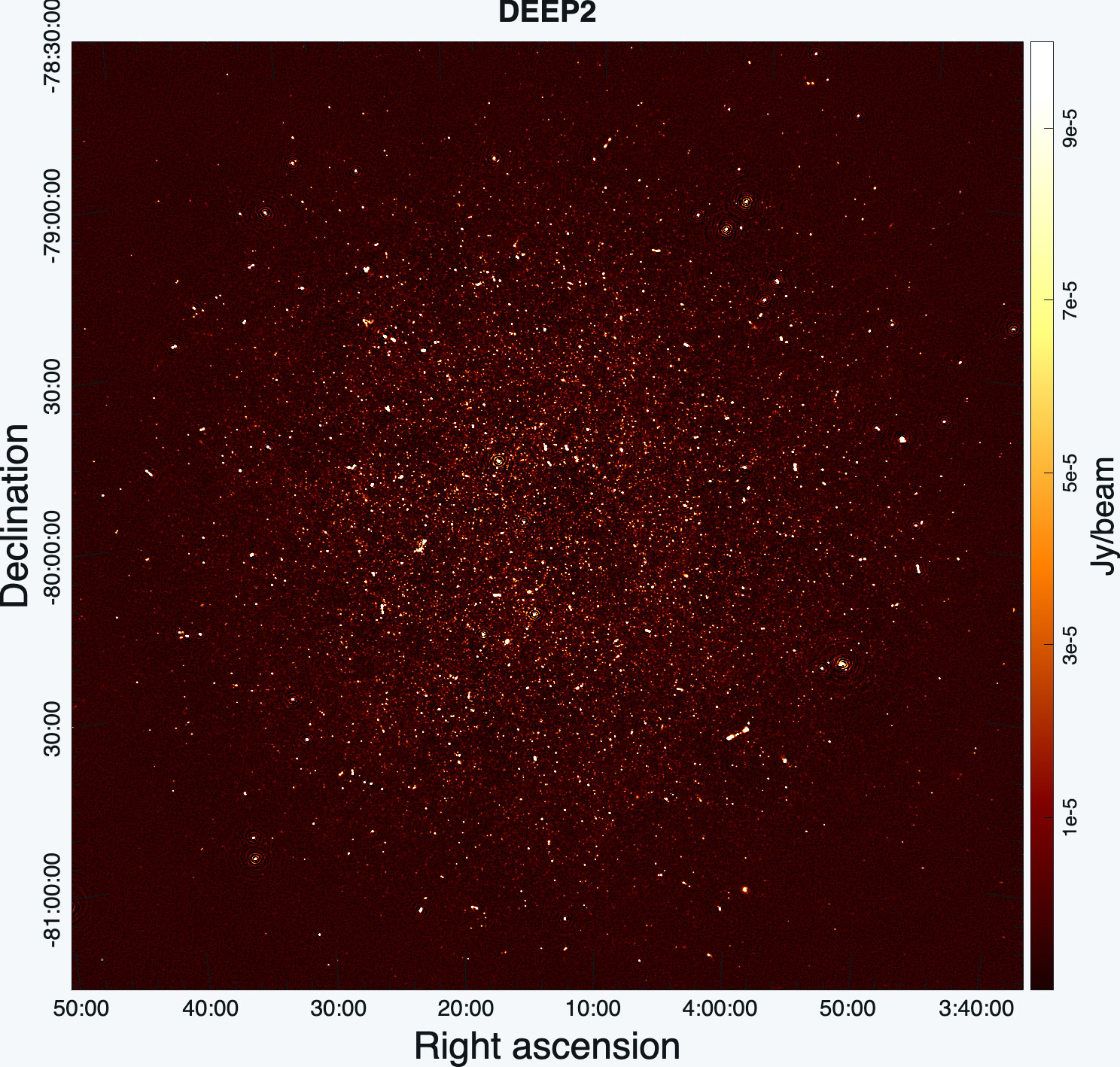
Neutral hydrogen (atomic hydrogen) is the most abundant basic element in the universe, and it is also an indispensable core "fuel" for the birth of stars and the growth and evolution of galaxies. In the radio band, neutral hydrogen atoms emit characteristic electromagnetic radiation with a wavelength of about 21 cm (the famous 21 cm hydrogen line). However, the spin transition probability of a single hydrogen atom is extremely low, and a single weak signal attenuates extremely severely when crossing the long deep space of the universe. Therefore, under conventional observation conditions, existing radio telescopes can hardly detect the neutral hydrogen radiation of a single galaxy billions of light years away from the Earth.
In order to cross this limit of physical observation, the scientific research team cleverly borrowed the universe's own "super magnifying glass" - the gravitational lens effect. When the weak radio waves emitted by the target deep space galaxy pass by another massive galaxy or galaxy cluster in front of the line of sight on its way to the earth, the huge gravitational field of the front object will bend and converge the light and radio signals of the rear galaxy like a convex lens, thereby significantly amplifying the originally extremely dim neutral hydrogen characteristic spectral lines several times, so that they can finally be clearly captured by the high-sensitivity radio receiving system on the earth.

By precisely calculating the red shift of the detected 21-centimeter spectral line, the researchers not only pinpointed the specific time slice of the galaxy in the tens of billions of years of cosmic evolution, but also further calculated the total mass of neutral hydrogen gas contained within the galaxy. Analysis of data shows that during the golden age of the universe billions of years ago, this galaxy had a much larger reserve of neutral hydrogen gas than its modern neighboring galaxies of the same size, directly confirming the physical inference that star formation activity was more intense in the early universe.
Astronomers pointed out that this landmark observation not only confirmed the technical feasibility of combining the gravitational lensing effect to break the upper limit of the detection distance of radio telescopes, but also provided key methodological verification and scientific reference for the next-generation ultra-large radio astronomy facility, the Square Kilometer Array Radio Telescope (SKA), which will be fully operational in the next few years. It is expected to systematically reveal in the future how major galaxies in the early universe accreted gas and drove the wave of star birth that lasted for hundreds of millions of years.
Comments