
Abstract:
An international research team recently discovered an important clue recording the cosmic journey of the solar system over the past 80,000 years by analyzing trace radioactive elements in ancient Antarctic ice. Researchers believe that these "stardust" buried deep in the ice prove that the Earth has long received materials from interstellar space, and these materials may help scientists uncover the mystery of the formation history of the interstellar environment around the solar system.

At the heart of the research is a rare radioactive isotope called iron-60. Iron-60 is not produced in large quantities in the earth's natural environment. It is usually born inside massive stars and is ejected into space when the star explodes as a supernova. Therefore, iron-60 has long been regarded as an important "cosmic fingerprint" for studying stellar death and supernova activity.
The scientific research team has previously found traces of iron-60 in newer Antarctic snow samples, but its source has always been controversial. To further search for answers, the researchers obtained Antarctic ice core samples that were between 40,000 and 80,000 years old, and extracted and analyzed trace elements. The results show that iron-60 is also present in these ancient ice layers, and its distribution pattern shows obvious changes.
By comparing it with data from recent Antarctic snow samples and deep-sea sediments, scientists have successfully reconstructed the approximate trajectory of iron-60 arriving on Earth over the past 80,000 years. The data shows that the influx of iron-60 is not constant, but has gone through stages such as troughs, peaks, and gradual declines.
Researchers believe that this change is most consistent with an explanation: the solar system is passing through an interstellar region called the "local interstellar cloud", and iron-60 is the remnant of ancient supernovae stored in this cloud. As the solar system moves through the Milky Way and enters this interstellar cloud, the Earth continues to receive iron-60 particles carried within it.
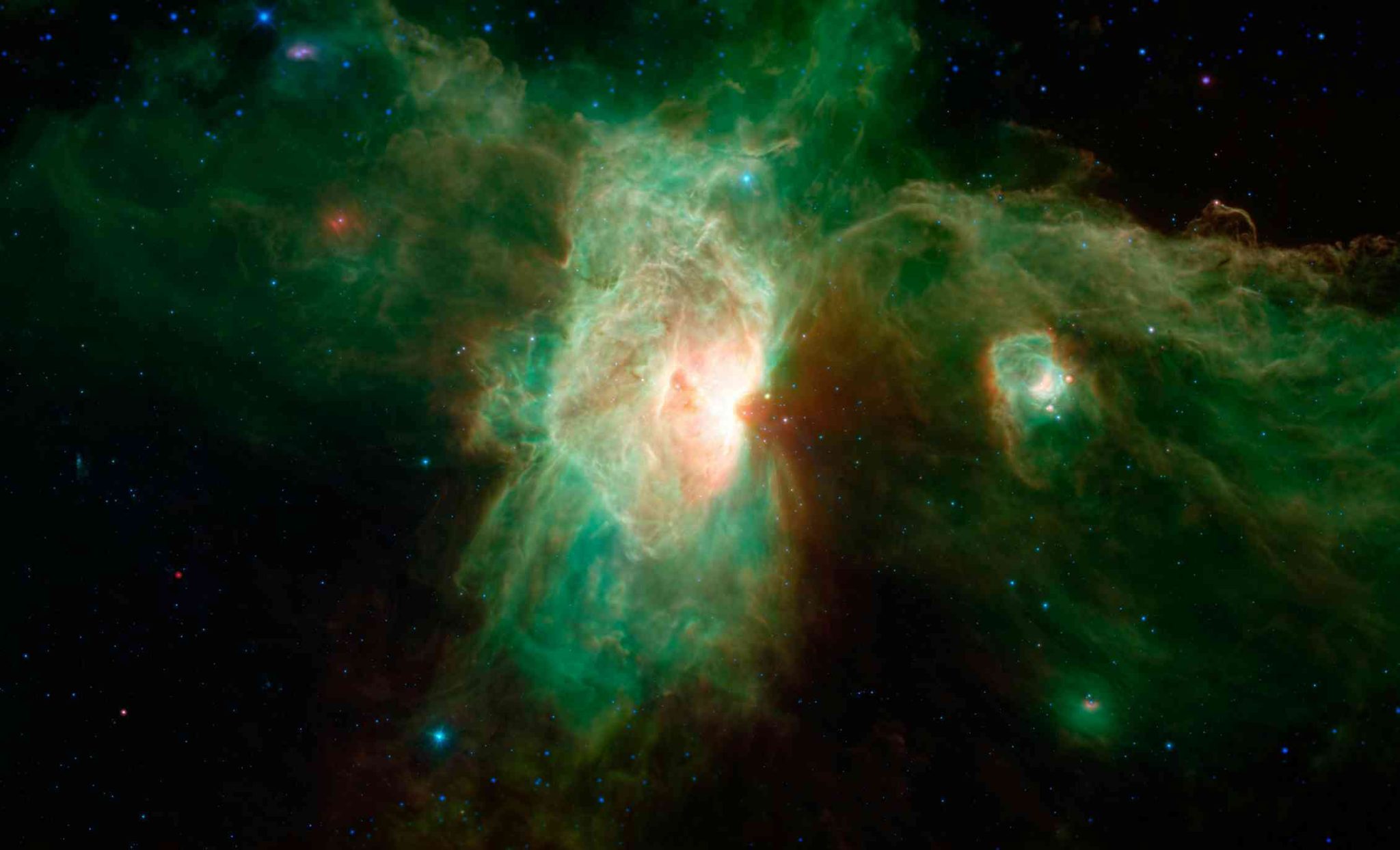
The local interstellar cloud is an extremely thin structure of gas and dust that surrounds the solar system and is part of a larger interstellar cloud group near the sun. Astronomers currently believe that the solar system is located inside this cloud. New research shows that these clouds are likely to be closely related to ancient supernova explosions, and iron-60 is the evidence left over from this history.
To complete this study, scientists processed hundreds of kilograms of ice core samples and used high-sensitivity mass spectrometers to search for extremely rare iron-60 atoms. At the same time, they also detected other isotopes such as manganese-53, hoping to distinguish different sources from the inner and outer solar system.
The analysis found that the actual amount of iron-60 observed cannot be explained solely by iron-60 produced by cosmic rays hitting dust in the solar system. The research team therefore believes that the most reasonable source of the excess is dust in interstellar space, and local interstellar clouds are the explanation that is currently most consistent with the evidence.
Scientists say the discovery not only helps confirm the connection between the solar system and local interstellar clouds, but also provides new tools for studying the origins of the interstellar clouds themselves. In the past, humans mainly relied on telescopes to observe distant celestial objects to study the history of the universe. Now, tiny atoms buried in the Earth's ice have begun to tell the story of the past of the Milky Way.
The researchers pointed out that if longer time scale and higher precision data can be obtained in the future, humans are expected to further reconstruct the historical trajectory of the solar system through different regions of the Milky Way and trace a series of ancient supernova events that affected the formation of the solar neighborhood environment.
For the astronomical community, these interstellar dust frozen in the Antarctic ice are not only relics from the death of distant stars, but more like a cosmic letter spanning tens of thousands of years, recording the solar system's long and continuous journey in the Milky Way.
Comments