
Abstract:
Plastic waste is often considered one of the most difficult types of modern waste to dispose of, but scientists are exploring a new chemical recycling route: using high-temperature molten salt as a reaction medium to break down and convert common plastics into valuable fuels and chemical raw materials. Compared with traditional mechanical recycling, this method does not require plastics to be highly classified, and it can also utilize plastic waste that has been contaminated, mixed, or is difficult to be recycled directly due to the nature of the material.
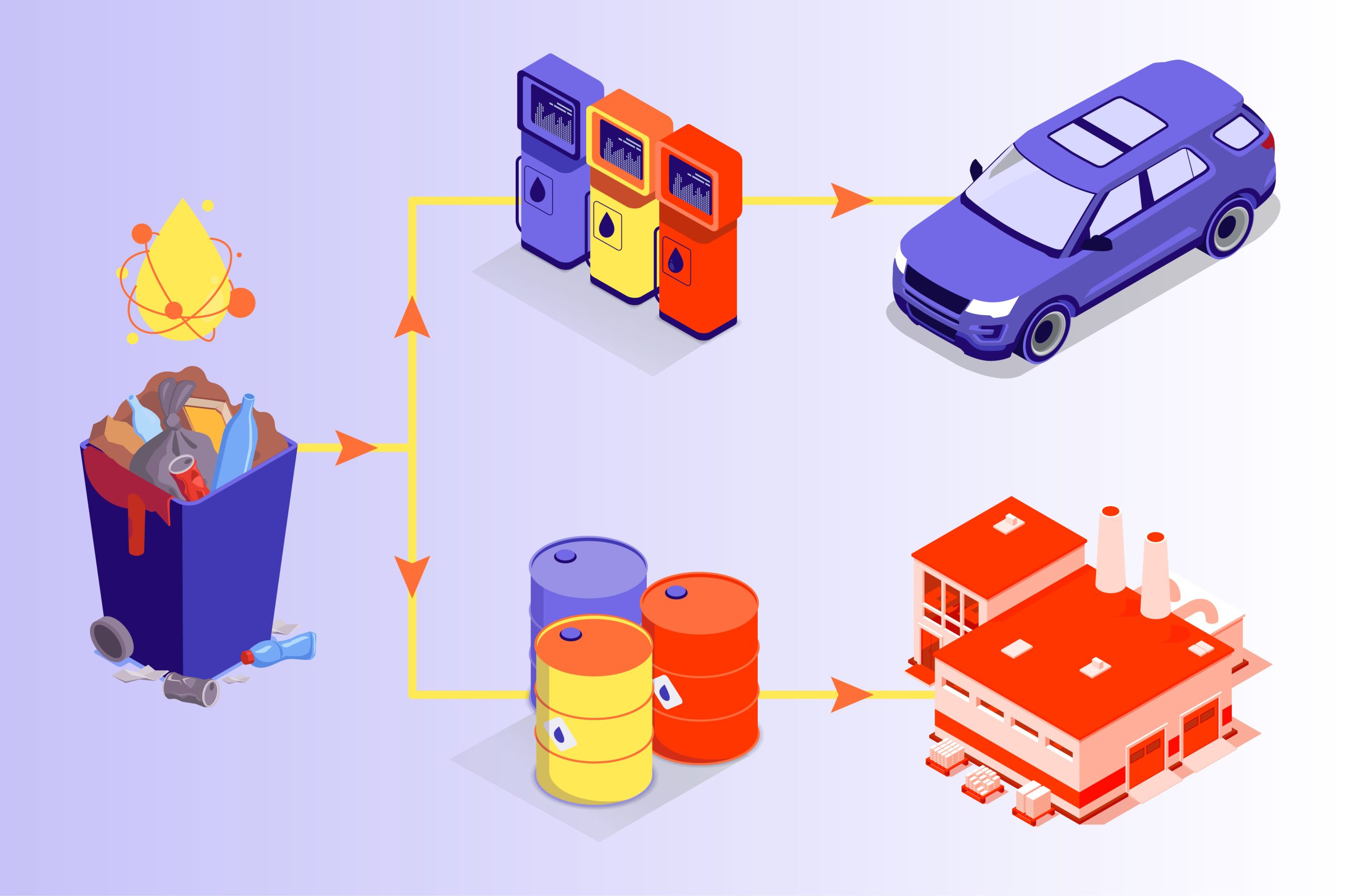
Currently, the amount of plastic waste produced globally every year is extremely large, but the proportion that actually enters the recycling system is still very low. Large amounts of plastic end up in landfills or are directly incinerated, which produces carbon dioxide and other pollutants. Traditional recycling is particularly difficult for mixed plastics made up of different polymers, as different plastics require different processing processes.
Scientists have therefore been looking for a chemical method that can directly deal with mixed plastics. Rather than remelting plastics to make low-quality recycled plastics, the goal of chemical recycling is to break down long polymer chains at the molecular level and convert them back into smaller hydrocarbon molecules to obtain fuels, lubricants or other chemical raw materials.
The core of this research is to use high-temperature molten salt to create a special reaction environment. Molten salt can remain liquid at high temperatures, has good heat transfer capabilities, and can participate in or promote complex chemical reactions. The researchers exploited this property to allow plastic polymers to break down under relatively controlled conditions.
Under normal circumstances, plastics such as polyethylene and polypropylene are composed of very stable carbon-hydrogen bonds. Effectively dismantling these long-chain molecules usually requires higher temperatures. Although traditional thermal cracking can complete this process, it often requires a large amount of energy, and the product composition is complex, and further processing is required.
The molten salt system can provide a more uniform heating environment and promote the chain scission reaction of plastic molecules. After the plastic enters the reaction system, the long-chain polymers will gradually crack into shorter hydrocarbons, eventually forming liquid and gaseous products that can be further processed and utilized.
One of the biggest potential advantages of this technology is that it can reduce the very expensive pre-processing step in the plastic recycling process. In reality, plastic waste is often not a single material. A piece of waste may contain different types of plastics, additives, pigments and other impurities. If each material had to be sorted individually, it would significantly increase the cost of the recycling facility.
The idea of chemical transformation is different. As long as different plastics can eventually be broken down in the same reaction system, some of the complicated manual sorting steps can be skipped. This means that in theory, mixed plastics from household waste, packaging materials and other consumer products could become raw materials for this process.
The researchers are particularly interested in polyethylene and polypropylene because these two materials account for a large proportion of global plastic waste and are also materials that often face economic problems in mechanical recycling systems. Their chemical structures are relatively stable, making it difficult to directly convert them into valuable products through traditional low-temperature chemical processing.
By increasing the reactivity of the molten salt system, researchers can promote chain scission in these stable polymers and convert polymer chains that originally were thousands or even tens of thousands in length into smaller molecules. These molecules can further be used as fuel or feedstock for the petrochemical industry.
The significance of this method compared to simply incineration of plastic is that the carbon is not immediately emitted into the atmosphere as carbon dioxide, but is retained in new chemical products. If these products can enter the industrial production system again, then there is a chance that the carbon in the plastic can be reused instead of being released into the environment all at once.
Of course, this does not mean that plastics automatically become "zero-carbon fuel" after such treatment. If the final product is burned directly, the carbon contained in it will still enter the atmosphere as carbon dioxide. Therefore, this type of technology more accurately belongs to the chemical recycling and resource utilization of plastic waste, and its environmental benefits largely depend on the energy source, reaction efficiency and how the final product is used.
Researchers also need to solve the problem of recycling the molten salt itself. Operating on an industrial scale requires continuous heating of large quantities of reactants and ensuring that the molten salt remains stable over the long term. If molten salt decomposes, becomes contaminated, or becomes less active during repeated use, operating costs may increase.
Also, real plastic waste is far more complex than the pure plastic found in the lab. Actual waste may contain metals, paper, glass, pigments, plasticizers, flame retardants, and other organic and inorganic substances. These ingredients may affect reaction efficiency or may produce by-products that require additional processing.
Therefore, there is still a certain distance between this type of technology and large-scale commercial application. Being able to prove at the laboratory stage that a certain plastic can be effectively converted does not mean that industrial facilities can already process tens or even hundreds of tons of mixed waste at a low enough cost.
If these problems can be solved, molten salt chemical recycling may become an important supplement to traditional mechanical recycling systems. Waste that is heavily contaminated, too mixed, or that cannot be remanufactured into plastic products through traditional means can be sent to chemical processing facilities to regain use value at the molecular level.
This route also changes people's traditional understanding of "plastic recycling". Recycling in the past usually meant crushing, cleaning, melting, and then manufacturing new plastic products; chemical recycling is closer to "disassembly and reuse," first breaking down polymers into their basic chemical components and then remaking fuels or other chemical products as needed.
As the global plastic pollution problem continues to intensify, scientists believe that it is unlikely to rely on a single technology to solve all plastic waste problems in the future. Mechanical recycling is suitable for relatively clean, well-defined plastics, while chemical recycling may handle more complex mixed wastes, while materials that are completely unrecyclable may still ultimately require other disposal methods.
If the high-temperature molten salt process can further improve energy efficiency, reduce equipment costs, and achieve recycling of molten salt and reaction products, then this technology is expected to provide a new path for plastic waste that is different from traditional landfills and incineration. What's really attractive about it is not simply "turning plastic into fuel", but trying to reuse plastics that have lost their recycling value at the molecular level, converting long-term waste into carbon resources that still have economic value.
Comments