
Abstract:
Samsung Electronics is adjusting its production strategy for traditional memory modules. As the demand for advanced packaging capacity for artificial intelligence-related products continues to grow, Samsung plans to hand over all new traditional memory module production capacity to external partners for expansion, while itself will focus its limited back-end production space and equipment on high-value products such as high-bandwidth memory (HBM).
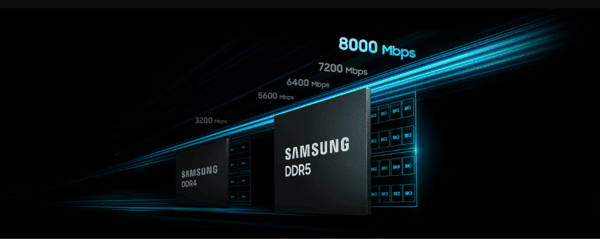
According to industry sources, Samsung has recently been vigorously requesting its outsourced semiconductor packaging and testing (OSAT) partners to expand production lines to meet the growing demand for traditional memory modules. Rather than expanding its own DDR5 memory module and SSD production capacity for PCs, servers and laptops, Samsung currently prefers to increase production capacity allocation to external partners.
Sources said that Samsung Electronics currently lacks enough space to expand traditional back-end production lines because existing space and equipment in factories such as Cheonan and Onyang are being reallocated for advanced packaging operations including HBM. The company therefore decided that most of the new production capacity brought about by the increase in demand for traditional memory modules in the future will be solved through outsourcing rather than expanding its own production capacity.
Another industry insider revealed that Samsung had asked partners to increase investment in DDR5 memory modules and SSD production lines as early as June last year. Since this year, Samsung has even suggested that some partners advance their already planned production capacity expansion plans in order to release more traditional memory module production capacity as soon as possible.
The reason why Samsung takes this approach is directly related to the strong demand for back-end manufacturing resources in the AI semiconductor business. Samsung plans to build a new HBM factory in Onyang Park starting from September this year, with a total investment of approximately 6 trillion won. However, it will still take several years from construction to formal production capacity of the plant.
At the same time, Samsung is building a back-end processing factory with an investment of approximately US$1.5 billion in an industrial park in Taiyuan Province in northern Vietnam, but the facility is mainly used to test more mature storage products such as DDR4, low-power LPDDR4, NAND flash memory and UFS. This further limits Samsung's own space for expanding traditional DDR5 module production.
The production process of DDR5 memory modules itself is relatively simple. The main method is to install packaged DRAM and NAND chips and other passive components on PCB circuit boards through surface mount technology. Compared with the advanced packaging required by products such as HBM, this process is less complex and therefore more suitable for rapid expansion of production capacity by external partners.
This strategic adjustment by Samsung has begun to push many partners to expand production facilities. Among them, Dreamtech, Hanyang Digitech and SFA Semicon are all expanding related production capacity in accordance with Samsung's arrangement to increase outsourcing orders.
Dreamtech started mass production of DDR5 memory modules in India in November last year and is currently further expanding local production capabilities. In June this year, the company approved an equipment investment plan to transform and expand the first factory in Noida, India. The factory, which was previously responsible for the assembly of printed circuit board assemblies (PBA) for smartphones, will now be transformed into a large-scale memory module production base.
Dreamtech expects to complete the expansion work in September this year and then gradually increase production capacity. Eventually, the factory's annual production capacity of DDR5 memory modules is expected to exceed 50 million.
Hanyang Digitech chose to improve the production efficiency of its existing memory module factory in Vietnam. The company has invested more than 31.5 billion won in the first half of this year to introduce new equipment and promote automation of the production process, thereby increasing DDR5 module production capacity based on existing factories.
SFA Semicon is transferring the DDR5 testing and module assembly equipment previously deployed at Samsung's Onyang campus to its Philippines factory. The first phase is scheduled to begin operations in November this year, and the second phase is planned to launch in the second quarter of next year. After completing the transfer, SFA Semicon's DDR5 final testing and module assembly capabilities are expected to be significantly improved.
SFA Semicon is currently responsible for the fine-pitch ball grid array (FBGA) packaging of memory chips at its Cheonan factory in Chungcheongnam-do, South Korea, while final testing and memory module assembly are mainly performed at its factory in the Philippines. By transferring Samsung's existing equipment to the Philippines, SFA can further expand the scale of the entire production system.
Behind Samsung’s adjustment, it actually reflects that the AI boom is reallocating manufacturing resources in the global memory chip industry. Traditional DDR5 memory still has huge market demand for PCs, servers and laptops, but HBM has become an indispensable key component of AI accelerators, and its added value and profit level are also significantly higher than traditional memory products.
Therefore, for Samsung, given its own limited back-end manufacturing space, handing over relatively standardized DDR5 module production to OSAT partners can free up more factories, equipment and engineering resources for advanced products such as HBM, while also being able to meet the growing demand of the traditional memory market.
This model also means that Samsung's future memory supply system will further exhibit the characteristics of "self-production of high-end products and expanded outsourcing of traditional products." As the AI server and accelerator markets continue to consume a large amount of advanced packaging resources, whether Samsung can simultaneously expand HBM production capacity and traditional memory supply in this way will become an important strategy for it to respond to changes in supply and demand in the current storage market.
Comments