
Abstract:
The European memory market continues to experience a new round of price increases. The latest statistics show that the German DDR5 memory price index has once again set a new historical record. Compared with the same period last year, the overall price has increased by 54.4%, showing that the supply tension in the memory market continues to intensify.
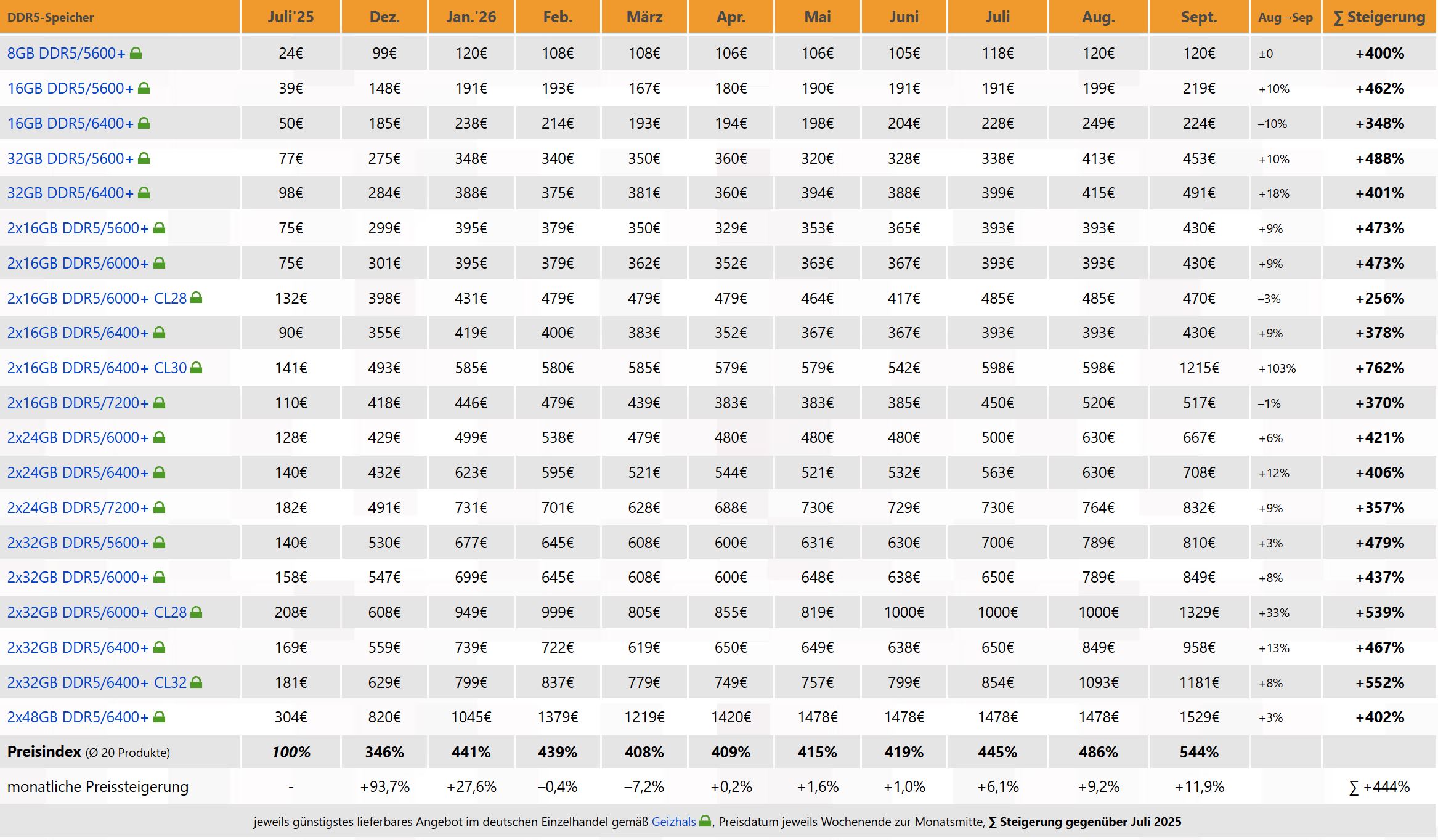
Data shows that since the beginning of this year, DDR5 memory prices have been in a continuous upward trend. After entering the third quarter, the price increase has further accelerated, and many mainstream capacity and specification products have successively exceeded previous price highs. Whether it is desktop memory for ordinary consumers or high-frequency DDR5 products for high-performance gaming platforms and workstations, there have been increases to varying degrees.
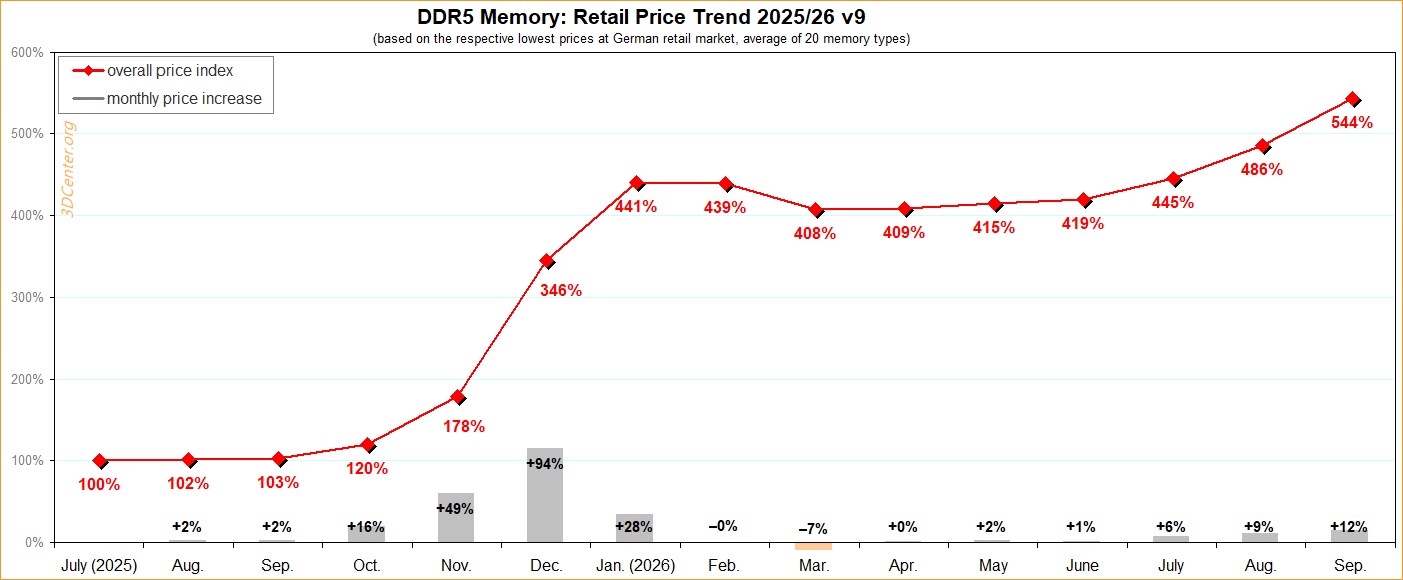
Judging from specific market conditions, the prices of mainstream products such as 16GB×2 sets, 24GB×2 sets, and 32GB×2 sets are generally higher than the same period last year. Some of the high-frequency, low-timing models have even increased more than the overall market average. For consumers planning to build a new computer or upgrade an existing platform, memory has become one of the core pieces of hardware with the most significant recent price increases.
Industry analysts believe that the fundamental reason for this round of price increases still comes from changes in the supply structure of memory chips. In the past year, major storage manufacturers such as Samsung Electronics, SK Hynix and Micron have continued to adjust production resources and invest more advanced manufacturing capabilities in the high-profit HBM high-bandwidth memory field to meet the explosive growth demand of the artificial intelligence server market.
As a large amount of production capacity is transferred to HBM, the production resources of DDR5 and GDDR video memory used in the consumer market are correspondingly reduced, resulting in tight supply. At the same time, the artificial intelligence industry's competition for advanced packaging, wafer manufacturing and storage resources has further pushed up the cost of the entire industry chain.
In addition to supply-side factors, market demand also plays a driving role. AMD and Intel have fully shifted to DDR5 platforms in recent years, and users with new computer installations are basically no longer able to choose the DDR4 solution. As DDR5 gradually becomes the mainstream standard for desktop computers and laptops, market demand continues to grow, but the supply side has not expanded simultaneously, which further intensifies the pressure on prices.
At present, the price increase trend has not shown obvious signs of slowing down. Some retailers and market research institutions predict that DDR5 prices may still rise further in the fourth quarter of this year. Especially after the traditional shopping season and the peak installation season at the end of the year, if the supply chain situation does not improve, the market may face a new round of price shocks.
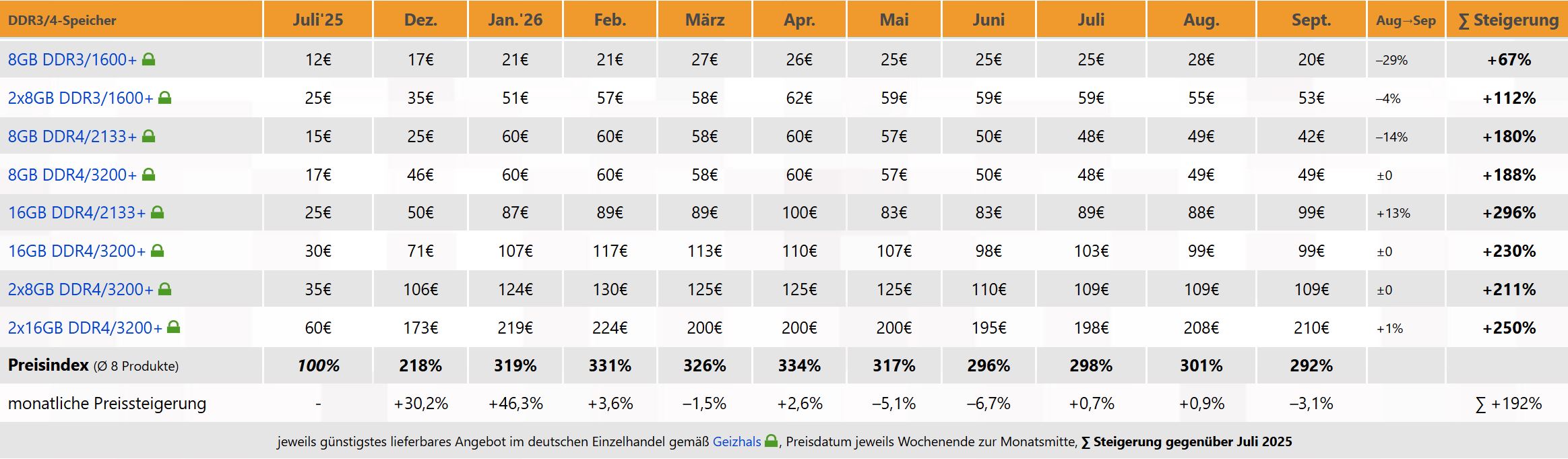
For ordinary consumers, the most direct impact is currently reflected in the increase in the installed cost of the entire machine. In the past year, the prices of graphics cards, memory and some storage products have continued to rise due to the demand from the AI industry, making the cost of upgrading new platforms significantly higher than previously expected. Unless major storage manufacturers re-increase investment in consumer-grade DRAM production capacity, or the growth in demand for high-bandwidth memory in the artificial intelligence market slows down, it will be difficult for DDR5 prices to return to last year's levels in the short term. The current market performance also reflects a new industry reality: the artificial intelligence industry is increasingly profoundly affecting the price system of the entire consumer electronics hardware market.
Comments