
Abstract:
A new study shows that the white dwarf star numbered WD J1330+6435 may appear yellow-green if its surface can be resolved at close range. This star is located in the constellation Draco, about 300 light-years from Earth. Researchers call it the first known green star, but this color is calculated based on stellar spectra and human visual models. It is not a green star that astronomers directly photographed or saw with the naked eye.
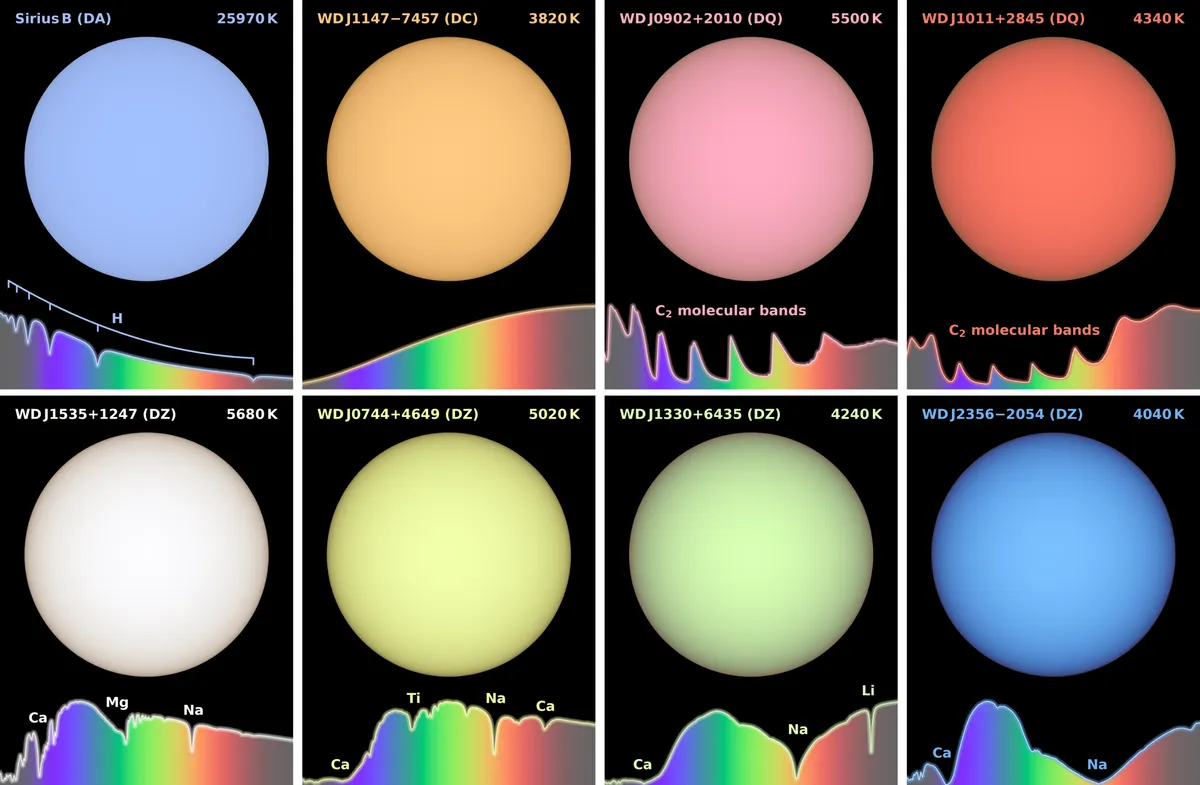
WD J1330+6435 is a dense remnant left behind at the end of a star's evolution. The research team believes that it accreted rock debris from the original planetary system, enriching the atmosphere with elements such as calcium, lithium and sodium. The white dwarf's atmosphere is extremely dense, and sodium atoms collide frequently with surrounding helium atoms, which broadens the range of the absorption spectrum and weakens yellow, orange and part of red light; calcium absorbs violet light. After combining these changes, the visible light emitted by the star peaks at around 500 nanometers, and the model shows that its visual color is close to yellow-green. The temperature of this white dwarf is about 4000 degrees Celsius.
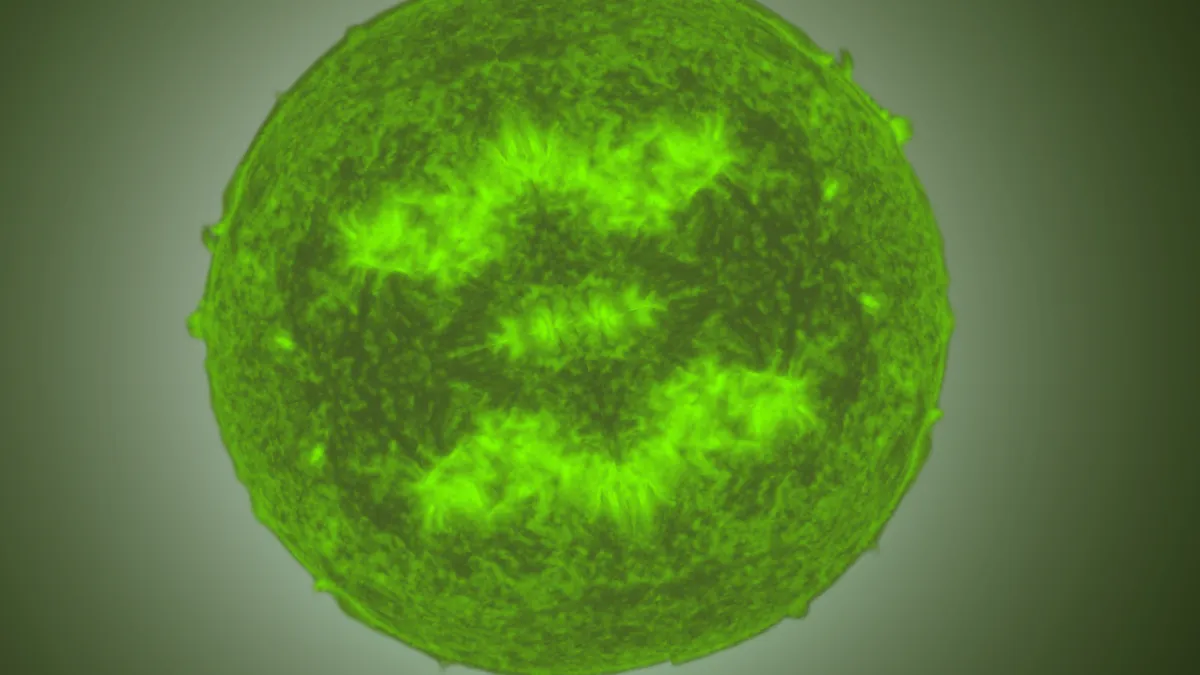
The research team did not just discover this white dwarf star. Instead, they reanalyzed the spectra of known stars and studied how different atmospheric components change the color of the white dwarf star in human eyes. White dwarfs are usually the core left behind after a sun-like star has exhausted its fuel and ejected its outer layers. It can reach about half the mass of the sun, but is compressed to nearly the size of the Earth. The researchers converted star spectra into colors recognizable by human visual models and found that in addition to white, white dwarfs can also appear yellow, green, cyan, pink or violet.
The study also pointed out that another white dwarf star WD J1011+2845 is about 48 light-years away from the Earth and may be one of the reddest stars currently known. The carbon inside it is carried to the surface by convection currents, and the carbon molecules formed change the light emitted by the star, giving it a salmon-pink color. Statistics from nearby white dwarf samples show that the vast majority are still close to white, and only a few objects deviate significantly from common colors.
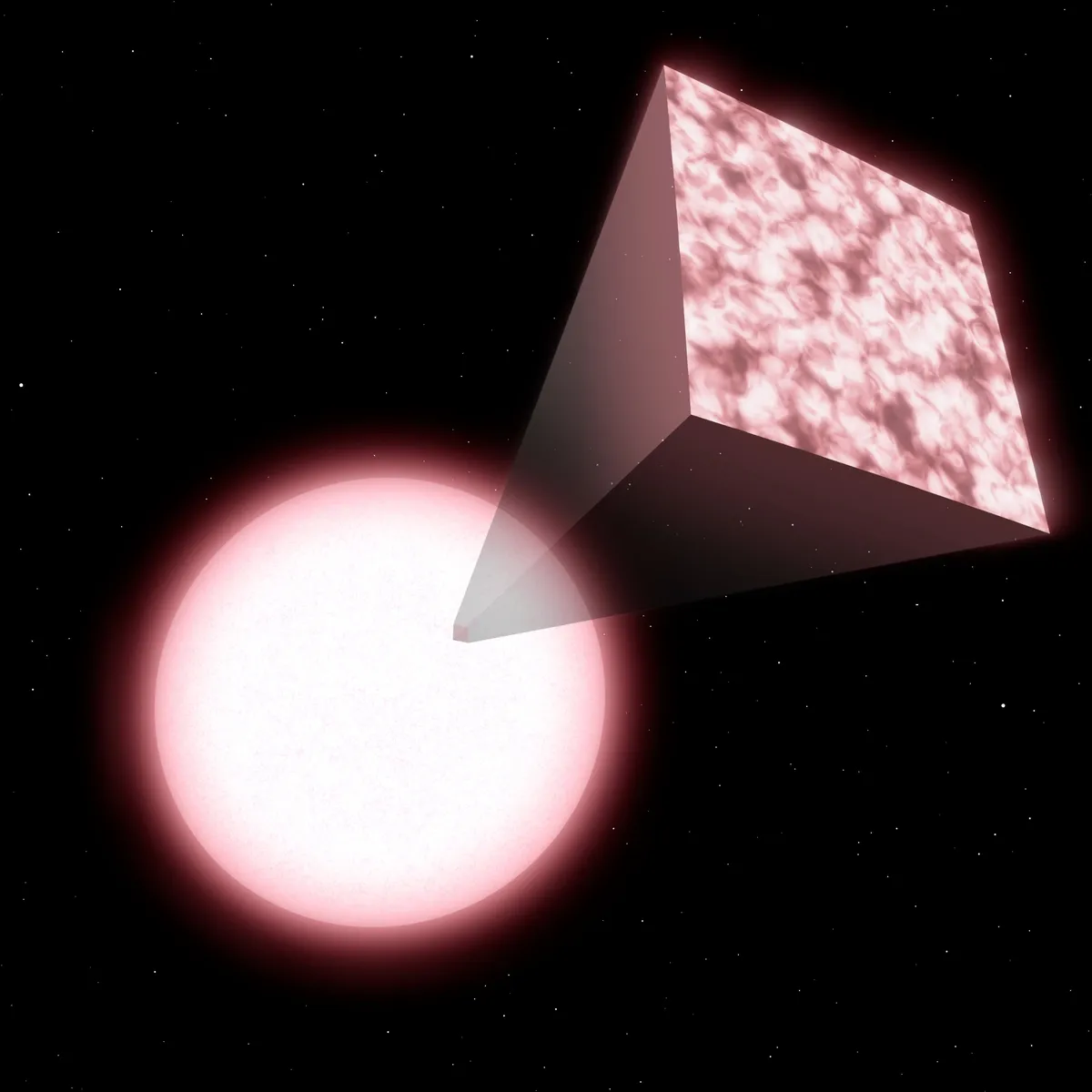
The study, published in RAS Techniques and Instruments, reminds astronomers that star color cannot always be determined based on temperature alone. For these distant, faint objects, spectra not only reveal the temperature and atmospheric composition, but can also help predict what color they would appear if they were observed up close.
Comments