
Abstract:
Observations of dozens of young Sun-like stars by NASA's James Webb Space Telescope (JWST) show that the forces that are stripping gas from planet-forming disks change as star systems mature.
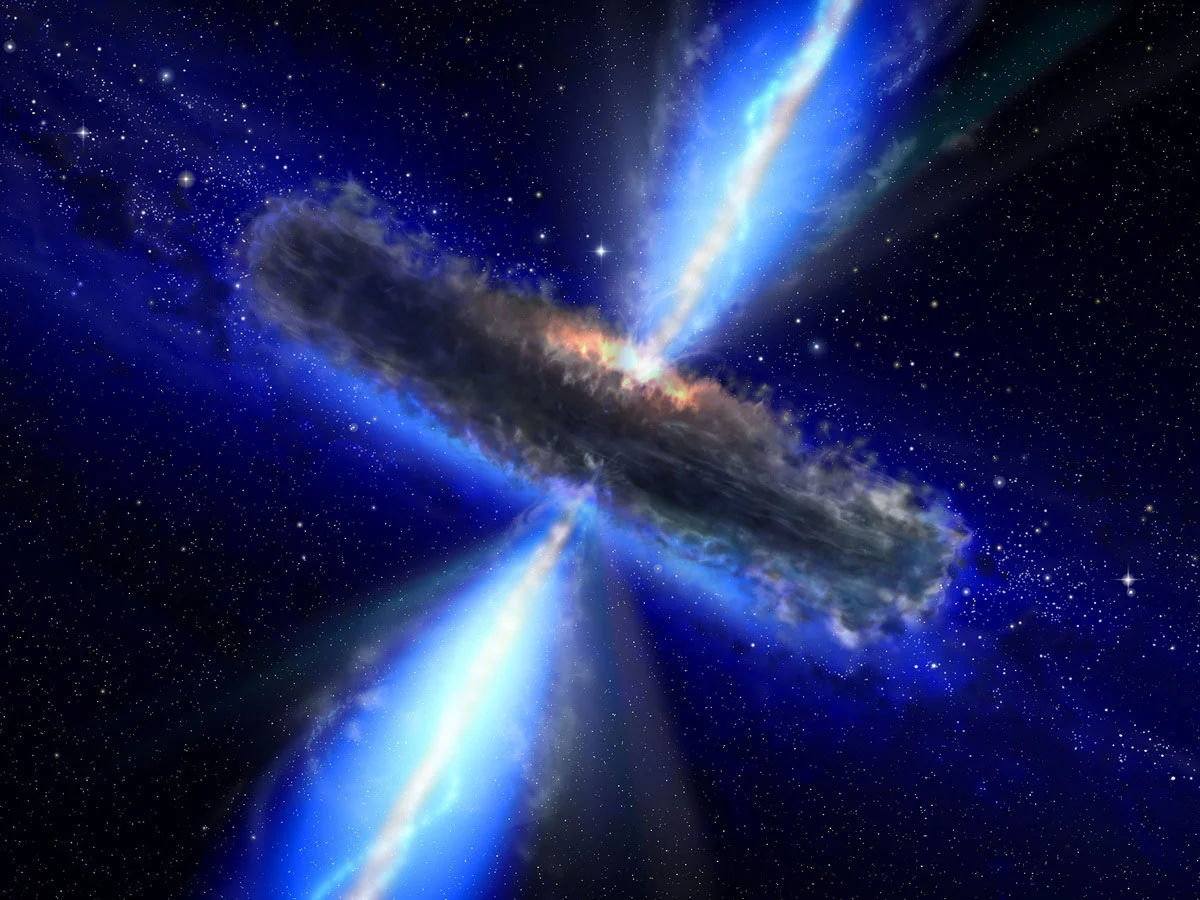
The gas used to create planets around young stars continues to disappear. New observations from the Webb telescope show that this loss of gas does not occur in the same way at all stages of a planetary system's early evolution. Instead, the stellar winds responsible for carrying material away from the system appear to change as the system ages.
This study, led by Naman Bajaj of the University of Arizona and participated by Uma Goldi, a scientist at the SETI Institute, analyzed the protoplanetary disks around 72 young sun-like stars. This is one of the largest Webb telescope studies of planet formation to date. The study found that at different stages of protoplanetary disk evolution, different gas removal mechanisms will dominate. Relevant results have been published in the Astronomical Journal.
Excitingly, Goldi said, researchers are now able to observe, using large samples of young stars, how the mechanisms that clear gas from planet-forming disks change over time. The dissipation of the protoplanetary disk sets a basic clock for planet formation: once the gas is gone, the chance of forming a gas-rich giant planet is essentially over.
Today's solar system is about 4.5 billion years old, and most of it is empty. However, in the first few million years after the birth of the sun, the young sun was surrounded by a dense protoplanetary disk, in which the mass of gas was about 100 times that of dust. Eventually, most of this gas disappears.
The speed of gas disappearance is crucial because the gas in the protoplanetary disk is the raw material for the formation of giant planets such as Jupiter and Saturn. If the gas dissipates prematurely, the planets may not have time to build up sizable atmospheres.
Bajai and colleagues used archived observations from the Webb Telescope's Mid-Infrared Instrument (MIRI) to reconstruct the evolution of the protoplanetary disk. These 72 star systems are at different stages of development of young planetary systems. The researchers combined them into an evolutionary sequence to track how the mechanisms that clear out gas from protoplanetary disks change with age.
The study also tests theoretical predictions made before the Webb telescope was able to directly observe the matter in question. In 2020, Lunar and Planetary Laboratory professor Ilariya Pascucci served as the second author of the paper and served as Bajaj's mentor. She once led the team to study the evolution of jets and stellar winds. At that time, researchers could not directly observe molecular hydrogen because the Webb telescope had not yet been put into operation, but they predicted that there might be molecular winds massive enough in young star systems to block X-ray photons. This time the Webb telescope confirmed this prediction by directly tracking molecular hydrogen.
The researchers focused on the signals of two gases escaping from the protoplanetary disk: molecular hydrogen and ionized neon. Molecular hydrogen is the most abundant molecule in protoplanetary disks. The Webb telescope's excellent sensitivity and spatial resolution allowed researchers to distinguish a wide range of molecular hydrogen winds from neon-traced jets and stellar winds.
In the youngest star systems, material is still falling toward the central star. The Webb telescope discovered that these systems have strong jets and broad outflows that contain both molecular and atomic gases. Their characteristics are consistent with stellar winds driven by magnetic fields that penetrate the protoplanetary disk. Gas can move outward along magnetic field lines, taking away mass and angular momentum in the process.
As the star system matures, less material falls towards the central star, the jet begins to weaken, and the proportion of atomic gas in the outflow becomes higher and higher. With less material blocking high-energy radiation, the high-energy radiation emitted by young stars is able to penetrate deeper into the protoplanetary disk and heat the gas enough to escape. This process is called photoevaporation.
Goldy has spent decades studying the evolution of protoplanetary disks and their gas loss processes, including the role of ultraviolet and X-ray radiation in generating photoevaporative winds. The Webb Telescope has now linked this theoretical study to practical measurements through observations of dozens of young star systems. Observations show that as protoplanetary disks age, the importance of photoevaporation increases, while magnetic field-driven jets and stellar winds gradually weaken.
Observations show that the dissipation of protoplanetary disks is not controlled by a single mechanism. Young planetary systems appear to undergo a transition from being dominated by powerful magnetic field-driven jets and stellar winds in the early stages to gradually becoming dominated by outflows of atomic gas, including photoevaporative winds.
Changes in this dominant mechanism determine how long a planet can obtain the gases it needs to form.
Planet formation is actually a race against time, Bajaj said. A gas giant like Jupiter must develop a massive atmosphere while its protoplanetary disk is still large enough to provide a continuous supply of gas; otherwise, stellar winds and jets would carry these raw materials into space.
Of the 72 protoplanetary disks, 66 exhibit a wide range of molecular hydrogen and ionized neon emissions. The researchers detected conical molecular hydrogen winds in 46 systems and high-speed neon jets in 40 systems. All protoplanetary disks with neon jets also show evidence of stellar winds traced by molecular hydrogen or oxygen.
This new analysis builds on the team's previous Webb telescope observations. In 2024, Bajaj, Goldi and colleagues captured an image showing that the planet-forming disk around the young star T Cha is losing gas.
Previous research has proven that the Webb telescope can directly observe the dissipation process of protoplanetary disks in a single planetary system. The study extends this approach to dozens of young stars, revealing how the relative importance of jets, molecular winds and atomic winds changes as stellar systems mature.
The researchers next hope to determine how much gas these stellar winds carry away at different times, and which regions of the protoplanetary disk provide a source of material for the outflowing gas. These measurements are expected to not only reveal how quickly the planet formation window closes, but may also help scientists determine exactly where in the protoplanetary disk different types of planets could have formed before the available gas disappeared.
Comments