
Abstract:
After staying on the International Space Station for more than seven months, the Crew-12 manned mission jointly executed by NASA and SpaceX recently ended successfully. The Dragon spacecraft Freedom carrying four astronauts successfully splashed down in the Pacific Ocean near the west coast of the United States, marking the successful conclusion of this long-term space mission.
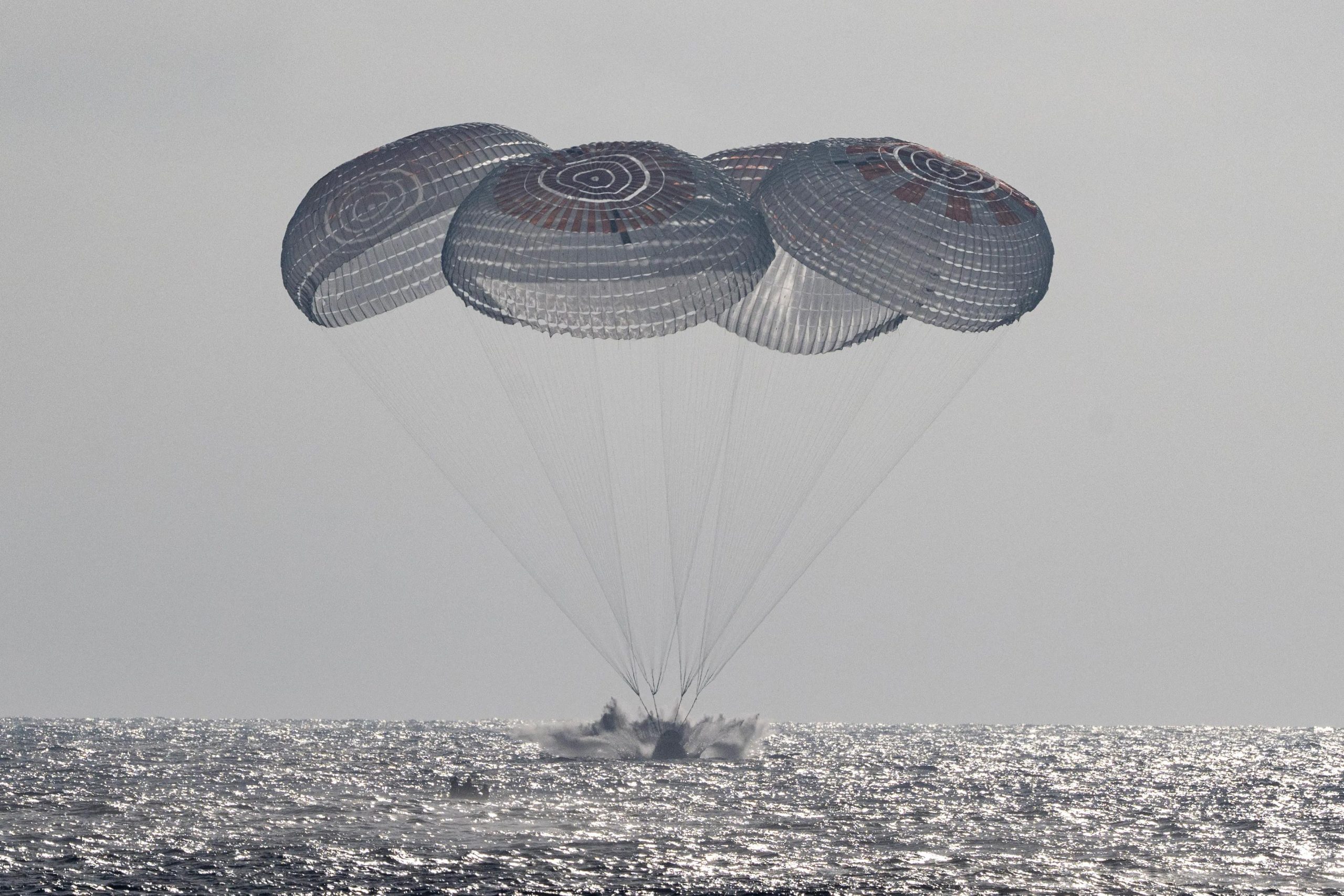
Members returning to Earth this time include NASA astronauts Jessica Meir and Jack Hathaway, European Space Agency astronaut Sophie Adenot, and Roscosmos astronaut Andrey Fedyaev. The spacecraft completed landing off the coast of Los Angeles at 8:34 a.m. local time, and was quickly salvaged and recovered by the SpaceX recovery team.
NASA Administrator Jared Isaacman said that the four crew members worked and lived in orbit for 237 days and flew a cumulative distance of more than 100 million miles. They not only completed a large number of important scientific research tasks, but also proved once again that the international cooperation and commercial space system has the ability to stably execute long-term manned missions.
Data shows that during this mission, the crew members flew more than 3,792 times around the earth. Crew-12 was launched from Florida on February 13, 2026, and successfully docked with the International Space Station the next day, and then began its long-term station mission.
After returning to Earth, the astronauts will first undergo routine medical examinations, then head to land and return to NASA's Johnson Space Center in Houston for recovery and follow-up mission summary.
Dana Weigel, head of NASA's low-Earth orbit project, said that the International Space Station continues to undertake important tasks such as scientific research, technology verification, and risk control, and these tasks will lay the foundation for future manned explorations to the moon, Mars, and more distant deep space.
While stationed at the station, Crew-12 conducted hundreds of hours of scientific research, covering multiple areas of future deep space exploration and improving human life on Earth. These include conducting experiments related to cell therapy using stem cells, validating technology to prepare intravenous infusions on demand, and studying how the bacteria that cause pneumonia cause long-term heart damage.
The scientific research team also conducted nutrition research and human circulatory system experiments, focusing on evaluating the impact of different body characteristics on blood flow in the space environment, hoping to improve the health protection capabilities of future astronauts during long-term missions.
This mission is also an important milestone in the careers of the four members. For Jessica Meir and Andrei Fedyaev, this was their second space mission; while Jack Hathaway and Sophie Adeno were in space for the first time.
During the mission, the crew members also completed multiple extravehicular activities. Meir performed four spacewalks, bringing her career total to seven, placing her at the forefront of NASA's history of female astronauts. Adeno completed three extravehicular missions and became the first French female astronaut to perform a spacewalk from the International Space Station.
With the safe return of Crew-12, the scientific research work and personnel rotation of the International Space Station once again completed an important handover. NASA stated that through cooperation with commercial aerospace companies such as SpaceX, the United States has established a stable low-Earth orbit transportation system, which not only ensures the continued operation of the International Space Station, but also accumulates valuable experience for future manned moon landing and Mars exploration missions.
NASA also announced that Crew-12 crew members will hold a press conference in Houston on October 15 to share scientific research results, life experiences and future deep space exploration-related discoveries during the 237-day space residency.
Comments