
Abstract:
The Chauvet Cave in southeastern France preserves prehistoric art dating back approximately 37,000 years, including exquisite charcoal drawings of animals such as cave bears, cave lions, bison, and horses. These works have survived tens of thousands of years and are still clearly identifiable today. Scientists recently discovered through a new type of ultraviolet detection technology that the surface of some murals is covered with an extremely thin layer of natural calcite minerals, which may have acted like a transparent protective paint to help these ancient works of art avoid long-term erosion.
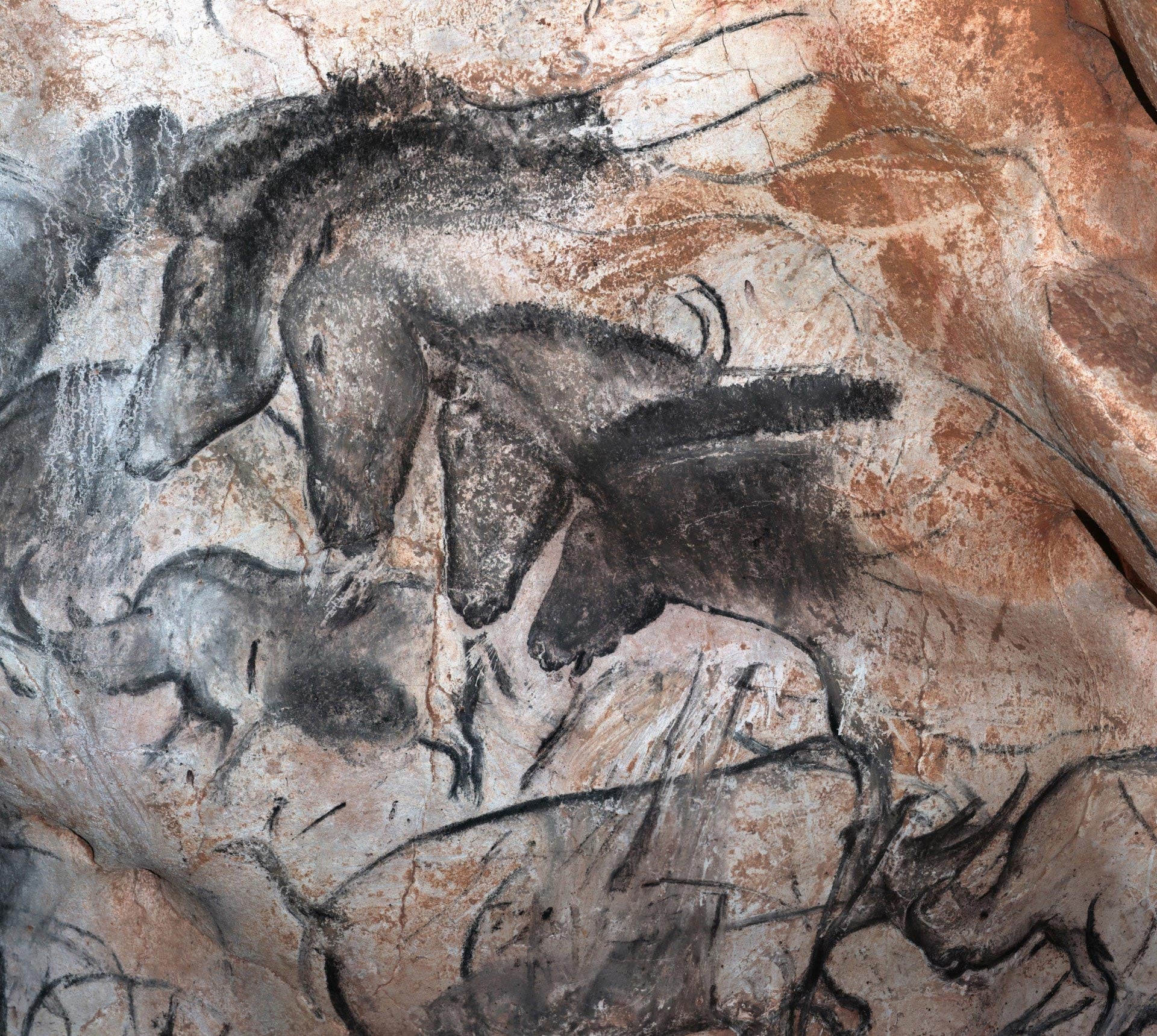
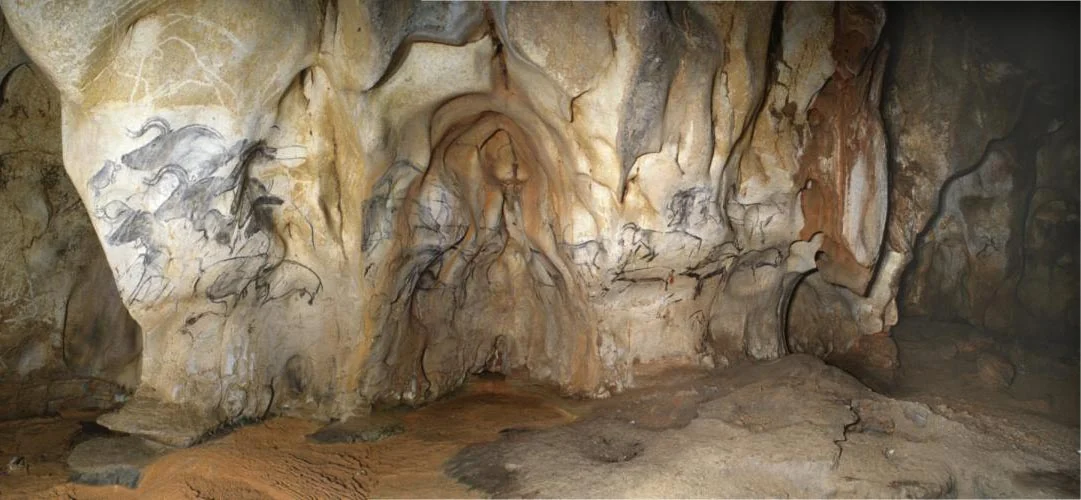
The Chauvet Cave, located in southeastern France, is one of the most important known sites of Paleolithic art. About 37,000 years ago, Paleolithic humans living in the area entered the cave and left a large number of animal patterns on the limestone walls. Afterwards, an ancient rock collapse sealed the entrance to the cave, leaving the interior isolated from the outside world for a long time until it was rediscovered in the 1990s.
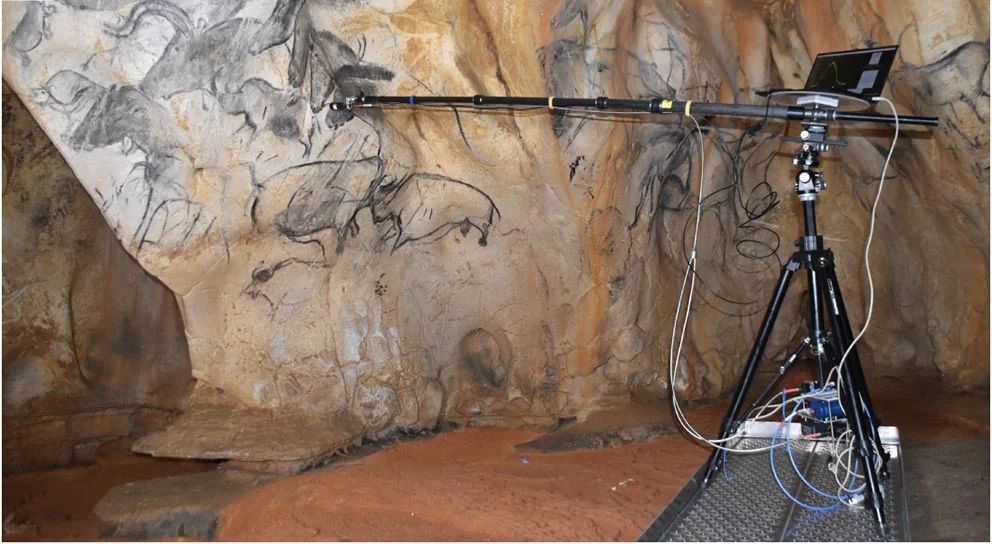
The cave not only preserves a large number of murals, but also contains footprints of prehistoric humans and animals. Because these ruins are extremely fragile, researchers are not allowed to approach or touch the cave walls at will. In order to protect the footprints and ancient sediments on the ground, all personnel can only move on specially laid metal walking paths.
This also brings special difficulties to scientific research. Traditional material analysis equipment usually requires close proximity or even contact with the research object. However, the murals in Chauvet Cave are far away from the trail, and researchers cannot conduct routine inspections directly on the walls.
To solve this problem, researchers from France's Sorbonne University, the French National Center for Scientific Research and other institutions have developed a set of portable ultraviolet fluorescence spectroscopy equipment. They installed the instrument on the protective trail, projected ultraviolet light onto the cave wall about 2.5 meters away through a long carbon fiber pole and an optical fiber system, and then used a spectrometer to analyze the fluorescence emitted by the material after being irradiated.
The key to this technology is that different minerals and organic substances exhibit different fluorescence characteristics when exposed to ultraviolet light. Even limestone surfaces that look identical to the naked eye may hide different mineral deposits and chemical compositions.
The test results showed that obvious blue fluorescence appeared on the surface of some murals. These areas are covered with a thin layer of calcite. Researchers believe that mineral-laden water flowed along the limestone cave walls, leaving calcium carbonate deposits behind after the water evaporated, gradually forming a thin layer of transparent minerals.
This calcite layer is different from ordinary thick travertine deposits. It is transparent enough and will not completely block the charcoal painting below. However, it may form a natural barrier on the surface of the mural to slow down the damage of external moisture and other environmental factors to the pigment. The researchers therefore describe it as a natural protective paint.
The discovery also explains why some prehistoric paintings are so well preserved. Moisture and mineral deposits in caves do not necessarily only destroy the paintings; under certain conditions, they may also form a protective layer. However, this protective effect is not universal. When the mineral deposits are too thick, they may completely cover the murals, making them difficult to read.
The researchers also discovered another fluorescence phenomenon worthy of attention. Near some charcoal drawings, orange fluorescence appears after exposure to ultraviolet light. Experiments show that this signal may be related to high-temperature heating of limestone or calcite.
To figure out the source of the orange fluorescence, the team conducted heating tests on samples of charcoal, limestone and calcite in the laboratory. The results showed that limestone and calcite treated with high temperatures can produce orange fluorescence similar to that found in caves.
This discovery has led researchers to propose a new explanation: Prehistoric artists may not have just used ordinary cold charcoal to draw on the walls, but once used burning charcoal, or used heat sources such as torches to treat the surface of the cave walls. The orange signals beneath some of the murals may be traces of this high-temperature exposure.
However, the researchers emphasized that this is still an explanation based on spectral and experimental results, and cannot directly prove that all relevant patterns were drawn with burning charcoal. Further research is needed on the relationship between different wood burning temperatures, charcoal state, and the extent to which the limestone is heated.
Philippe Walter, one of the leaders of the research team, said that their research method is similar to a forensic investigation. It requires a comprehensive analysis of every material trace to restore the creative techniques of prehistoric artists and understand how these works were preserved over a long period of time.
An important feature of this technology is that it does not require any contact with the surface of the mural. Researchers can conduct inspections from several meters away, avoiding damage to precious relics. Since it is difficult to distinguish natural limestone from calcite formed later by traditional detection methods, this UV fluorescence analysis technology provides a new research approach.
The researchers believe that this method may not only be used at archaeological sites in the future, but may also be used in forensic medicine and other fields that require the identification of trace substances. The research team has begun exploring the use of similar technology to monitor biofilms inside the International Space Station. Biofilm is a community formed by the accumulation of microorganisms on the surface of an object, which may affect the internal environment and equipment of the spacecraft.
The relevant research paper is titled "In Situ Ultraviolet Fluorescence Spectroscopy for the Characterization of Translucent Calcite Coatings over Prehistoric Cave Art" (In Situ Ultraviolet Fluorescence Spectroscopy for the Characterization of Translucent Calcite Coatings over Prehistoric Cave Art), published in "ACS Omega" on September 29, 2026.
This study reveals an interesting natural process: Mineral deposits left by water flow on cave walls tens of thousands of years ago may have inadvertently served as a natural barrier to protect early human artworks. At the same time, ultraviolet spectroscopy technology also allows scientists to further understand how prehistoric humans created without touching these precious relics, and how the natural environment helped these works to be preserved across tens of thousands of years.
Reference materials: American Chemical Society (ACS) research releases and "ACS Omega" papers.
Comments