
Abstract:
A new study may have solved one of the most fascinating mysteries in the history of human navigation: why Polynesians, after experiencing relative stagnation for about 1,700 years, suddenly began to cross the vast Pacific and settle a large number of remote islands in a short period of time.
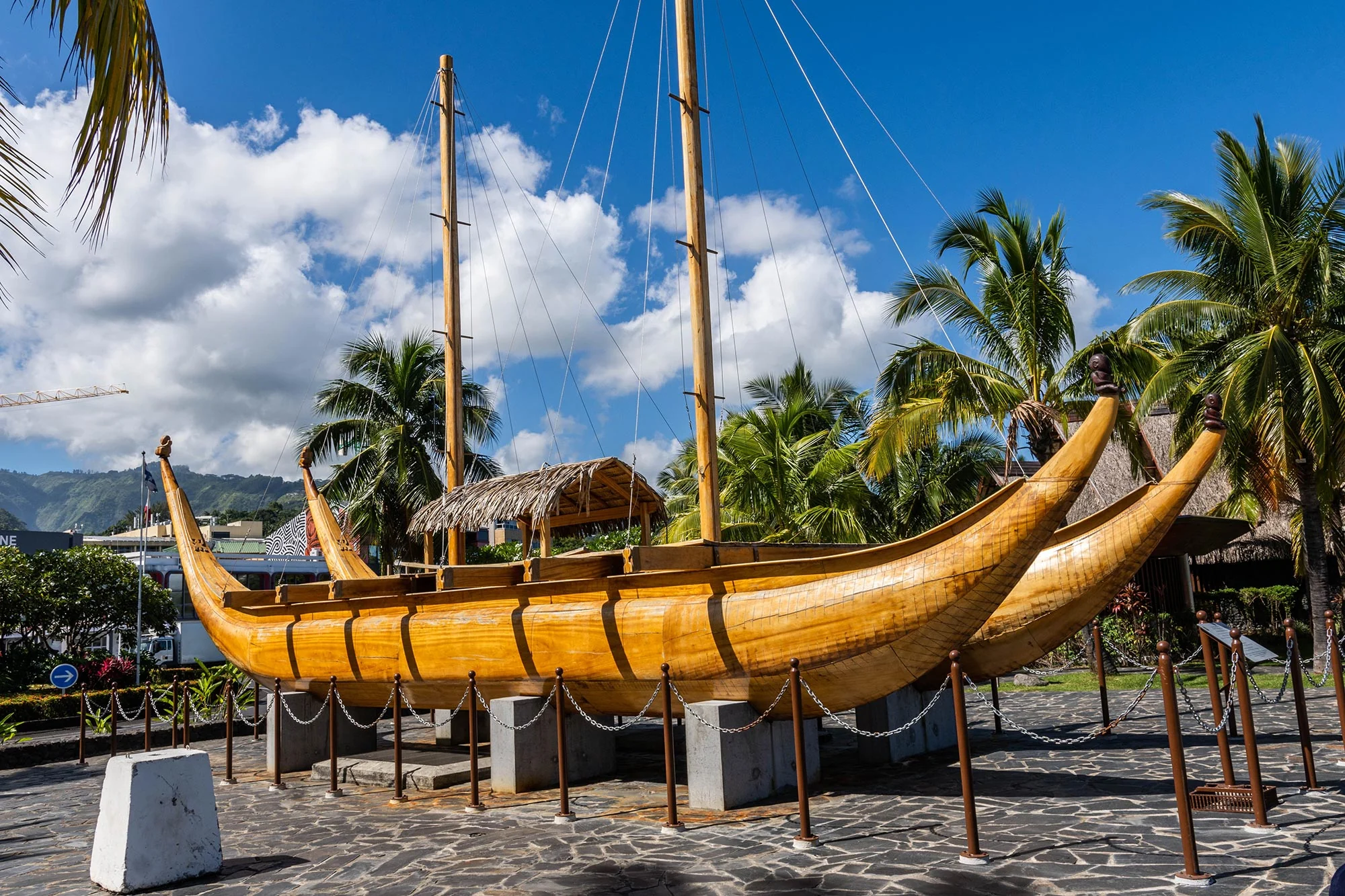
Archaeological evidence shows that between about 3000 BC and 1000 BC, the Austronesian ancestors gradually expanded to the Pacific Ocean and formed the Lapita culture. However, after reaching Western Polynesia, further large-scale expansion almost stopped for about 1700. It was not until about AD 800 to 1300 that the Polynesians suddenly entered a stage of rapid expansion, reaching remote areas such as Hawaii, Easter Island, and New Zealand, completing one of the most spectacular ocean migrations in human history.
Academics have long been trying to explain this phenomenon. Some people believe that this is due to the advancement of navigation technology; others attribute the reason to the development of social organization, population growth or cultural factors. But new research suggests the key factors may come from changes in climate and marine environments.
The research team used paleoclimate data, ocean models and navigation simulation technology to reconstruct and analyze the changes in wind direction and ocean currents in the Pacific thousands of years ago. It turns out that during the most active period of Polynesian expansion, there was a series of persistent climate changes in the Pacific that made long-distance navigation significantly easier.
Research shows that El Niño-like climate conditions frequently occurred at that time, and these changes changed traditional wind fields and ocean current patterns. For the Polynesians, who relied on canoes and traditional sails for ocean voyages, this meant significantly less resistance when sailing east and northeast, while tailwinds and favorable ocean currents increased the odds of successful long-distance exploration.
Simulation results show that under these special climate conditions, explorers setting out from core areas such as Samoa and Tonga can more easily reach previously inaccessible islands. The researchers believe that this environmental window may have provided Polynesians with a rare opportunity to cross a vast ocean, thus driving their subsequent rapid expansion.
The study also pointed out that climate change not only affects the navigation process itself, but may also affect the distribution of food resources, rainfall patterns and island ecological environment, thereby having a chain effect on population migration and settlement behavior. In other words, climatic conditions both helped explorers reach the New World and may have increased the likelihood that new settlements would survive and thrive.
Polynesians have always amazed scientists with their seafaring abilities. In the absence of modern navigation equipment, they can rely on star positions, wave patterns, wind direction changes, bird activity trajectories, and cloud characteristics for ocean navigation. During the voyage of thousands of kilometers, many islands were extremely small in size, but they were still successfully discovered and settled. This is considered one of the most outstanding navigation achievements in human history.
The new findings do not deny the important role of seafaring technology, cultural traditions and social organization, but suggest that these factors may have played a role in conjunction with favorable climatic conditions, the researchers said. When environmental conditions changed, the Polynesians, who already had superb navigation capabilities, finally had the best time to explore the Pacific on a large scale.
This study provides new insights into the history of human migration. The research results show that some major historical events may not be driven entirely by technological breakthroughs or social changes alone. The natural environment and climate change may also play a decisive role at critical moments. For the Polynesians, the climate change that changed wind directions and ocean currents may have been an important driving force that pushed them toward the depths of the Pacific.
Comments