
Abstract:
A new study found that about 2,000 years ago, the remnants of an ancient ice sheet in the Earth's Arctic began to expand again, which may mean that the Earth has started the early process of the next round of glaciation. However, as human industrialization developed, greenhouse gas emissions continued to increase, and global temperatures continued to rise, this expansion trend eventually reversed in the mid-20th century. Researchers believe that human activities may have interrupted the Earth's long-term and fairly regular ice age cycle.
This study, conducted by Nicholas Young, a geochemist at Columbia University’s Lamont-Doherty Earth Observatory, and colleagues, was published in the journal Science on October 22, 2026. By analyzing the Barnes Ice Cap on Canada's Baffin Island, the research team reconstructed the expansion and retreat history of the last important remnant of North America's ancient Laurentide Ice Sheet, providing new evidence to determine whether the next ice age has begun.
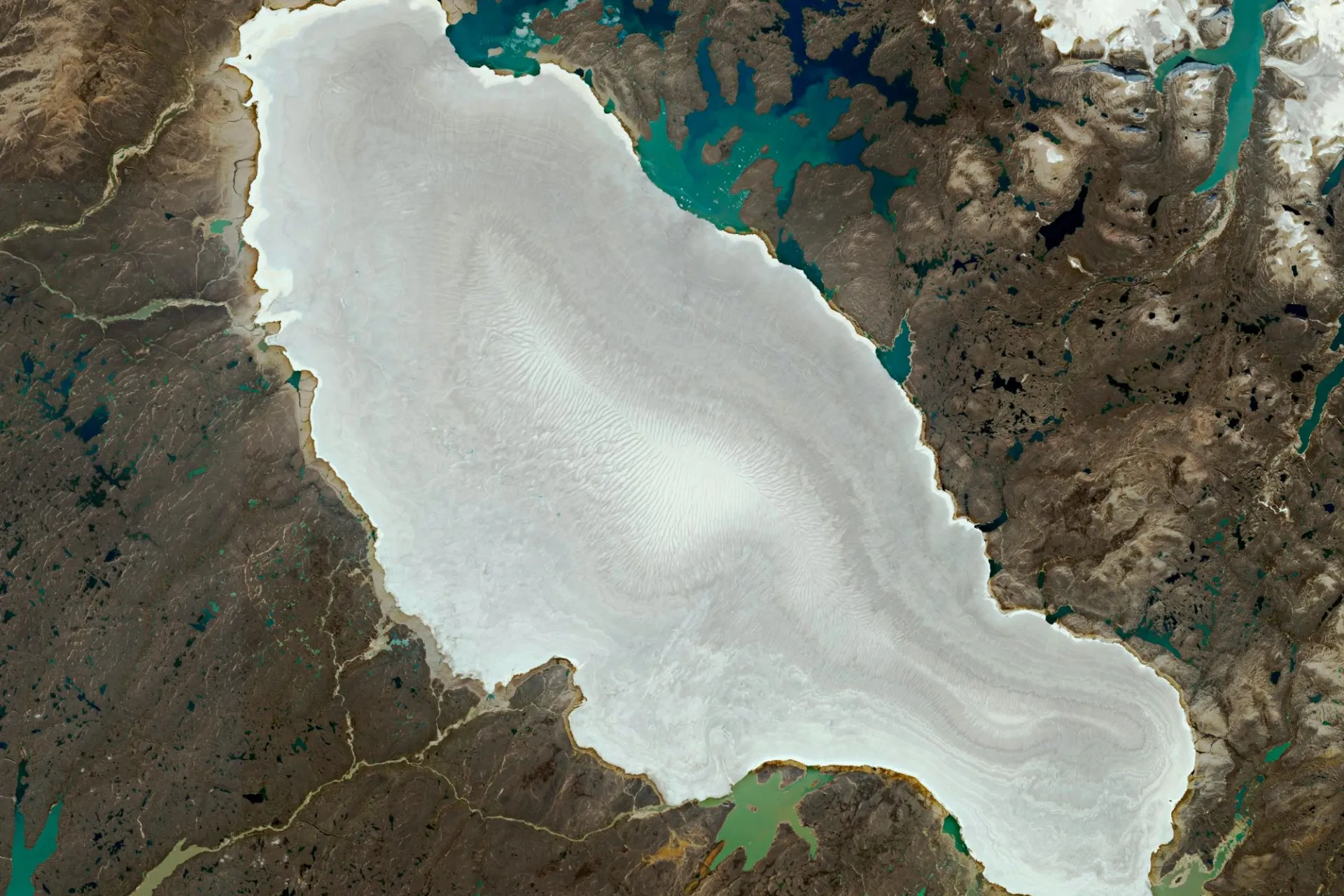
The Laurentide Ice Sheet once covered most of today's Canada and the northern United States. It was one of the largest ice masses in North America during the past glacial period. About 20,000 years ago, this ice sheet reached its maximum size, covering nearly 30% of North America. The southern edge even extended to today's Illinois, and the ice thickness in some areas was more than 3 kilometers. As the climate gradually warms, the ice caps continue to melt, and eventually only a few ice bodies are left in the Canadian Arctic. Among them, the Barnes Ice Cap has become the focus of researchers' investigation.
The Earth is not always in the same climate state. Over the past 2.6 million years, the Earth has repeatedly experienced alternations between glacial and interglacial periods. During glacial periods, large-scale ice sheets expanded in the Northern Hemisphere; during interglacial periods, they were relatively warm and the ice sheets gradually retreated. The Holocene we are currently living in began about 11,700 years ago and was an interglacial period.
Scientists have long believed that slow changes in the direction of the Earth's orbit and spin axis alter the solar radiation received at high latitudes, particularly affecting summer temperatures. As the Arctic becomes cooler in the summer, snow accumulated in the winter becomes less likely to melt in the summer, gradually forming thicker ice. The ability of ice and snow to reflect sunlight is much higher than that of bare ground, further reducing the locally absorbed solar energy and forming a feedback mechanism that is conducive to the expansion of ice sheets.
However, there has been controversy over when the next ice age will begin. Some previous climate models believe that even without the influence of human activities, the current interglacial period on earth may still last tens of thousands of years. A 2016 modeling study even suggested that while the pre-Industrial Revolution Earth may have been close to conditions for the onset of ice ages, it never actually crossed that threshold.
To further clarify this issue, the research team conducted a detailed analysis of ancient plant remains near the Barnes Ice Cap. When the ice sheet retreats, the land originally covered by the ice is exposed again, allowing plants such as mosses to grow; and when the ice sheet expands again, these plants will be covered by the ice and preserved in the low temperature environment. Today, as the edge of the ice cap continues to recede, plant remains buried for hundreds to thousands of years are being resurfaced, providing researchers with a natural archive to reconstruct the ice sheet's history.
The research team conducted new radiocarbon dates on 88 plant samples previously covered by ice. After a plant dies, the radiocarbon in its tissue decays over time, helping researchers determine when the plant was covered by a re-expanding ice sheet. In addition, the researchers analyzed beryllium-10 in the rocks. This isotope accumulates as rocks are exposed to cosmic rays, so it can help determine when the surface in question broke away from its ice cover.
After combining these data with 186 previously published sets of radiocarbon dates from nearby ice caps, the researchers found that the ice in the area where the Barnes Ice Cap is located shrank to a relatively small extent about 3,600 years ago and then began to expand. Multiple lines of evidence suggest that this re-expansion began around 2000 years ago and continued for a considerable period of time.
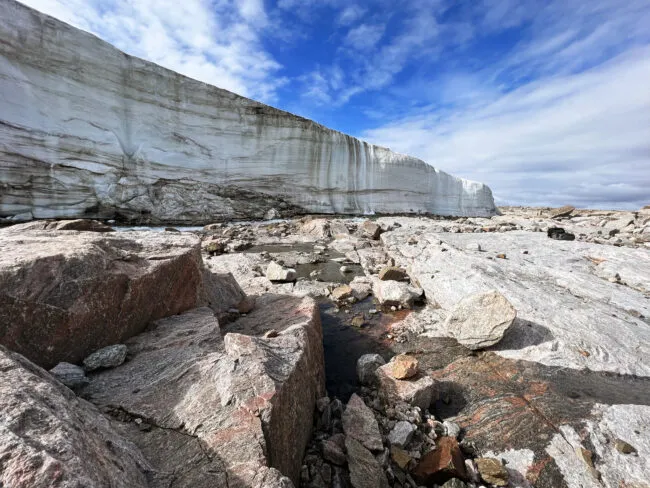
Researchers believe that this may be an early signal for the start of the next ice age. The "beginning of the ice age" mentioned here does not mean that the earth had entered a severe cold environment similar to that of 20,000 years ago, but that the ice caps began to grow again after experiencing the retreat of the interglacial period. If this trend continues for tens of thousands of years, the ice body may gradually expand and eventually form a large ice sheet covering the continent.
The research team pointed out that it takes a long process of climate change from the initial expansion of the ice sheet to the formation of a true continental ice sheet. Study leader Yang estimates that without additional warming from human activities, it could take tens of thousands of years for the Laurentide Ice Sheet to re-grow to the size it once did covering large swaths of North America. Therefore, this study does not mean that the earth is about to enter a full-scale ice age before 2000, but that its early ice sheet expansion process may have already started.
But by the mid-20th century, things had changed. As the industrialization process continues to advance, greenhouse gases such as carbon dioxide released by humans burning coal, oil and natural gas continue to accumulate, and global temperatures, especially summer temperatures in the Arctic, have increased significantly. The Barnes Ice Cap reached its greatest extent in research records around the 1960s, and has since begun to retreat. The amount of ice melted in summer gradually exceeds the amount that can be replenished by winter snowfall, and the ice cap enters a state of continuous ice loss.
Researchers believe that this change shows that greenhouse gas forcing caused by human activities has been enough to offset the long-term natural climate trend that previously promoted the expansion of ice sheets. Changes in the Earth's orbit are still continuing, but the reduction in solar radiation at high latitudes in summer has been unable to offset the warming effects of rising greenhouse gas concentrations in modern times.
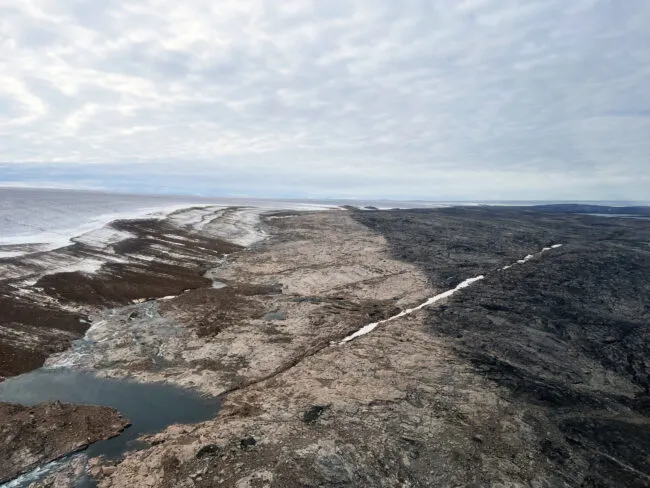
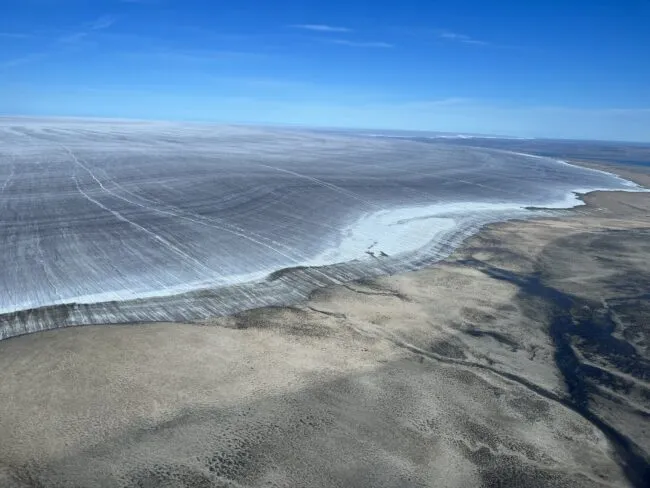
Changes in the Barnes Ice Cap may also affect the evolution of future ice ages. Ice caps are not only a result of climate change, they may also influence climate. When the ice layer is thick enough and the surface is high enough, lower temperatures can help more snow to be preserved in the summer and sustain ice growth. The Barnes Ice Cap once had a high-altitude area where ice and snow could continue to accumulate, but researchers pointed out that since around 2010, this accumulation area has disappeared, and the ice cap can no longer make up for the losses caused by summer melt through winter snowfall.
According to relevant model predictions, the last remnants of this ancient ice sheet may completely disappear within the next few hundred years. Its disappearance would not only mean the end of an important glacial landscape in the Arctic, but could also change the initial conditions under which future ice sheets will form again. The remnants of the Laurentide Ice Sheet once provided a core area where ice and snow could continue to accumulate. If the global climate turns colder again in the future, new continental ice sheets may need to develop without this core.
However, the researchers also emphasized that historical changes in the Barnes Ice Cap alone cannot prove that without artificial warming, all of North America will inevitably be re-covered by continental ice sheets. The research provides evidence that the ice sheet has re-expanded, and whether this trend will eventually develop into a full-scale ice age still depends on subsequent climate evolution. There is not necessarily a fundamental contradiction between previous model predictions and this study, because the model discusses whether ice ages can form on a larger scale, while the new study focuses on reconstructing the actual history of the remnants of a certain ice sheet.
The researchers believe that the most important significance of this discovery is that it reveals that the impact of human activities on the earth's climate system may be more profound than simply changing the average temperature. The ice age cycle is one of the relatively stable and extremely long-lasting natural processes on Earth over the past millions of years, and human emissions of greenhouse gases are now enough to change the evolution direction of this process.
Researchers point out that modern global warming is not about saving the planet from an inevitable disaster. Even if it took tens of thousands of years for an ice age to finally form, greenhouse gas emissions from human activities have disrupted a long-running natural climate mechanism. Regarding the future of Earth's climate, the real issue worthy of attention is not only when the next ice age will arrive, but also how human activities will continue to change the long-term evolution of ice sheets, sea levels, and the entire climate system.
Comments