
Abstract:
Sony Semiconductor Solutions Corporation officially announced the new mobile phone image sensor LYTIA 720. This new product is positioned as the main camera of smartphones, using a stacked CMOS architecture of approximately 50 million effective pixels. The sensor size is 1/1.56 inches, the diagonal length is approximately 10.24 mm, and the single pixel size is 1.0 micron.
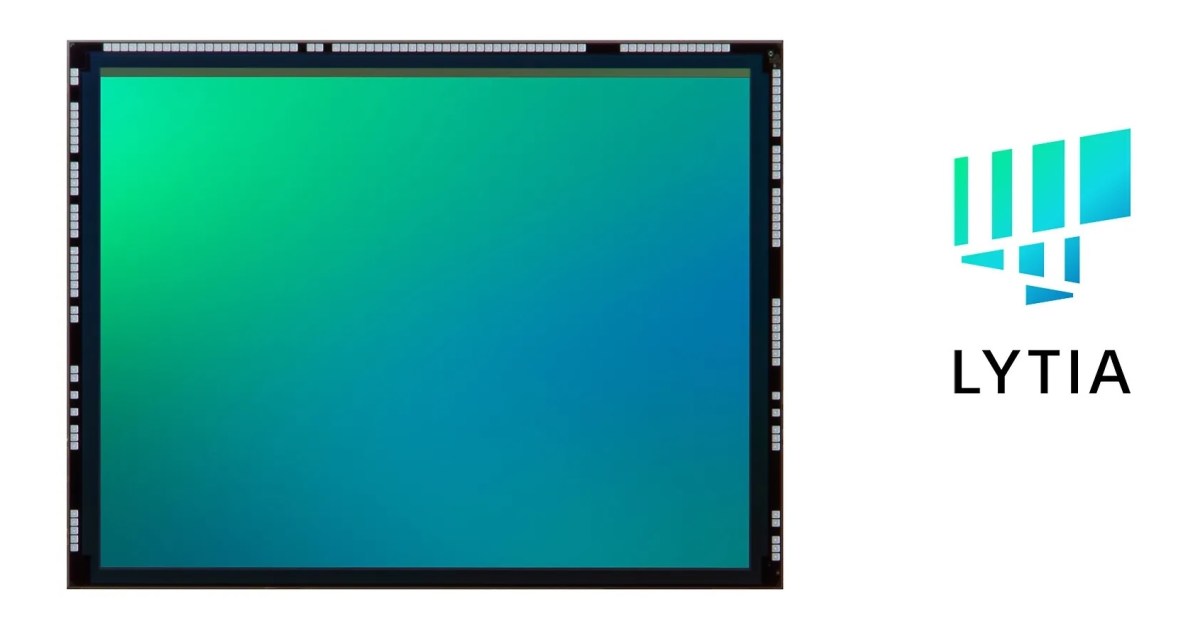
According to reports, LYTIA 720 inherits many core technologies of Sony’s high-end LYTIA series, focusing on improving imaging capabilities, autofocus performance and dynamic range performance in low-light environments. In the 1/1.56-inch format currently widely used in smartphones, Sony hopes to further improve shooting quality through the new architecture.
The new sensor is equipped with Sony's independently developed UHCG (Ultra High Conversion Gain) circuit technology, which can improve the efficiency of converting charge into voltage. Compared with the previous generation product of the same specifications, LYTIA 700, LYTIA 720 can reduce the random noise generated in low-light environments by about 50%, thereby reducing the graininess of the picture and improving the detail performance and signal-to-noise ratio in night scenes and dark light scenes.
In terms of video shooting, Sony has redesigned and optimized the analog-to-digital conversion (AD) circuit, which not only reduces conversion delay and power consumption, but also achieves stronger video capabilities. LYTIA 720 becomes Sony's first product to support full-pixel autofocus and 4K 60-frame HDR video recording in a 1/1.56-inch format and 1.0-micron pixel size.
In order to avoid ghosting and smearing problems in traditional multi-frame HDR synthesis in sports scenes, LYTIA 720 adopts a single-frame HDR solution, which maintains high-speed autofocus response while providing HDR video shooting capabilities, so that dynamic images can achieve a more natural performance.
In terms of dynamic range, LYTIA 720 supports Hybrid Frame-HDR (HF-HDR) technology, which can achieve up to 100dB dynamic range. This technology combines the DCG-HDR data obtained by a single exposure with the highlight area data obtained by a short exposure, and retains the details of the dark and highlight areas through post-synthesis, thus reducing the phenomenon of dead shadows and highlight overexposure, making the final picture closer to the real effect observed by the human eye.
From a specification perspective, LYTIA 720 uses a Quad Bayer color filter array and is designed for smartphone main camera applications. In addition to supporting 4K 60fps HDR video and full-pixel autofocus, it also has high-speed image output capabilities and takes into account energy consumption control while maintaining image quality.
Sony stated that LYTIA 720 plans to begin mass production and shipment in early November 2026. As this sensor enters the market, it is expected that more mid- to high-end smartphones will adopt this new solution in the future to improve night scene photography, high dynamic range shooting and high-quality video recording capabilities.
Comments